Deep Cooled & Vacuum Cameras
High Performance Scientific Deep Cooled CCD Cameras from X-ray to Near Infrared (NIR)
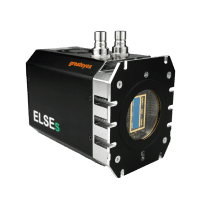
Deep-Cooled CCD Cameras for UV, VIS & NIR Imaging & Spectroscopy:
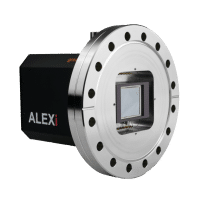
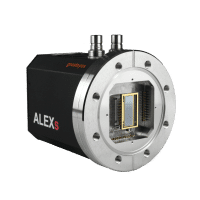
Vacuum-Flange CCD & sCMOS Cameras for VUV, EUV & X-ray Imaging & Spectroscopy:
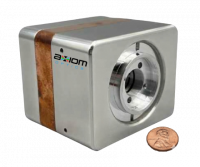
In-Vacuum CCD Cameras for VUV, EUV & X-ray Imaging & Spectroscopy:
In-Vacuum CMOS Cameras for Visualization:
Compare Deep-Cooled and Vacuum Cameras
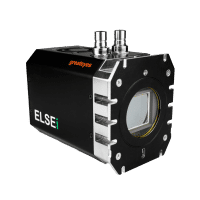
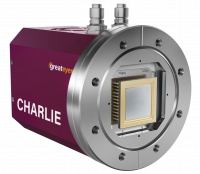
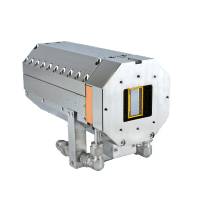
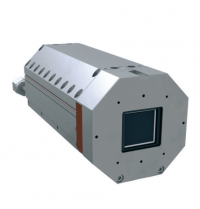
These cameras are grouped by the spectral range they detect and whether they mount in air, in vacuum, or in situ inside a chamber. The Greateyes CCD families (ELSE, ALEX, LOTTE) offer matched spectroscopy and imaging variants on the same cooling platform, TorriCam is a cost effective in situ CMOS, and CHARLIE is a cooled X-ray CMOS. Full specifications and datasheets are available on each product page.
| Model | Spectral range | Sensor and cooling | Mounting | Best suited for |
|---|---|---|---|---|
| TorriCam | VIS and NIR | CMOS, thermoelectric | In situ, in vacuum | Cost effective in situ imaging inside vacuum chambers |
| ELSE-s and ELSE-i | UV, VIS, NIR | Deep cooled CCD, down to -100°C | In air | Spectroscopy (ELSE-s) and imaging (ELSE-i) from UV through NIR |
| ALEX-s and ALEX-i | X-ray, EUV, VUV | Deep cooled CCD, back illuminated open sensor | In air with vacuum flange | Soft X-ray and EUV spectroscopy (ALEX-s) and imaging (ALEX-i) |
| LOTTE-s and LOTTE-i | X-ray, EUV, VUV | Deep cooled CCD, in-vacuum design | In vacuum | Soft X-ray and EUV spectroscopy (LOTTE-s) and imaging (LOTTE-i) mounted directly in the chamber |
| CHARLIE | X-ray | CMOS, cooled | In air with vacuum flange | Direct detection X-ray imaging where CMOS speed is preferred over CCD |
Working at longer infrared wavelengths instead? See the scientific CMOS cameras for low light VIS and NIR imaging, or the full deep-cooled range for the complete lineup.
Deep-Cooled and Vacuum Camera FAQs
Why do these cameras need deep cooling?
Cooling suppresses dark current, the thermally generated signal that builds up in a sensor during an exposure regardless of incoming light. In faint-signal applications such as spectroscopy of weak sources or long-exposure imaging, uncooled dark current would accumulate faster than the signal itself and bury it. Cooling the sensor deep below zero slows dark current dramatically, allowing exposures of many minutes and revealing features that would otherwise be lost in noise.
What is the difference between an in-vacuum and an in-air camera?
An in-air camera sits outside the vacuum chamber and views the experiment through a window or behind a thin barrier on a flange. An in-vacuum camera places the sensor itself inside the chamber, with no window between the source and the detector. The distinction matters most for soft X-rays and extreme ultraviolet light, which even a thin window would absorb; for those wavelengths the sensor has to be in the vacuum to see the signal at all.
Why do X-ray and EUV cameras use open, back-illuminated sensors?
Soft X-ray, EUV, and VUV photons are absorbed by the materials that normally sit in front of a sensor, including protective windows and the sensor’s own front-side circuitry. Open, back-illuminated sensors expose the bare silicon directly to the incoming light so those photons reach the active region without being absorbed first. This delivers the high quantum efficiency these low-signal, short-wavelength applications require.
Should I choose a CCD or a CMOS camera for low-light work?
CCD sensors remain the benchmark for the most demanding low-light spectroscopy and imaging, with very low read noise, excellent uniformity, and high dynamic range in long exposures. CMOS sensors read out faster and reach higher frame rates, which suits time-resolved measurements and higher-throughput work. The decision comes down to whether the application needs the lowest possible noise floor or faster acquisition.
What is an in situ vacuum camera used for?
An in situ camera operates inside a process chamber to observe a procedure as it happens, such as monitoring a thin-film deposition, an etch step, or crystal growth in real time. Rather than inspecting a result after the fact, it provides live imaging of the process itself, which supports both process development and in-line quality control. TorriCam is a cost-effective in situ CMOS option for this role.
How deep do these cameras cool, and does deeper always help?
Cameras in this class reach deep sub-zero sensor temperatures, with some models cooling to around -100°C. Deeper cooling reduces dark current further and extends the usable exposure time, but it only helps up to the point where dark current is no longer the limiting noise source. Very short exposures of bright sources gain little from extreme cooling, while long-exposure measurements of faint sources benefit from the deepest cooling available. Match the cooling depth to the exposure length the measurement requires.
Can these cameras be used at synchrotron and laser facilities?
Yes. Deep-cooled X-ray, EUV, and VUV cameras are widely used at synchrotron beamlines, free-electron lasers, and high-harmonic and plasma laser sources for spectroscopy and imaging. The main integration questions are matching the mounting and vacuum interface to the beamline, and confirming the camera’s SDK works with the facility’s acquisition and control system so it fits into the existing experimental pipeline.