MWIR Cooled Cameras & Cores
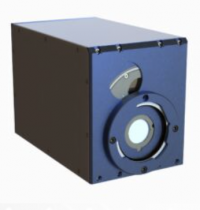
- The new G900 Series cooled broadband MWIR cameras provide the same high-resolution imaging and performance as the IRC900 Series scientific cameras, but at a more competitive price point. Based on a closed-cycle Stirling cooled sensor engine, the G900 cameras feature a broadband spectral response (1 to 5 m) and offer advanced outputs like GigE Genicam for digital data and HD-SDI for monitoring, allowing for easy integration and customization in a wide range of applications.
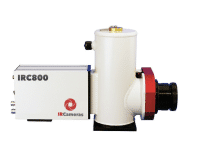
- The IRC800 Series MWIR cameras offer the ultimate in flexibility for research scientists. Cold filters are user-replaceable, thus making the IRC800 the perfect instrument for prototyping system development or where application requirements may change. A 4-filter cold-filter wheel is available as an option for your MWIR camera core. The 1/3-liter LN2 pour-filled Dewar assembly maintains temperature for up to 20 hours unpowered and 9 hours powered which makes the IRC800 Series of cooled MWIR cameras perfect for Scientific Imaging, Spectroscopy, Process Analysis, and Quality Assurance.
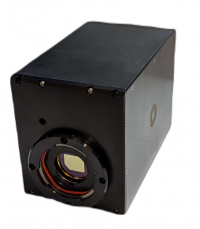
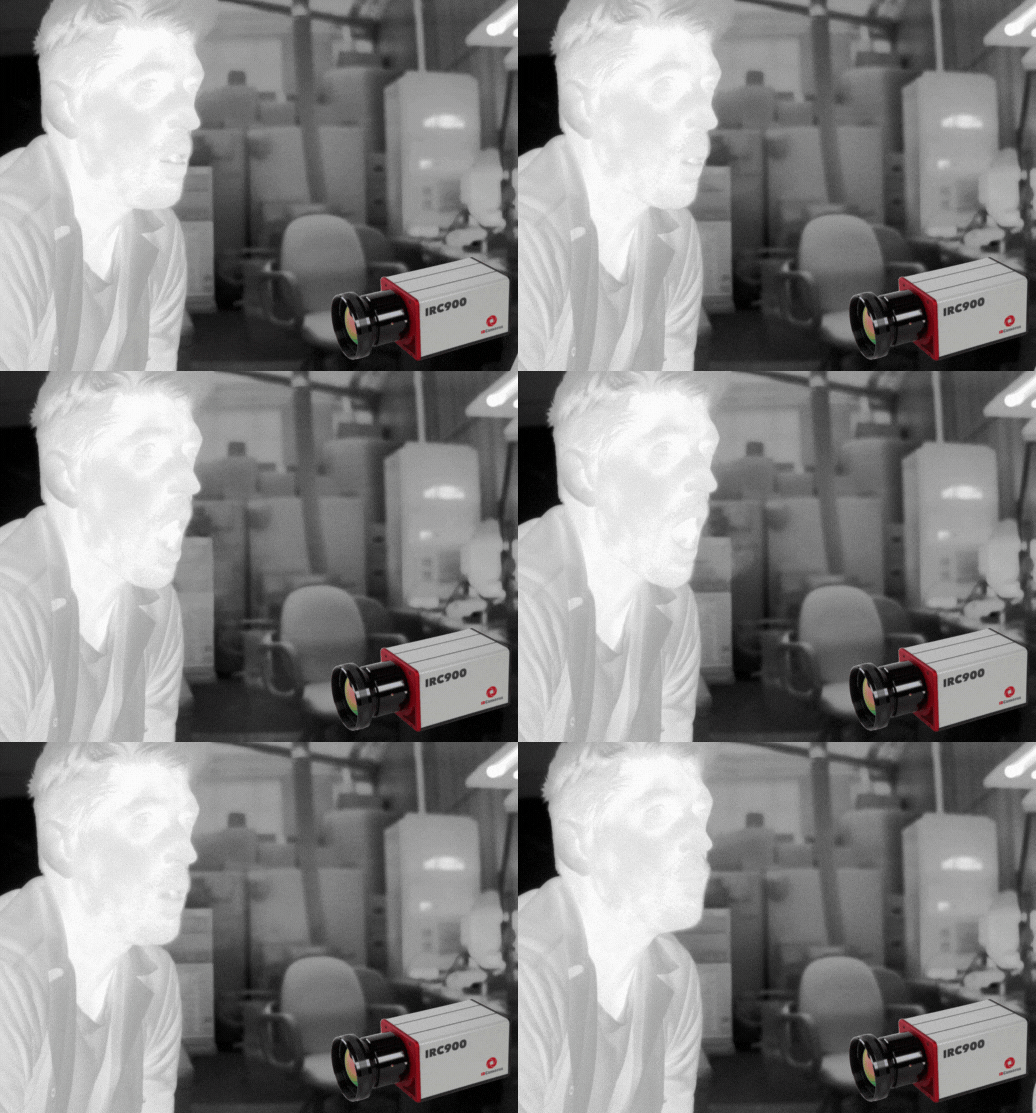
- Using closed cycle stirling coolers, the IRC900 Series cameras and their MWIR cooled core provide high thermal sensitivity and spatial resolution in a compact package suitable for laboratory and field use, while offering long-life and resilience under stressing environmental conditions.
Compare MWIR Cooled Cameras
All three series image across the full 1 to 5 micron midwave band on high quantum efficiency InSb and nBn focal plane arrays, with no blooming and no cross-talk. They differ mainly in how the detector is cooled, how much resolution and speed is available, and how much spectral filtering flexibility the instrument offers. Full specifications and datasheets are available on each product page.
| Series | Cooling | Sensor and resolution | Speed and interfaces | Best suited for |
|---|---|---|---|---|
| G900 series | Closed cycle Stirling | InSb or nBn, SXGA 1280 x 1024 or VGA 640 x 512, 12 or 20 µm pitch | GigE Genicam for data, HD-SDI for monitoring | IRC900 class imaging at a lower price point, with integration and monitoring outputs built in |
| IRC800 series | LN2 pour-filled Dewar, up to 20 hours unpowered and 9 hours powered | InSb or nBn, SXGA 1280 x 1024 or VGA 640 x 512, 12 or 20 µm pitch | Up to 500 fps, GigE and Camera Link | Research flexibility through user-replaceable cold filters and an optional 4-filter cold wheel |
| IRC900 series | Closed cycle Stirling | InSb or nBn, SXGA 1280 x 1024, 1024 x 1024, or VGA 640 x 512, 12 to 25 µm pitch | 10 to 500 fps, GigE, Camera Link, and HDMI | Scientific imaging in the lab or the field, with long cooler life and resilience in demanding environments |
Imaging outside the midwave band? See the SWIR cameras for reflected light imaging from 900 to 2500 nm, or the LWIR thermal cameras for uncooled longwave thermal imaging.
How to Choose a Cooled MWIR Camera
Because every cooled midwave camera shares the same 1 to 5 micron window, the decision comes down to cooling method, detector material, and how the instrument will be used day to day.
Cooling method
Every MWIR detector must run at cryogenic temperatures to suppress dark current, and there are two ways to get there. Closed cycle Stirling coolers, used in the G900 and IRC900, run continuously from wall or battery power with no consumables, reach operating temperature in minutes, and tolerate field conditions, which makes them the practical default for production monitoring, field trials, and anything requiring long unattended operation. Liquid nitrogen cooling, used in the IRC800, eliminates the mechanical vibration and audible noise of a moving cold finger, which matters for vibration sensitive optical benches and precision spectroscopy. The IRC800 Dewar holds a third of a liter and maintains temperature for up to 20 hours unpowered or 9 hours powered, so a single fill covers a full working day.
Detector material: InSb or nBn
Indium antimonide is the long established midwave detector, offering high quantum efficiency and excellent uniformity across the full 1 to 5 micron band. nBn barrier detectors suppress dark current by design, which allows operation at higher detector temperatures and reduces the cooling load, easing power draw and extending cooler life. All three series are available with either material, so the choice is usually made alongside the intended operating temperature, sensitivity target, and duty cycle.
Resolution and pixel pitch
Formats run from VGA 640 x 512 up to SXGA 1280 x 1024, with the IRC900 also offering a square 1024 x 1024 array. Pixel pitch matters as much as pixel count: a 12 micron pitch packs more resolution behind the same optics and shrinks the required lens for a given field of view, while larger 20 and 25 micron pixels collect more photons each, favoring sensitivity and shorter integration times. Small pitch suits detailed inspection and long range imaging; large pitch suits low signal and high speed work.
Frame rate and integration time
Midwave scenes are photon rich compared with SWIR, so frame rates of several hundred per second are achievable at full resolution, and the IRC800 and IRC900 reach up to 500 fps with windowing available for faster capture. Match the frame rate to the event being observed: combustion, ballistics, and rapid thermal transients need the high end, while process monitoring and quality assurance are well served below 100 fps, where longer integration improves sensitivity.
Spectral filtering
The midwave band contains distinct absorption and emission features, including carbon dioxide near 4.3 microns and various hydrocarbons, so narrowband filtering turns a thermal camera into a gas or process specific instrument. Filters for cooled cameras sit inside the Dewar behind the cold shield, so changing them is normally a factory operation. The IRC800 is built around this constraint: its cold filters are user replaceable, and an optional 4-filter cold wheel allows switching bands during an experiment, which is what makes it suited to prototyping, spectroscopy, and applications whose requirements are still evolving.
Optics and cold shield matching
Midwave lenses are built from germanium, silicon, and similar infrared materials rather than glass, and their f-number must match the camera’s cold shield so the detector sees only the scene and not warm internal surfaces. A mismatch shows up as reduced sensitivity and non-uniformity that calibration cannot fully remove, so confirm lens compatibility with the specific Dewar and cold stop rather than assuming any MWIR lens will mount and perform.
Radiometry and calibration
Quantitative temperature measurement requires non-uniformity correction and a blackbody-referenced calibration across the intended temperature range, along with a stable detector temperature to keep that calibration valid. If the goal is absolute temperature rather than qualitative imaging, plan for calibration at the outset and confirm the camera’s radiometric accuracy specification. For dedicated thermography rather than scientific imaging, the industrial thermographic cameras are purpose built for that task.
Interfaces and form factor
GigE Genicam suits networked and long cable installations, Camera Link delivers low latency high bandwidth acquisition for scientific capture, and HD-SDI or HDMI outputs allow live monitoring on a display without a host computer, which is useful for range work and demonstrations. Cooled cores are also available for OEM integration where the camera becomes part of a larger instrument rather than a standalone system.
MWIR Camera FAQs
Why do MWIR cameras need cooling?
Midwave detectors respond to the same wavelengths the camera itself emits at room temperature, so without cooling the detector would be overwhelmed by its own thermal signal and its dark current would swamp the scene. Cooling the focal plane to cryogenic temperatures suppresses that dark current and delivers the sensitivity and low noise that make cooled MWIR imaging quantitative. This is the fundamental difference from uncooled longwave microbolometers, which trade sensitivity and speed for the simplicity of running at ambient temperature.
What is the difference between MWIR, LWIR, and SWIR imaging?
SWIR cameras between roughly 900 and 2500 nm image reflected light, producing images that look like sharp black and white photographs. MWIR cameras from 1 to 5 microns and LWIR cameras from about 8 to 14 microns both detect emitted thermal radiation. MWIR delivers higher spatial resolution and better sensitivity to hot targets such as flames, engines, and industrial processes, and it accesses gas absorption features unavailable in the longwave band. LWIR performs better in humid air and at near ambient temperatures, and it is available in uncooled form at lower cost.
What is the difference between InSb and nBn detectors?
Indium antimonide is the established midwave detector material, with high quantum efficiency and strong uniformity across the full 1 to 5 micron band. nBn barrier detectors are engineered to suppress dark current, which allows operation at a higher detector temperature, lowers the cooling load, reduces power consumption, and extends cooler life. Both are offered across the G900, IRC800, and IRC900 series, and the right choice depends on target sensitivity, operating temperature, and duty cycle.
Should I choose Stirling or liquid nitrogen cooling?
Closed cycle Stirling coolers need no consumables, cool down in minutes, run indefinitely from wall or battery power, and withstand field conditions, which suits monitoring, portable work, and long unattended operation. Liquid nitrogen cooling introduces no mechanical vibration or cooler noise, which benefits vibration sensitive optical setups and precision spectroscopy, at the cost of periodic refilling. The IRC800 Dewar holds temperature for up to 20 hours unpowered and 9 hours powered on a single fill.
What is a cold filter and why does it matter?
A cold filter sits inside the Dewar behind the cold shield, at cryogenic temperature, so it does not radiate into the detector the way a warm external filter would. Narrowing the band this way isolates specific gas or material signatures within the midwave window. Because the filter lives inside the vacuum assembly, swapping it is normally a factory operation, which is why the IRC800 stands out: its cold filters are user replaceable and an optional 4-filter cold wheel allows switching bands during an experiment.
Do MWIR cameras need special lenses?
Yes. Glass is opaque in the midwave band, so lenses are built from germanium, silicon, and related infrared materials with matched coatings. Beyond material, the lens f-number must match the camera’s cold shield so the detector sees only the scene and not warm internal surfaces; a mismatch reduces sensitivity and introduces non-uniformity that calibration cannot fully correct. Confirm compatibility with the specific Dewar and cold stop rather than assuming any midwave lens will work.
Can MWIR cameras measure absolute temperature?
They can, with proper radiometric calibration. Quantitative temperature measurement requires non-uniformity correction, a blackbody-referenced calibration across the expected temperature range, and a stable detector temperature to keep that calibration valid. Scene emissivity, atmospheric path, and reflected background all affect the result and must be accounted for. Applications that need calibrated temperature rather than qualitative imaging should plan for calibration from the start.