SWIR Hyperspectral Cameras
What is SWIR hyperspectral imaging?
SWIR hyperspectral imaging (Short-Wave Infrared hyperspectral imaging) is an advanced technique that combines detailed spectral analysis with high-resolution imaging in the SWIR range, typically 900–2500 nm. Unlike standard imaging, which only captures broad color information, SWIR hyperspectral cameras collect full spectral data at each pixel, creating a rich “hypercube.” This three-dimensional dataset allows precise material identification, chemical composition analysis, and detection of subtle physical variations that are invisible to traditional cameras.
SWIR hyperspectral imaging works by capturing hundreds of narrow, contiguous spectral bands simultaneously or sequentially. This enables users to distinguish between materials based on their unique spectral signatures — even when they look identical to the human eye. It has become essential for non-destructive testing, advanced quality control, and material characterization.
Applications of SWIR hyperspectral Cameras
SWIR hyperspectral cameras are widely used across scientific, industrial, and research applications, including:
-
Semiconductor and solar cell inspection: Detecting micro-defects, verifying layer uniformity, and identifying contamination.
-
Food and pharmaceutical quality control: Ensuring product consistency, detecting foreign materials, and analyzing chemical composition.
-
Recycling and material sorting: Differentiating and separating various plastics and other materials efficiently.
-
Agriculture and plant research: Monitoring plant health, water content, and nutrient levels.
-
Art conservation and cultural heritage: Revealing hidden layers, underdrawings, and material composition in artworks.
SWIR Hyperspectral Camera Solutions
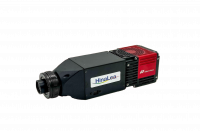
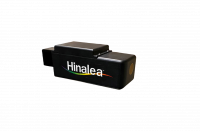
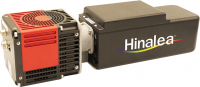
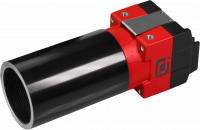
Axiom Optics offers a versatile range of SWIR hyperspectral cameras from Cubert and Hinalea designed for both research and industrial applications:
-
Ultris SWIR 1: The first light field SWIR hyperspectral camera, providing true snapshot hyperspectral imaging with high spatial and spectral resolution — ideal for dynamic scenes and real-time analysis.
-
Hinalea SWIR Pro: A high-performance camera delivering excellent sensitivity and spectral fidelity for detailed chemical and material analysis.
-
Hinalea VSWIR Pro: A versatile system optimized for rapid, non-contact inspection and real-time material identification across various industries.
-
Hinalea XSWIR Pro: An extended-range SWIR hyperspectral camera covering a broader spectral range for deeper material insights and enhanced detection capabilities.
Compare SWIR Hyperspectral Cameras
All three cameras use HinaLea fast Fabry-Perot tunable filters, sweeping through narrow bands so the user defines exactly which wavelengths to acquire. They differ in how far into the shortwave infrared they reach and how finely they sample it. Full specifications and datasheets are available on each product page.
| Model | Spectral range | Bands and resolution | Spatial resolution | Best suited for |
|---|---|---|---|---|
| HinaLea VSWIR Pro | 500 to 1700 nm (VIS-SWIR) | 300 bands at 4 nm | See product page | Broad visible-through-SWIR coverage in a single camera, fine spectral detail |
| HinaLea SWIR Pro | 900 to 1700 nm (SWIR) | 108 bands at 10 nm | 640 x 512 px | Standard SWIR imaging with real-time classification for inspection and sorting |
| HinaLea XSWIR Pro | 1300 to 2100 nm (extended SWIR) | 225 bands at 15 nm | 640 x 512 px | Extended SWIR detection of materials beyond the reach of standard InGaAs |
Need visible and near-infrared coverage as well, or a snapshot camera for moving scenes? See the full hyperspectral cameras range, which adds VIS-NIR and snapshot options. For single-band SWIR imaging rather than full spectra, see the SWIR cameras lineup.
SWIR Hyperspectral Camera FAQs
What can SWIR hyperspectral imaging detect that visible hyperspectral cannot?
Many materials that look identical in the visible have distinct absorption features in the shortwave infrared. Water content, fats and oils, sugars, plastics and polymers, pharmaceuticals, and various minerals all reveal themselves between roughly 1000 and 2100 nm. This makes SWIR hyperspectral imaging able to grade produce by moisture, sort plastics by polymer type, verify pharmaceutical blends, and separate materials that a visible or near-infrared camera cannot tell apart.
What spectral range do I need for my materials?
It depends on where the target materials absorb. Water and many organic compounds show strong features between about 1400 and 1900 nm, while some plastics, hydrocarbons, and minerals are only separable toward 2000 nm and beyond. The HinaLea SWIR Pro covers the core 900 to 1700 nm band, the VSWIR Pro adds visible coverage from 500 nm, and the XSWIR Pro extends to 2100 nm for signatures beyond the reach of standard InGaAs. Identifying the diagnostic band for the materials of interest is the first step in choosing.
How is a tunable filter hyperspectral camera different from a snapshot one?
A tunable filter camera scans through the spectrum band by band using a fast Fabry-Perot filter, letting the user select exactly which wavelengths to record and delivering many finely spaced bands, but requiring the scene to hold still during a scan. A snapshot camera captures the whole spectral cube in one exposure, which handles motion but typically offers fewer bands and lower spatial resolution. Tunable filter cameras suit stationary inspection and laboratory measurement; snapshot cameras suit moving scenes and handheld or airborne use.
Why can’t I use standard LED lighting for SWIR hyperspectral imaging?
Hyperspectral measurement needs illumination that emits energy in every band being recorded, and common white LEDs produce almost no output beyond 1000 nm, leaving the SWIR bands effectively dark. Broadband halogen sources are the standard choice because they emit smoothly across the full shortwave infrared. Stable, diffuse, and even illumination also improves classification repeatability, since the measurement compares reflected intensity across bands.
How many spectral bands do I need?
More bands resolve finer and more closely spaced absorption features but produce larger data cubes and longer scans. Distinguishing broadly different materials, such as wet versus dry or one plastic family from another, needs relatively few well-chosen bands, while separating subtle chemical differences benefits from the fine 4 nm sampling of a camera like the VSWIR Pro. Because these are tunable filter cameras, the user can also restrict acquisition to only the diagnostic bands to speed up measurement.
Can SWIR hyperspectral cameras classify materials in real time?
Yes. The HinaLea SWIR Pro and XSWIR Pro support real-time classification, which allows in-line decisions such as pass or fail sorting on an inspection line. Each pixel’s SWIR spectrum is compared against reference signatures as data is acquired, producing a material map rather than requiring offline processing. Confirm that the classification workflow and any SDK match the throughput and integration needs of the specific application.
What industries use SWIR hyperspectral cameras?
Common uses include food quality and moisture assessment, plastics identification and recycling, pharmaceutical inspection and blend uniformity, agriculture and crop analysis, mineralogy and mining, and materials research. The right camera depends on the materials involved and where their SWIR signatures fall, which sets both the required spectral range and the spectral resolution.