Spectrometers
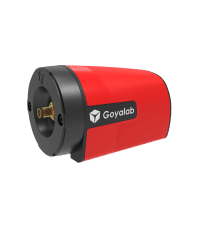
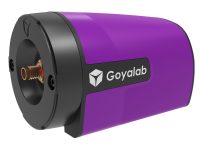
Axiom Optics supplies a comprehensive range of portable optical spectrometers which are compact and mobile devices that are designed for on-the-go qualitative and quantitative analysis. Our portable spectroscopy solutions include visible spectrometers, Near-Infrared spectrometers, Raman spectrometers, and fluorescence spectrometers that offer flexibility and convenience in applications such as environmental monitoring, food safety, pharmaceuticals, agriculture, and more.
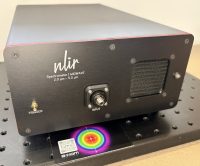
Our line of Mid-Infrared optical spectrometers are powerful and unique instruments that are based on wavelength upconversion, taking Mid-Infrared light and converting it into near-visible light, resulting in fast and sensitive measurements. Their ability to rapidly analyze samples makes them suitable for both laboratory and process monitoring applications.
Compare Optical Spectrometers
Axiom Optics offers spectrometers across two families: compact portable instruments for visible, near-infrared, Raman, and fluorescence measurement in the field or lab, and mid-infrared instruments built on wavelength upconversion, along with the detectors and sources that support them. The first choice is the wavelength range the measurement needs; the second is form factor and technique. Full specifications are on each product page.
Portable VIS, NIR, Raman and fluorescence spectrometers
| Model | Wavelength range | Resolution | Notable feature | Best suited for |
|---|---|---|---|---|
| IndiGo VIS | 380 to 780 nm | <1.5 nm FWHM | USB-C and Bluetooth, S/N 400 | General visible spectroscopy in the field or lab |
| IndiGo NIR | 720 to 1050 nm | <2 nm FWHM | USB-C and Bluetooth, S/N 1000 | Near-infrared measurement of materials and moisture |
| IndiGo VIS-NIR | 400 to 1000 nm | <2.0 nm FWHM | USB-C and Bluetooth, broad single-unit range | Combined visible and near-infrared coverage in one handheld |
| IndiGo Fluo | 380 to 780 nm | <1.5 to 7 nm | Built-in 405, 488, or 532 nm excitation laser | Portable fluorescence measurement and authentication |
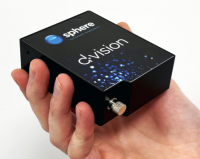
| d-Vision SWIR | 500 to 1700 nm | 0.7 to 3.1 nm | InGaAs CMOS, 16-bit, USB-C | Extending portable measurement into the SWIR |
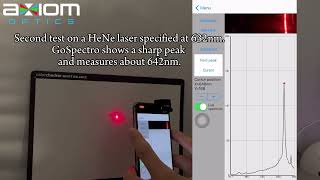
| GoSpectro | 400 to 750 nm | 10 nm | Smartphone-based, Android and iOS | Education and the most accessible entry to spectroscopy |
Mid-infrared and SWIR upconversion instruments and components
| Product | Wavelength range | Resolution or key spec | Role |
|---|---|---|---|
| MIDWAVE Spectrometer | 2 to 5 µm | 6 cm-1, 400 kHz readout, 5 pW/nm sensitivity | Fast, sensitive mid-IR spectroscopy via upconversion |
| Single-Wavelength Detectors | 2.2 to 5.0 µm center | Up to 10 GHz bandwidth, down to 1E-15 W detection | High-speed detection at a chosen mid-IR wavelength |
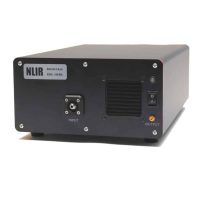
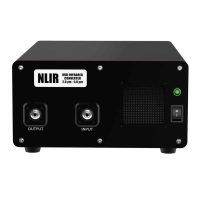
| Wavelength Conversion Module | Accepts 2.0 to 5.3 µm | Outputs 695 to 886 nm at 2.5 cm-1 | Upconverts mid-IR to near-visible for silicon detection |
| Thermal Infrared Light Sources | 1.2 to 8.0 µm | Better than +/- 0.5 percent stability, fiber-coupled | Broadband IR illumination for absorption measurement |
These two families live in dedicated subcategories: handheld visible, NIR and Raman spectrometers and mid-IR and SWIR spectrometers.
Optical Spectrometer FAQs
What wavelength range do I need?
It depends on the sample and the measurement. Visible spectrometers (about 380 to 780 nm) suit color, pigments, and many solutions; near-infrared (to about 1050 nm) suits materials, moisture, and organic content; the SWIR (to 1700 nm and beyond) reaches deeper material and chemical information; and the mid-infrared (2 to 5 microns) accesses fundamental molecular vibrations for the richest chemical fingerprints. Identifying where the diagnostic signal falls is the first step in choosing an instrument.
Which spectrometer should I choose?
Match the instrument to the range and technique. For general visible work choose the IndiGo VIS; for near-infrared the IndiGo NIR; for both in one unit the IndiGo VIS-NIR; for fluorescence the IndiGo Fluo with its built-in laser; for SWIR the d-Vision; for education or the lowest cost the smartphone-based GoSpectro; and for mid-infrared chemical analysis the upconversion-based MIDWAVE. Sharing the sample type, wavelengths of interest, and setting narrows the choice quickly.
What is the difference between absorption, Raman, and fluorescence spectroscopy?
Absorption spectroscopy measures which wavelengths a sample absorbs, revealing composition and concentration. Fluorescence measures light a sample re-emits after being excited by a laser or LED, offering high sensitivity for fluorescent or tagged samples. Raman measures the small wavelength shifts imparted by molecular vibrations, providing a molecular fingerprint useful for identifying materials. Each reports on different physics, so the right technique depends on what property of the sample matters.
What is a portable or handheld spectrometer used for?
Portable spectrometers bring measurement to the sample rather than the sample to the lab, which suits environmental monitoring, food safety, pharmaceuticals, agriculture, materials verification, and document authentication. They trade some resolution and sensitivity for mobility, low cost, and speed, and connect over USB-C and Bluetooth so they can be used with a laptop or mobile device in the field or on a production line.
How do mid-infrared upconversion spectrometers work?
Rather than detecting mid-infrared light directly, which normally requires cooled infrared detectors, these instruments use wavelength upconversion to shift mid-IR light into the near-visible range, where fast, sensitive, low-noise silicon detectors can measure it. This makes mid-infrared measurement rapid and highly sensitive, with picowatt-level sensitivity and high readout speeds, suiting both laboratory analysis and real-time process monitoring in the 2 to 5 micron band.
What spectral resolution do I need?
Resolution determines how close two spectral features can be and still be distinguished. Sharp, closely spaced peaks need fine resolution such as sub-2 nm in the visible or a few wavenumbers in the mid-infrared, while broad features and educational use are well served by coarser resolution like 10 nm. Because higher resolution can cost more and reduce light throughput, it is best matched to how narrow and closely spaced the features of interest actually are.
Can I use a spectrometer for process monitoring?
Yes. Several of these instruments are designed for it, particularly the mid-infrared systems whose high readout speed and sensitivity suit rapid, repeated in-line measurement, and the fiber-coupled detectors and light sources that integrate into a process setup. Portable instruments can also support at-line checks. Confirm that the wavelength range, speed, and connectivity match the throughput and integration needs of the specific process.
More on Spectroscopy:
Visit application pageBlogs
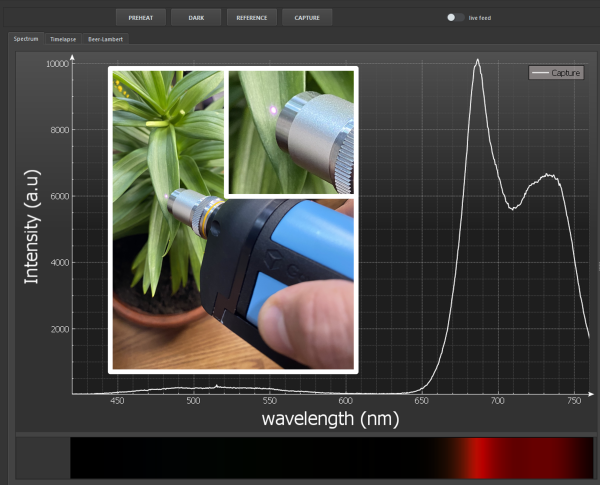
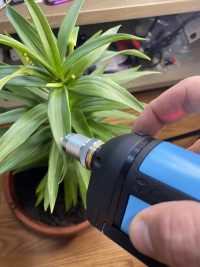
Portable Spectroscopy for Non-Destructive In-Vivo Measurements on Plants
Characterization of Optical Bandpass Filters Using a Portable Spectrometer
Axiom Optics Adds the Fastest and Most Sensitive Mid-Infrared Spectrometers and Detectors to its Portfolio
Criteria To Consider When Buying a Visible or NIR Spectrometer
Exploring the Role of CW Lasers in Spectroscopy: A Focus on Raman Lasers
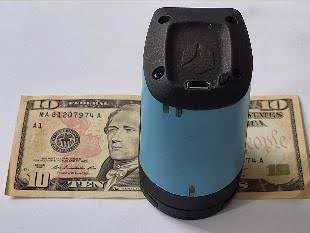
Fluorescence in Banknotes and Passports: Using Portable Fluorescence Spectrometers to Enhance Document Security
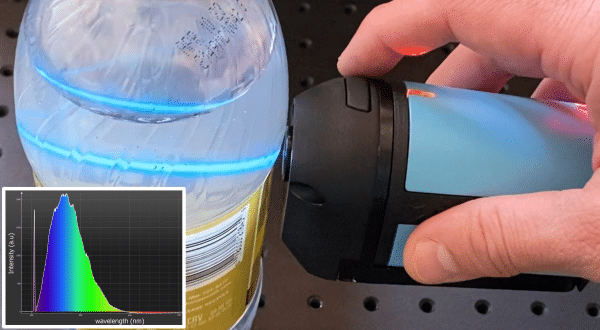
Top Three Characteristics of a Good Handheld Spectrometer
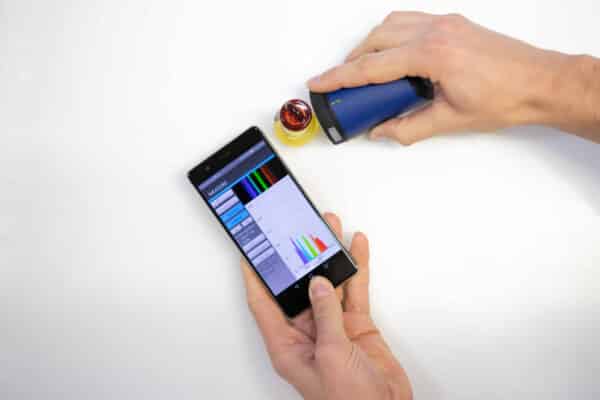
Introducing: Handheld Spectrometers!
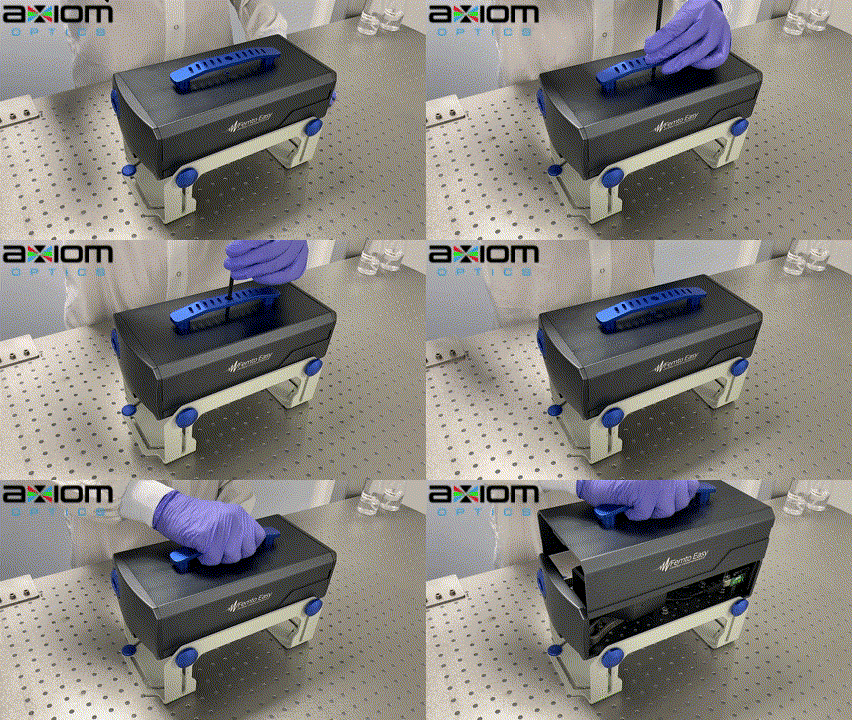
How to Easily Swap MISS Spectrometers in your Femto Easy FROG System
Watch our videos: