

ERIS-1.1 | Analog & Stable 2.4 MP phase LCOS SLM
Display Type
Analog
Resolution
1920 x 1200
Pixel Pitch
8.0 µm
Fill Factor
>95%
Active Area
15.42 x 9.66 mm (0.717" diagonal)
Signal Formats
HDMI
 Description
 Specifications
 Applications
 Downloads
 Publications
Precision Optical Control for Advanced Applications
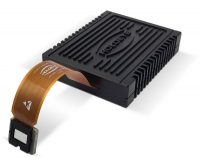
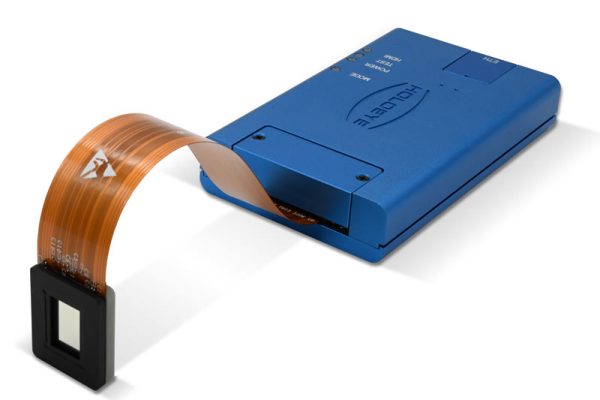
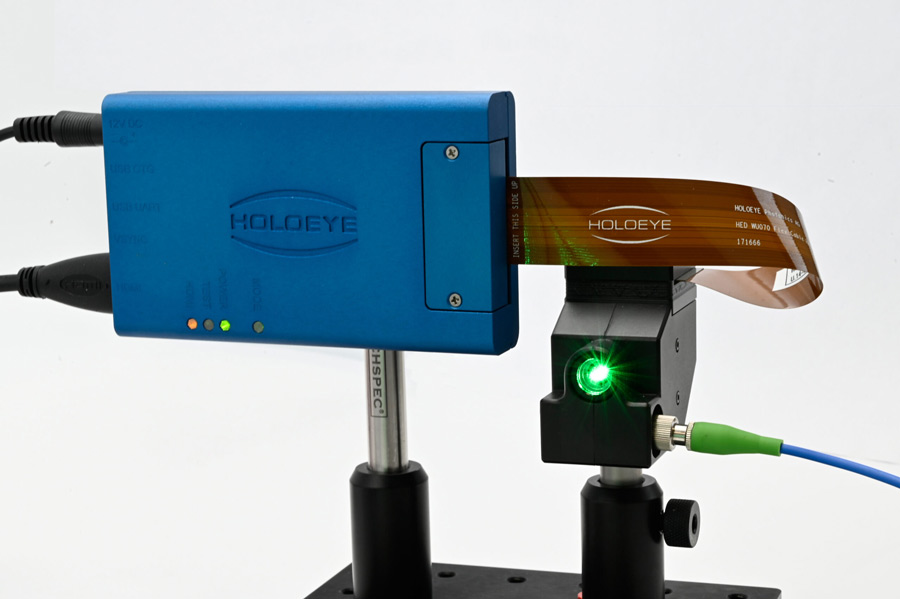
The ERIS-1.1 is a specialized Spatial Light Modulator (SLM) designed exclusively for phase modulation. Its core component is a 0.717-inch LCOS microdisplay, featuring a native resolution of 1920×1200 pixels and an 8µm pixel pitch. While it natively supports 8-bit phase levels, it can also be configured for 10-bit operation. This SLM functions as a plug-and-play phase modulator, allowing it to be driven by standard graphics cards as a secondary display. Users have multiple options for addressing it with phase functions, including the bundled Pattern Generator and SLM Slideshow Player software, or even common image viewing applications. HOLOEYE further supports developers with an SLM Display Software Development Kit (SDK), providing Application Programming Interfaces (APIs) for a range of programming environments. The ERIS-1.1’s driver relies on an HDMI interface for transmitting phase data and a USB connection for control and calibration. The USB link facilitates adjustments such as modifying the voltage-to-gray-level distribution (gamma control) and the overall voltage across the liquid crystal cell (dynamic range) to optimize the SLM for various wavelengths. Furthermore, the driver incorporates a trigger sync output, enabling seamless synchronization with external hardware.
Multiple versions available:
To cater to a wide spectrum of optical wavelengths and application requirements, the ERIS-1.1 Phase Only Spatial Light Modulator is available in several optimized versions:
- Visible Range Optimized: A version specifically tuned for applications operating within the visible light spectrum.
- Flexible Broadband Version: Covering a wide range from 420 nm to 1100 nm, offering exceptional versatility for multi-wavelength experiments and systems.
- 1550nm Optimized Version: Tailored for telecommunication and other applications specifically utilizing the 1550 nm wavelength.

ERIS-1.1 Software

Operating the ERIS-1.1 phase only modulator is incredibly straightforward; you can simply connect and control it just like an extra display using your computer’s standard graphics card via an HDMI interface. This means you won’t need any specialized software or dedicated hardware to get your SLM up and running right out of the box.
For more advanced customization, the LCOS SLM device comes equipped with a Graphical User Interface (GUI)-based Configuration Manager. This intuitive software lets you fine-tune various settings, including geometrical adjustments, brightness, contrast, and even the electro-optical response by precisely adjusting pixel voltages. These advanced calibrations are conveniently handled through a USB interface.
Beyond basic operation and configuration, HOLOEYE provides additional powerful software tools. You’ll receive the HOLOEYE SLM Pattern Generator software, which is perfect for:
- Calculating computer-generated holograms (CGH) from your own images.
- Creating SLM signals that represent fundamental optical functions like lenses, gratings, axicons, and vortex functions.
- Combining the functionalities of CGHs with basic optical functions through superposition.
The device also includes a specialized SLM Slideshow Player software. Moreover, a robust SLM Display SDK (Software Development Kit) is available for download. This SDK offers APIs (Application Programming Interfaces) across a range of popular programming languages, enabling you to directly display images and data/phase arrays on your HOLOEYE Spatial Light Modulator. Supported languages include:
- National Instruments LabVIEW™ (version 8.6 and newer)
- MathWorks MATLAB® (R2009b and newer)
- Octave (version 5.2)
- Python™ (versions 2.7 and 3.x)
- C or C++ compilers (e.g., Microsoft Visual C++ Compiler)
This comprehensive software suite ensures you have all the tools you need for both basic operation and sophisticated optical manipulation with your ERIS-1.1 SLM.
ERIS-1.1 SLM Kit Contents
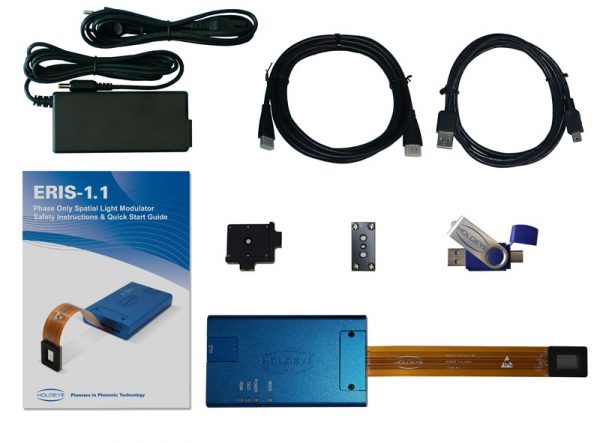
Your ERIS-1.1 SLM kit comes with:
- Phase only display incl. flex cable
- Driver unit
- Device mount
- Display mount
- Power supply + cable
- USB/mini usb cable
- HDMI cable
- Safety instructions & quick-start guide (test polarizer inside)
- USB flash drive with software package and documentation