Spatial Light Modulators
What are Spatial Light Modulators (SLMs)?
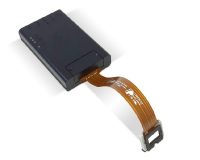
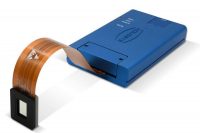
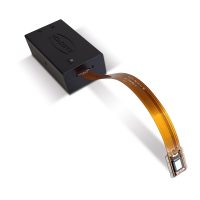
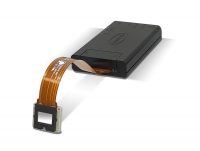
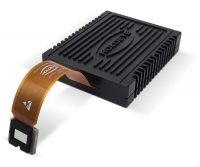
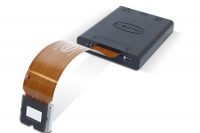
A Spatial Light Modulator (SLM) is a sophisticated optical device that provides dynamic, programmable control over the properties of a light beam in two dimensions. Imagine a high-tech “digital canvas” for light – instead of pixels displaying color, SLMs can precisely manipulate characteristics like:
- Amplitude (Intensity): Controlling the brightness or darkness of light at each point. This is like turning individual light bulbs up or down.
- Phase: Adjusting the “timing” or wavefront of light. This allows for complex beam shaping, focusing, and aberration correction, invisible to the naked eye but crucial for optical performance.
- Polarization: Modifying the orientation of light waves, which is vital in applications like advanced displays and optical communication.
Compare Spatial Light Modulators
The table below summarizes every spatial light modulator in the Axiom Optics lineup. All reflective models are LCOS microdisplays addressed over standard HDMI like an extended monitor. Full specifications, phase retardation curves, and datasheets are available on each product page.
| Model | Type | Resolution and pitch | Spectral versions | Best suited for |
|---|---|---|---|---|
| GAEA-2.1 | Phase only, reflective LCOS | 4160 x 2464 (4K), 3.74 µm | VIS, NIR, telecom | High resolution holography and large diffraction angles from the smallest pixel pitch |
| ERIS-1.1 | Phase only, reflective LCOS, analog addressed | 1920 x 1200, 8.0 µm | Broadband 420 to 1100 nm, telecom | Flicker free, phase stable modulation for adaptive optics and metrology |
| LETO-3 | Phase only, reflective LCOS | 1920 x 1080, 6.4 µm | VIS, broadband, NIR | High speed phase modulation with 93 percent fill factor |
| PLUTO-2.1 | Phase only, reflective LCOS | 1920 x 1080, 8.0 µm | 13 versions from 350 to 2500 nm | The versatile workhorse, including UV, SWIR, and dielectric mirror high power versions |
| LUNA | Phase only, reflective LCOS | 1920 x 1080, 4.5 µm | VIS, NIR, telecom | Compact, cost efficient full HD phase modulation |
| LC 2012 | Transmissive LC, amplitude and phase | 1024 x 768, 36 µm | VIS | In-line transmissive setups, education, and mixed amplitude and phase experiments |
| Amplitude SLM | Amplitude, reflective LCOS | 1920 x 1080, 8.0 µm | VIS, NIR | Intensity masking, projection, and maskless lithography patterns |
Not sure whether an SLM or a deformable mirror fits your correction task? See the deformable mirrors lineup for large stroke, achromatic, polarization independent correction, or the AO Kit SLM for a complete closed loop system pairing an SLM with a HASO wavefront sensor.
How to Choose a Spatial Light Modulator
The right SLM depends on what property of light needs to be modulated, the wavelength of the source, and how much diffraction angle, speed, and phase stability the application demands. These are the specifications that separate the models above.
Phase only vs. amplitude modulation
Phase only SLMs reshape the wavefront without absorbing light, which makes them the standard choice for holography, beam shaping, aberration correction, and optical tweezers where efficiency matters. Amplitude SLMs modulate intensity directly and suit projection, masking, and maskless lithography. The transmissive LC 2012 can operate in mixed amplitude and phase regimes, which is one reason it is popular in optics education and method development.
Resolution and pixel pitch
Resolution sets how complex a pattern the SLM can display, while pixel pitch sets the maximum diffraction angle: the smaller the pixels, the steeper the angle at which light can be steered. A 4K panel with 3.74 micron pixels like the GAEA-2.1 addresses both at once, displaying finer holograms and deflecting light to larger angles than an 8 micron device. For many beam shaping and adaptive optics tasks, full HD at 6.4 to 8 microns is entirely sufficient and more economical.
Spectral range and phase retardation
Each SLM version is built and coated for a specific wavelength band, and the achievable phase stroke shrinks as wavelength grows: a panel delivering several waves of retardation at 450 nm may provide just over 2 pi at 1064 nm. Confirm the version provides at least 2 pi retardation at the working wavelength. The PLUTO-2.1 family covers the widest span, with versions from 350 nm in the UV out to 2500 nm in the SWIR.
Phase stability and addressing scheme
Digitally addressed LCOS panels drive their pixels with pulse code modulation, which superimposes a small temporal phase flicker on the modulated beam. Most applications tolerate it, but interferometry, metrology, and precision adaptive optics often do not. The ERIS-1.1 exists for exactly this case: its analog addressing produces a virtually flicker free, phase stable response.
Fill factor and diffraction efficiency
Fill factor is the fraction of the panel area that actively modulates light; the gaps between pixels scatter light into unwanted orders. Panels like the LETO-3 and PLUTO-2.1 reach 93 percent fill factor, which translates directly into higher diffraction efficiency and cleaner reconstructions.
Polarization requirements
Liquid crystal SLMs modulate only linearly polarized light aligned to the panel’s working axis, so plan for a polarizer and half wave plate in the beam path if the source polarization is uncontrolled. This is a fundamental difference from deformable mirrors, which are polarization independent and achromatic.
Power handling
Standard LCOS panels absorb a portion of incident light and are limited to moderate power densities. For higher power beams, dielectric mirror coated versions raise reflectivity above 90 percent, reducing absorption and heat load, and thermal management accessories extend the usable range further. Pulsed sources are generally compatible as long as peak fluence stays below the damage threshold of the panel; check the specific version’s rating before committing a high energy beam.
Integration and software
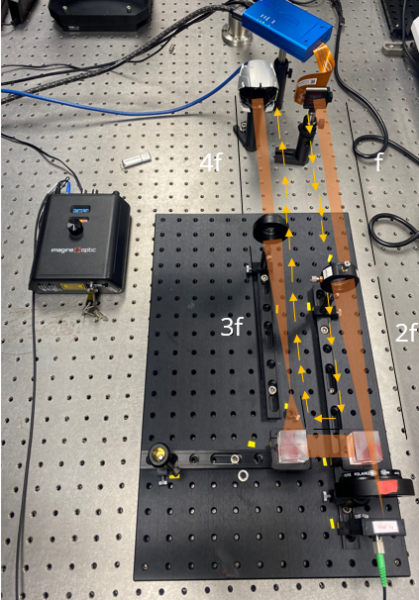
All reflective models here connect over HDMI and behave as an extended monitor, so patterns can be addressed from any graphics card with supplied pattern generator software or an SDK for custom control. For wavefront correction, the AO Kit SLM combines an SLM with a HASO wavefront sensor and closed loop software as a turnkey adaptive optics system, described further in the adaptive optics application note.
Unlike fixed optical components like lenses or mirrors, SLMs are electrically or optically addressed, meaning their light-modulating patterns can be changed rapidly and reconfigured in real-time. This dynamic capability is what makes them so powerful and versatile.
The most common types of SLMs are based on liquid crystal (LC) technology, similar to the displays in your phone or TV. In these devices, an electric field manipulates the orientation of liquid crystal molecules, which in turn alters the light passing through or reflecting off them. Liquid Crystal on Silicon (LCoS) SLMs are a prevalent reflective type, offering high resolution and precise control. Another type is the Digital Micromirror Device (DMD), which uses an array of tiny, independently tilting mirrors to modulate light intensity.
What are Spatial Light Modulators Used For?
The ability to precisely control light across a two-dimensional plane unlocks a vast array of cutting-edge applications, driving innovation across science, industry, and technology:
- 3D Displays & Holography: Creating truly immersive 3D images that can be viewed without special glasses, or generating dynamic holograms for artistic installations, data visualization, and advanced microscopy.
- Beam Shaping & Steering: Precisely sculpting laser beams for highly specialized tasks. This includes:
- Laser Material Processing: Fine-tuning laser profiles for precision cutting, welding, and additive manufacturing.
- Optical Tweezers: Manipulating microscopic particles, cells, or even atoms with light, crucial for biological research and nanotechnology.
- Optogenetics: Directing light to specific neurons for neuroscience research.
- Adaptive Optics: Compensating for distortions in optical systems, such as atmospheric turbulence in telescopes (enabling clearer astronomical images) or aberrations in microscopy (improving resolution in biological samples).
- Optical Communication: Encoding and decoding information onto light waves for high-bandwidth data transmission.
- Quantum Computing & Photonics: Playing a crucial role in manipulating quantum states of light, essential for developing next-generation quantum technologies.
- Maskless Lithography: Creating intricate patterns directly onto materials without the need for physical masks, accelerating semiconductor manufacturing and microfabrication.
- Medical Imaging & Diagnostics: Enhancing image quality in various medical procedures and enabling new diagnostic techniques.
Spatial Light Modulator FAQs
When should I use a spatial light modulator instead of a deformable mirror?
Choose an SLM when the application needs high spatial resolution: complex holograms, multi-spot patterns for optical tweezers, steep beam steering, or correction of high order aberrations. Choose a deformable mirror when the priority is large stroke, speed, broadband or multi-wavelength operation, polarization independence, or high laser power. Many adaptive optics systems in microscopy work well with either, and the tradeoff usually comes down to resolution versus optical efficiency and simplicity.
Do spatial light modulators require polarized light?
Liquid crystal SLMs modulate only linearly polarized light aligned with the panel’s specified axis. Unpolarized or misaligned input reduces modulation depth and creates an unmodulated background. A linear polarizer and a half wave plate ahead of the SLM are standard practice when the source polarization is not already controlled.
What is phase flicker and when does it matter?
Digitally addressed LCOS panels refresh their pixels with pulse code modulation, which causes a small periodic ripple in the modulated phase. It is negligible for most beam shaping and display work, but interferometry, quantitative metrology, and demanding adaptive optics benefit from an analog addressed, phase stable device such as the ERIS-1.1.
What pixel pitch do I need?
Pixel pitch sets the maximum diffraction angle: light can be steered to steeper angles as pixels get smaller. An 8 micron pitch panel covers most beam shaping and adaptive optics tasks, while holographic projection, dense multi-spot generation, and applications needing wide angular coverage benefit from the 3.74 micron pitch of a 4K panel like the GAEA-2.1.
Can spatial light modulators handle high power lasers?
Standard panels are limited to moderate power densities because the liquid crystal stack absorbs part of the incident light. Dielectric mirror coated versions raise reflectivity above 90 percent and tolerate substantially higher average power, and thermal management accessories extend this further. For very high energy pulsed beams, a mechanical deformable mirror such as the ILAO Star is usually the better correction element.
How is an SLM controlled?
Reflective LCOS models connect over standard HDMI and appear to the computer as an extended monitor, so any pattern displayed on that monitor becomes a phase function on the panel. Supplied pattern generator software covers common functions such as gratings, lenses, and Zernike terms, and an SDK enables custom control from user code, including closed loop adaptive optics with a wavefront sensor.