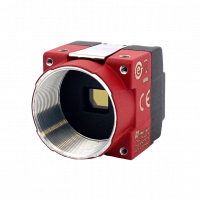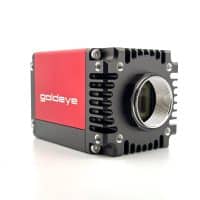
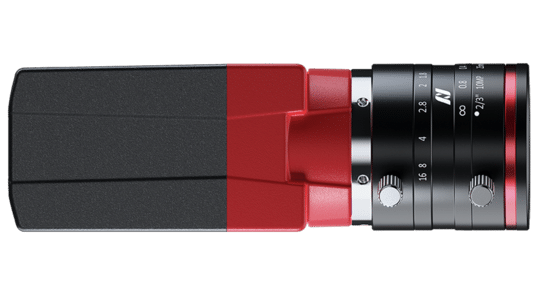
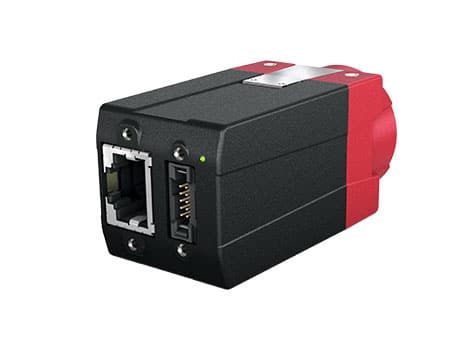
Alvium 1800 G5-130 VSWIR | Low SWaP 5 GigE camera w/ IMX990 Sony SenSWIR sensor
Sensor Type
Sony IMX990 SenSWIR InGaAs
Sensitivity
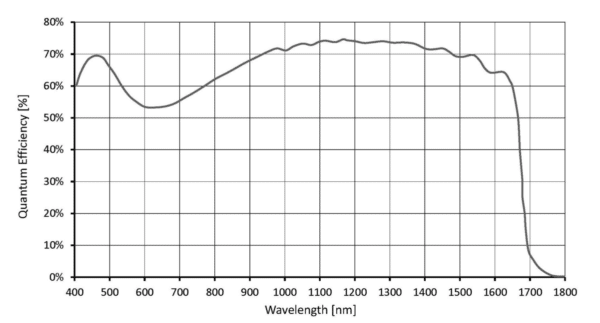
VSWIR 400 - 1700 nm
Resolution - Pixel pitch
1296 x 1032 (1.3 MP) - 5µm
Sensor Mode - Max Frame rate
Global Shutter- 130 Hz (1.3 MP)
Modular design
Closed housing - Open housing
Interface
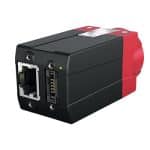
5 GigE (1 GigE compatible)
Operating systems & APIs
Windows, Linux, Linux for ARM - APIs for C,C++,.NET & Python
Digital interface
5GBASE-T, 1000BASE-T
European Availability
Available at Axiom Optics Europe
Low SWaP 5 GigE camera w/ IMX990 Sony SenSWIR sensor
The Allied Vision Alvium G5-130 VSWIR 5GigE camera, powered by the ALVIUM® Technology Allied Vision’s ASIC chip, features the Sony SenSWIR IMX990 1/2″ 1.3 megapixel sensor with a 130 frame rate at full resolution.
Alvium G5 – The easy upgrade for more performance
The Alvium G5 camera series offers all the advantages of the GigE Vision standard while providing more bandwidth for applications, where resolution and frame rate are critical. The Alvium G5 camera series enables an easy upgrade of existing systems (USB3 Vision or GigE Vision) and offers backwards compatibility with GigE solutions.
The 5GigE interface provides higher bandwidth without sacrificing image quality, and is backward compatible with existing GigE applications. Offering high image quality and reducing the workload for the host, Alvium enables innovation among vision system designers. The advanced ALVIUM System on Chip (SoC) performs image corrections and preprocessing tasks onboard the camera instead of on the host computer.
| Sensor Specs | |
|---|---|
| Alvium 1800 G5-130 | |
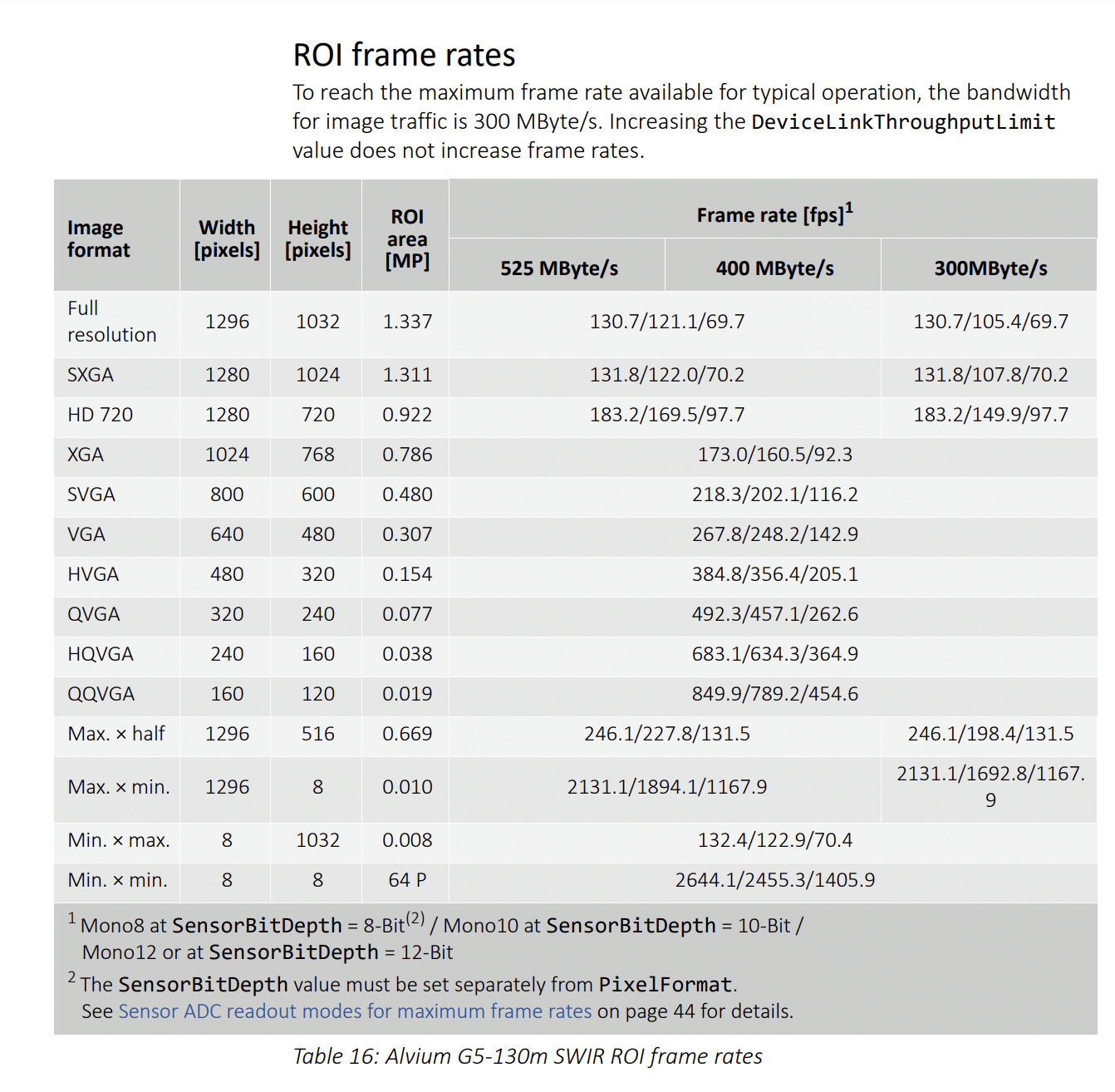
| Resolution (px) | 1296 x 1032 |
| Pixel size | 5 µm x 5 µm |
| Sensor dimensions - Diagonal - Format | 6.4 x 5.12 mm - 8.2 mm - 1/2" |
| Max frame rate full frame (8-bit / 10-bit / 12-bit) | 130 / 122 / 70 |
| Min exposure time | 22 µs |
| Analog gain | 0dB to 42dB, 0.1 dB increments |
| Full Well Capacity | 165ke- (gain0), 17.2ke- (gain1) |
| Dynamic range | 56.4 dB (no gain), 38.2 (high gain) |
| A/D Converter - Pixel Format | 12-bit - Mono8, Mono10, Mono10p, Mon |
| Lens interface | C-Mount, CS-Mount, or S-Mount |
| Cooling | TEC-less |
| Mechanical, Electrical & Operational Specs | |
|---|---|
| Alvium 1800 G5-130 | |
| Dimensions (mm3) | 60 × 29 × 29 |
| Weight | 100 g |
| Power consumption | 4.9 W at 12 VDC, 5.8 W with PoE |
Alvium 1800 G5-130 VSWIR Applications
Visit our SWIR application page now!
- Semiconductor industry: Solar cell and chip inspection
- Recycling industry: Plastic sorting
- Medical imaging, sciences: Hyper- and multi-spectral imaging
- Glass industry: Defect detection through hot glass
- Agriculture industry: Airborne remote sensing
- Printing industry: Seeing hidden features
- Surveillance: Vision enhancement (for example, seeing through fog or haze)
- Security: Counterfeit detection (such as for money, faked hair, or skin)
Axiom Optics Blogs
Alvium 1800 G5-130 VSWIR Software
VIMBA SDK
Vimba is a comprehensive software suite:
- Acquire images and explore camera features without programming.
- Program your vision applications with C, C++, .NET or Python APIs.
- Connect to third-party libraries and frameworks.
Platform independent
Vimba 6.0 was tested with:
- Vimba for Windows 64-bit:
- Windows 10 (GigE, USB, 1394, and Camera Link cameras)
- Windows 11 (GigE, USB, and 1394 cameras)
- Vimba for Windows 32-bit:
- Windows 10 (GigE, USB, 1394, and Camera Link cameras)
- Vimba for Linux: Ubuntu 20.04 LTS (64-bit), Debian 11.2 (64-bit)
- Vimba for ARM64: NVIDIA Xavier NX with
- JetPack 4.6 (L4T 32.6.1) – GigE and USB cameras
To operate Alvium CSI-2 cameras on your vision system, Allied Vision provides different access modes:
- GenICam for CSI-2 Access controls the camera by GenICam features, using the Alvium CSI-2 driver and CSI-2 transport layer (TL) directly.
- Direct Register Access (DRA) to control the cameras via registers for advanced users.
- Video4Linux2 Access allows to control the cameras via established V4L2 API and applications like GStreamer and OpenCV.
Supported embedded boards:
- Adapter Board for Boundary Devices Nitrogen6_MAX
- Adapter Board for Wandboard i.MX6 Series
- Adapter Board for Toradex Ixora Carrier Board
- Adapter Board for NVIDIA Jetson Nano and Jetson Xavier NX Developer Kit
-
Adapter Board for NVIDIA Jetson TX2 and AGX Xavier
From quick prototyping to sophisticated development
Vimba provides four APIs with extensive documentation and code examples:
The Python API is perfect for a quick and easy start or for prototyping.
The C API is Vimba’s basic and easy-to-use API. It can also be used as API for C++ applications.
The C++ API has an elaborate class architecture. It is designed as a highly efficient and sophisticated API for advanced object-oriented programming including the STL (standard template library), shared pointers, and interface classes. If you prefer an API with less design patterns, we recommend the Vimba C API.
The .NET API supports all .NET languages, for example, C#, C++/CLI, or Visual Basic .NET. Its general concept is similar to the C++ API.
All APIs cover the following functions:
- Listing currently connected cameras
- Controlling camera features
- Receiving images from the camera
- Notifications about camera connections or disconnections
The Image Transform Library converts camera images into other pixel formats and creates color images from raw images (debayering). While this is separated for the C and C++ API, the .NET API includes these functions. Therefore, a .NET application does not have to access the Image Transform Library. The APIs use GenICam transport layer (GenTL) libraries to communicate with the cameras.
Third-party libraries compatibility
Vimba’s transport layers automatically connect to third-party software, for example, LabVIEW, MATLAB, OpenCV, Halcon, CVB, and many more.