
Particle Image Velocimetry (PIV) Systems
Light Source
0.5W - 400W Laser Diode Pulsing System
Pulse width
Min: 2µs
Imaging Rate
Options up to 2000 fps (double frame), higher at reduced resolution
Imaging min. interpulse
Options as low as 10 µs
Software
PIVlab
Max. velocity
Up to 40m/s in water or air
PIV Measurement Systems by OPTOLUTION: The Simplest To Use Instrument Suite for 2D/2C Velocity Measurements in Water or Air
OPTOLUTION PIV systems are designed to be simple, easy to use, robust, and affordable. One of the key features of the OPTOLUTION systems is the use of laser diode pulsing technology that significantly reduces cost without sacrificing performance. The OPTOLUTION PIV systems can be used for 2D/2C measurements in water or air up to 30m/s and interrogation areas of up to 400 x 400 mm at up to 2000 fps.
PIV System Key Components
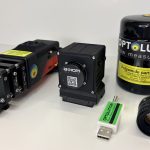
- Illumination: A unique light source based on a Laser Diode Pulsing System (LD-PS) designed by OPTOLUTION that generates bright and very thin light sheets with user-selectable pulse spacing and pulse length. We offer peak power outputs of 500mW, 5W, 20W, 40W, and 400W.
- Synchronizer: A simple synchronizer that controls the timing of laser pulses and our cameras. It can be directly controlled from PIVlab, offering very comfortable and uncomplicated PIV recordings. Operates with internal timing, or externally triggered.
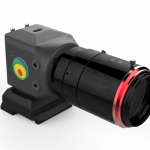
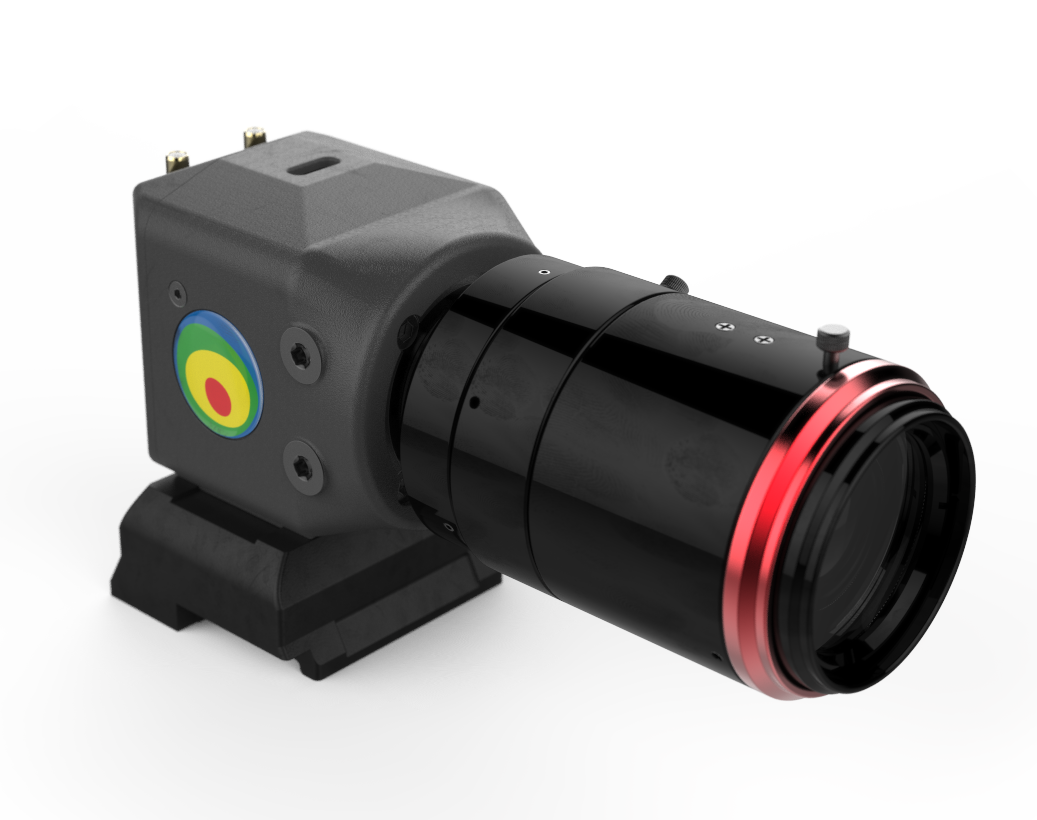
- Camera: Directly integrated into PIVlab and compatible with our synchronizers, we offer a variety of cameras with some options exceeding 2000 fps (double image rate) with 20 minimum interpulse time.
- PIV data acquisition and analysis: The widely known PIVlab software developed by William Thielicke, an easy-to-use application for Particle Image Velocimetry, with the unique advantage of ALSO controlling directly our pulsed laser diodes, synchronizers, and cameras. All from the same place, resulting in the most simple to use PIV measurement suite.
- Seeding: A seeding generator with the ability of adjusting the particle concentration and quantity. Switched on and off via a switch, or remotely from PIVlab.
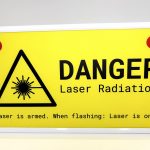
- Laser warning sign: Safety first! An Illuminated LED laser warning sign, remotely controlled, automatically, from PIVlab.

Light Source Options
The laser diode pulsing systems (LD-PS) designed in-house by OPTOLUTION are a lower cost and powerful illumination alternative to perform velocity measurements using Particle Image Velocimetry (PIV) techniques. These pulsed light sources generate bright and very thin light sheets with easily adjustable pulse spacing and pulse length. The light systems are very compact and extremely easy to use. The high brightness is achieved by toggling (arrays of) high-power laser diodes using a special laser driver circuit. We offer optical peak power outputs of 500 mW, 5 W, 20 W, 40 W and 400W to accommodate different measurement conditions. The systems can be used for measurements in air or water.
Synchronizer
The OPTOLUTION Synchronizer controls the timing of laser pulses and our cameras. This synchronizer can be controlled directly from PIVlab (here, presets are available for the supported cameras) and thus enables very comfortable and uncomplicated PIV recordings. The synchronizer has five outputs and one input (TTL), minimal pulse lengths and pulse separations of 1 µs are possible.
The synchronizer can react to external events. Currently, four modes are implemented:
- Mode 0: Internal. Uses the configured camera and pulse timings, and starts recording when ‘Start’ button is clicked, stops when ”image amount” is reached.
- Mode 1: External – Double shot on rising edge. Uses the configured camera and pulse timings, arms when ‘Start’ button is clicked, records one double image each time trigger goes high, stops when ‘image amount’ is reached.
- Mode 2: External – Shoot while high. Uses the configured camera and pulse timings, arms when ‘Start’ button is clicked, records while the trigger input is high (and pauses when it is low), stops when ‘image amount’ is reached.
- Mode 3: External – Start on rising edge. Uses the configured camera and pulse timings, arms when ‘Start’ button is clicked, starts record when the trigger input goes high, stops when ‘image amount’ is reached.
Cameras
There are a variety of cameras that are directly integrated into PIVlab and compatible with our synchronizers. The control of a PIV experiment is thus maximally simplified and extremely convenient. You can see all camera options under the Specifications Tab. The choice depends on factors such as the required interframe time, frame rate, light sensitivity, and resolution.
The synchronizer is used to synchronize the camera exposure with the laser pulses. This allows to use frame straddling. By enabling frame straddling, this approach significantly shortens the interframe time, thus lessening particle displacement. This is achieved by emitting the first laser pulse at the very end of the first image exposure, and the second pulse at the very beginning of the second image exposure.
How do you select the right frame rate for PIV applications? The video below compares two cameras with different frame rates in the same Particle Image Velocimetry (PIV) experiment. The lower-frame-rate camera (middle) captures only intermittent snapshots of the moving particles, while the high-speed camera (right) records a much denser sequence of images, revealing the continuous dynamics of the flow and enabling accurate tracking of rapidly changing velocity structures. When temporally resolved PIV is required, choosing a camera with higher frame rates will allow capturing rapid flow changes, transient events, and turbulent structures, providing a true representation of flow dynamics that slower cameras cannot achieve. Our interactive PIV system recommendation tool, located at the bottom of this page, can help you select the right setup.
Software: PIVLab
PIVlab is a free and open-source PIV software and is currently the most frequently cited PIV tool on the market. PIVlab is developed and maintained by William Thielicke, and is available as stand-alone app or Matlab toolbox. It can be used to calculate the velocity distribution within imported (or captured) images. It also controls OPTOLUTION’s lasers, cameras and synchronizers, and derives, displays and exports multiple parameters of the flow pattern. The simple graphical user interface makes PIV data acquisition and data post-processing fast and efficient.
**************************************
1
2
3
4
5
6
7
8
9
10
11
12
13
14
15
16
17
18
19
20
21
22
23
24
25
26
27
28
29
30
31
32
33
34
35
36
37
38
39
40
41
42
43
44
45
46
47
48
49
50
51
52
53
54
55
56
57
58
59
60
61
62
63
64
65
66
67
68
69
70
71
72
| Camera Technical Specifications | |||||||||
|---|---|---|---|---|---|---|---|---|---|
| Camera | Optolution OPTOcam 2/80 | Optolution OPTOcam 20/9 | pco.panda 26 DS | OPTRONIS Cyclone-2-2000-M | OPTRONIS Cyclone-25-150-M | OPTRONIS Cyclone-1HS-3500-M | Basler acA2000-165um | Krontech Chronos 1.4 | FLIR Firefly S FFY-U3-16S2M-C |
| Resolution (pixels) | 1936*1216 | 4504*4504 | 5120*5120 | 1920*1080 | 5120*5120 | 1280*860 | 2048*1088 | 1280*1024 | 1440*1080 |
| Bit depth (bits) | 8,12 | 8, 12 | 12 | 8 | 8 | 8 | 8 | 8 | 8 |
| Max. fps (double images per second) | 80 (200 @ 1600*480) | 9 (21 @ 2200*2200) | 1 (45 @ 360*256) | 1075 (4750 @ 1920*240) | 72.5 (345 @ 5120*1080) | 1750 (4650 @ 1280*320) | 80 | 500 | 600 |
| Min. interpulse (µs) | 62 | 20 | 10 | 20 | 40 | 20 | 150 | 20 | 600 |
| PIVlab integration (user friendliness) | ++++ | ++++ | +++ | +++ | +++ | +++ | ++ | + | ++ |
| Interface | USB3 | USB3 | USB3 | PCIe 3.0 (Gen 3) x8 (frame grabber included) | PCIe 3.0 (Gen 3) x8 (frame grabber included) | PCIe 3.0 (Gen 3) x8 (frame grabber included) | USB3 | Ethernet | USB3 |
| Sensor diagonal (mm) | 7.9 | 17.5 | 18.1 | 22.03 | 18.1 | 21.12 | 12.8 | 10.8 | 6.21 |
| Pixel size (µm) | 3.45 | 2.74 | 2.5 | 10 | 2.5 | 13.7 | 5.5 | 6.6 | 3.45 |
1
2
3
4
5
6
7
8
9
10
11
12
13
14
15
16
17
18
19
20
21
22
23
24
25
26
27
28
29
30
31
32
33
34
35
36
37
38
39
40
41
42
43
44
45
46
47
48
49
50
51
52
53
54
55
56
| Light Source Technical Specifications | |||||
|---|---|---|---|---|---|
| Laser diode model | LD-PS/0.5 | LD-PS/5 | LD-PS/20 | LD-PS/40 | LD-PS/400 |
| Sheet Optics | Included | Included | Included | Included | Included |
| Attachable to OPTOLUTION synchronizer | Yes | Yes | Yes | Yes | Yes |
| Laser sheet thickness (mm) | < 0.7mm | < 0.7mm | < 1mm | < 1mm | 2-5mm |
| Power | 500 mW | 5 W | 20 W | 40 W | 400 W |
| Wavelength | 638 ± 10 nm (red) | 450 ± 20 nm (blue) | 450 ± 20 nm (blue) | 450 ± 20 nm (blue) | 455 ± 10 nm (blue) |
| Duty cycle | 0 - 50% | 0 - 50% | 0 - 50% | 0 - 50% | 0 - 10% |
| Max. laser modulation frequency | 500 kHz | 500 kHz | 500 kHz | 500 kHz | 500 kHz |
| Pulse length | 2 μs – 10 ms | 2 μs – 10 ms | 2 μs – 10 ms | 2 μs – 10 ms | 1 μs – 1 ms |
| Rise and fall time (90%) | 100 ns | 100 ns | 100 ns | 100 ns | 50 ns |
| Typical diode lifetime | 20,000 hours | 20,000 hours | 20,000 hours | 20,000 hours | 20,000 hours |
| Power supply | 100 - 240 V AC, 40W | 100 - 240 V AC | 100 - 240 V AC power supply, 180 W | 100 - 240 V AC power supply, 180 W | 100 - 240 V AC power supply, output 24 VDC, 360 W |
| Dimensions | 130x40x40 mm, 160 g | 130x40x40 mm, 160 g | 235x85x82 mm including light sheet optics, 1.3 kg | 235x85x82 mm including light sheet optics, 1.3 kg | 413x210x106 mm including light sheet optics, 4.6 kg |
| Full sheet opening angle | ca. 15° | ca. 15° | ca. 15° | ca. 15° | ca. 30° |
This video shows how to get going with the OPTOLUTION PIV system, showing the complete integration of the entire experimental setup and data analysis with PIVlab.
Vortex shedding – Particle Image Velocimetry Analysis in a water tunnel, vortex behind a cylinder.
Software: PIVlab
PIVlab is an easy-to-use application that calculates velocities in image data (movies, pictures). It uses a method called ‘Particle Image Velocimetry’. This method is typically used to calculate velocities in fluids, but there are also many other possibilities.
PIVlab is available as stand-alone app, or as toolbox for Matlab: https://www.PIVlab.de
PIVlab is developed by OPTOLUTION employee William Thielicke, and OPTOLUTION supports the software development of PIVlab. OPTOLUTION’s PIV systems maximize the potential of PIVlab by enabling full control of compatible PIV hardware, which has resulted in the development of the most simple to use PIV measurement suite. Our pulsed laser diodes, synchronizers, several cameras and the seeding generator can all be remote controlled directly from PIVlab.
PIVlab Tutorials:
FLOWlab: Affordable PIV System for Education
For those seeking to get immersed into the PIV world, particularly in education enviroments, OPTOLUTION offers FLOWlab, a small circulating water tunnel for educational Particle Image Velocimetry (PIV). It is bundled with a 500 mW (Laser class 2M) pulsed laser with synchronizer and sheet optics, and the OPTOcam 2/80 (160 fps, 2 megapixels, USB 3.0) with a suitable band pass filter. These components offer unparalleled PIV performance in a cost-effective eduPIV package. Inside the water tunnel, a powerful thruster generates a velocity up to 0.4 m/s. Several flow straighteners rectify the flow in the test section measuring 140 x 125 x 200 mm. Three example flow bodies are supplied that can be examined by the students. OPTOLUTION also provides scripts for practical courses that involve the analysis of the vortex shedding frequency of cylinders, the circulation (lift) of flat and cambered wings, and more common tasks dealing with PIV in general.
References
Optolution PIV systems (lasers, synchronizers, cameras, etc.) are used by renowned institutes, universities and companies worldwide, e.g:
- Massachusetts Institute of Technology (MIT), Mechanical Engineering Department, Cambridge, USA
- French National Centre for Scientific Research (CNRS), Laboratoire de Physique Subatomique et de Cosmologie, Grenoble, France
- Max Planck Institute for Marine Microbiology (MPIMM), Bremen, Germany
- University of Washington (UW), Dept. Of Mechanical Engineering, Seattle, USA
- Texas A&M University (TAMU), Zachry Department of Civil and Environmental Engineering, College Station, USA
- University of Manchester, Department of Chemical Engineering (UoM), Manchester, United Kingdom
- Tel Aviv University (TAU), School of Zoology, Ramat Aviv, Israel
- University of Copenhagen (KU), Department of Biology, Helsingør, Denmark
- Aarhus University (AU), Department of Biology, Aarhus, Denmark
- Polish Academy of Sciences (PAN), Institute of Physical Chemistry, Warsaw, Poland
- Physikalisch-Technische Bundesanstalt (PTB), Chemical Physics and Explosion Protection, Braunschweig, Germany
- Université de Bretagne Occidentale (UBO), IRDL laboratory, Brest, France
- University of Antwerp (UAntwerpen), Institute of Environment & Sustainable Development, Antwerp, Belgium
- University of Ljubljana (UL), Faculty of Mechanical Engineering, Ljubljana, Slovenia
- University of Southern Denmark (SDU), Department of Biology, Odense, Denmark
- University of Parma (UNIPR), Department of Engineering and Architecture, Parma, Italy
- VDL Enabling Technologies Group (VDL ETG), Eindhoven, Netherlands
- Bremen University of Applied Sciences (HSB), Bionics Innovation Center, Bremen, Germany
- Bundesanstalt für Wasserbau (BAW), Karlsruhe, Germany
Feedback From Customers
“The micro-PIV solution from OPTOLUTION is excellent. It is by far the most user-friendly PIV system (camera, synchronizer, and laser) I’ve worked with— it works right out of the box, essentially plug-and-play. It is exceptionally well integrated with PIVlab (as expected), and the performance is reliable and consistent. Moreover, the use of standard adaptors and interlocking cables makes the PIV system (which also has a small footprint) more accessible to integrate to a microscope, and Dr William Thielicke is extremely efficient at finding suitable solutions.”
“The hardware-software integration is very impressive, allowing the user to obtain high-quality PIV data within just a few steps. The instructional videos are also very useful. Overall, the Educational PIV system is an excellent tool for both teaching and research.”
“We’ve been using your system quite heavily for the last 4 months or so and it works great. The hardware and software are both well designed and easy to use.”
“The laser has been performing exceptionally well in our experimental setup. Its power and speed are perfectly suited for our measurements, and its size and weight make installation straightforward. The original integration with PIVlab is user-friendly, and the open accessibility of the laser has allowed us to integrate its control into a Python script along with other devices.”
“We work with students and the implementation is very easy with tutorials found on YouTube.”
“We are already using the system in our student courses and appreciate its compact design, Â quick installation and ease of handling. The support is also excellent.”
“Small and mobile which makes it very versatile, easy to use and to train other people, good tutorials.”
Sources and contact information are available upon request!


