
DPSS Lasers

Ultra-stable single frequency lasers

Single frequency CW diode-pumped solid-state or DPSS lasers by Skylark offer unparalleled performance and power. These bespoke lasers focus on offering high output power in a single frequency, engineered with proprietary technology for sustained long-term operation.

Features of Skylark Single-Frequency Continuous Wave Lasers:

  • Available wavelengths: Comprehensive range across UV, Visible, and NIR (e.g., 320 nm, 349 nm, 532 nm, 640 nm, 780 nm, 785 nm)
  • Ultra-narrow linewidth: Spectral bandwidth typically kHz for high spectral purity
  • Ultra-stable performance: Output power stability and spectral stability pm (over 8 hours)
  • Optical power: Up to 1.5 W (wavelength dependent)
  • Compact design: Integrated monolithic platform built for easy system integration
  • Optional fiber coupling for flexible beam delivery
  • Digital control: Plug-in USB connectivity with versatile control software

Features & Benefits

  • Maximum power
  • Spectral purity
  • Spectral stability
  • Power Stability
  • Compact Form factor
  • Low power consumption

Applications

  • Inspection: High power ultraviolet light to enable uniform, high-resolution imaging with low noise. Ultra-narrow linewidth ensures accurate detection of fine details for improved quality control in production environments:
      • Wide band-gap semiconductors
      • Wafer Inspection
      • Photoluminescence
      • Flow Cytometry
  • Analytics: Ultra-stable output and ultra-narrow linewidth, single frequency DPSS lasers enable precise data collection and measurement for advanced research and industrial applications:
      • Brillouin Microscopy
      • Raman Spectroscopy
      • Quantum Sensing
  • Manufacturing: High-power, single frequency DPSS lasers with superior spectral purity deliver precision and consistency, enabling detailed patterning over large areas without compromising quality:
      • Laser interference lithography
      • Optical grating manufacturing
  • Custom Solutions: From optomechanical design to software development, the team at Skylark Lasers pushes the capabilities of laser technology to engineer ultra-stable, spectrally pure single frequency DPSS lasers. If you don’t see what you are looking for, consider a collaboration with Skylark to develop lasers tailored to your application.

Compare the Skylark Single-Frequency DPSS Lasers

Axiom Optics offers five Skylark single-frequency continuous-wave DPSS lasers spanning the ultraviolet, visible, and near-infrared. All five run in a single longitudinal mode with an ultra-narrow linewidth and near-diffraction-limited beam quality, so the primary choice is the wavelength the application needs, followed by linewidth and output power. The table below summarizes the differences; full specifications are on each product page.

Model Wavelength Linewidth Output power Best suited for
Skylark 320 320 nm (UV) ≤ 500 kHz Up to 200 mW UV inspection, photoluminescence, wide-bandgap semiconductors
Skylark 349 349 nm (UV) ≤ 500 kHz Up to 400 mW Higher-power UV inspection and wafer inspection
Skylark 640 640 nm (visible, red) ≤ 500 kHz See product page Visible analytics, Brillouin microscopy, quantum sensing
Skylark 780 780 nm (NIR) ≤ 300 kHz Up to 400 mW NIR quantum sensing, Brillouin microscopy
Skylark 785 785 nm (NIR) ≤ 300 kHz Up to 400 mW 785 nm Raman spectroscopy, quantum sensing

All five are single-longitudinal-mode (SLM) continuous-wave sources built on a compact monolithic platform, with optional fiber coupling and USB digital control. Output power is wavelength dependent, reaching up to 1.5 W on select wavelengths. For other laser sources, see the full laser sources range, including CW laser modules and supercontinuum white-light lasers.

Single-Frequency DPSS Laser FAQs

What is a single-frequency DPSS laser?

A DPSS laser is a diode-pumped solid-state laser, and a single-frequency model emits in a single longitudinal mode, producing one narrow spectral line rather than several. The Skylark lasers pair this single-frequency output with high power and spectral stability on a compact monolithic platform, which gives them the spectral purity needed for demanding inspection, analytics, and manufacturing tasks.

Which Skylark DPSS laser should I choose?

Start with the wavelength the application needs, then weigh linewidth and power. The Skylark 320 (320 nm) and 349 (349 nm) are ultraviolet sources for inspection and photoluminescence; the 640 (640 nm) is a visible source for analytics; and the 780 (780 nm) and 785 (785 nm) are near-infrared sources for Raman, Brillouin microscopy, and quantum sensing. Sharing the wavelength, linewidth, and power the technique requires will narrow it quickly.

What wavelengths are available?

The five stocked Skylark models cover 320 nm and 349 nm in the ultraviolet, 640 nm in the visible, and 780 nm and 785 nm in the near-infrared. Skylark offers a broader range across the UV, visible, and NIR, including 532 nm, so if a required wavelength is not listed it is worth asking whether it can be supplied.

How narrow is the linewidth?

These lasers run single frequency with an ultra-narrow linewidth. The Skylark 320, 349, and 640 specify 500 kHz or less, and the near-infrared Skylark 780 and 785 specify 300 kHz or less. This spectral purity is what enables techniques that resolve very small frequency shifts, such as Brillouin microscopy and high-resolution Raman spectroscopy.

What are single-frequency DPSS lasers used for?

They are used across inspection, analytics, and manufacturing. Inspection uses include wafer inspection, photoluminescence, wide-bandgap semiconductors, and flow cytometry; analytics uses include Brillouin microscopy, Raman spectroscopy, and quantum sensing; and manufacturing uses include laser interference lithography and optical grating fabrication. The combination of spectral purity, stability, and a clean beam makes them well matched to these precision applications.

How stable are these lasers?

The Skylark lasers are engineered for sustained, repeatable operation, with output power stability of 2.0% or better and spectral stability of plus or minus 0.2 pm over eight hours, along with near-diffraction-limited beam quality. This makes them suitable for long, unattended measurement runs and for quantitative work where drift would otherwise affect the result.

How do DPSS UV lasers compare with He-Cd lasers?

Both provide ultraviolet output, but single-frequency DPSS lasers such as the Skylark 320 and 349 offer high spectral purity, strong stability, and a compact, integration-friendly platform, and they are increasingly chosen in place of older He-Cd sources for UV inspection and photoluminescence. For a direct comparison of the two technologies, see the article on He-Cd versus DPSS UV lasers linked on this page.
DPSS Lasers

Ultra-stable single frequency lasers

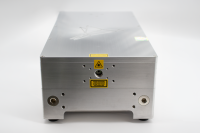
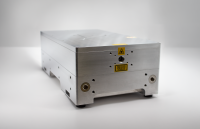
Single frequency CW diode-pumped solid-state or DPSS lasers by Skylark offer unparalleled performance and power. These bespoke lasers focus on offering high output power in a single frequency, engineered with proprietary technology for sustained long-term operation.

Features of Skylark Single-Frequency Continuous Wave Lasers:

  • Available wavelengths: Comprehensive range across UV, Visible, and NIR (e.g., 320 nm, 349 nm, 532 nm, 640 nm, 780 nm, 785 nm)
  • Ultra-narrow linewidth: Spectral bandwidth typically kHz for high spectral purity
  • Ultra-stable performance: Output power stability and spectral stability pm (over 8 hours)
  • Optical power: Up to 1.5 W (wavelength dependent)
  • Compact design: Integrated monolithic platform built for easy system integration
  • Optional fiber coupling for flexible beam delivery
  • Digital control: Plug-in USB connectivity with versatile control software

Features & Benefits

  • Maximum power
  • Spectral purity
  • Spectral stability
  • Power Stability
  • Compact Form factor
  • Low power consumption

Applications

  • Inspection: High power ultraviolet light to enable uniform, high-resolution imaging with low noise. Ultra-narrow linewidth ensures accurate detection of fine details for improved quality control in production environments:
      • Wide band-gap semiconductors
      • Wafer Inspection
      • Photoluminescence
      • Flow Cytometry
  • Analytics: Ultra-stable output and ultra-narrow linewidth, single frequency DPSS lasers enable precise data collection and measurement for advanced research and industrial applications:
      • Brillouin Microscopy
      • Raman Spectroscopy
      • Quantum Sensing
  • Manufacturing: High-power, single frequency DPSS lasers with superior spectral purity deliver precision and consistency, enabling detailed patterning over large areas without compromising quality:
      • Laser interference lithography
      • Optical grating manufacturing
  • Custom Solutions: From optomechanical design to software development, the team at Skylark Lasers pushes the capabilities of laser technology to engineer ultra-stable, spectrally pure single frequency DPSS lasers. If you don’t see what you are looking for, consider a collaboration with Skylark to develop lasers tailored to your application.

Compare the Skylark Single-Frequency DPSS Lasers

Axiom Optics offers five Skylark single-frequency continuous-wave DPSS lasers spanning the ultraviolet, visible, and near-infrared. All five run in a single longitudinal mode with an ultra-narrow linewidth and near-diffraction-limited beam quality, so the primary choice is the wavelength the application needs, followed by linewidth and output power. The table below summarizes the differences; full specifications are on each product page.

Model Wavelength Linewidth Output power Best suited for
Skylark 320 320 nm (UV) ≤ 500 kHz Up to 200 mW UV inspection, photoluminescence, wide-bandgap semiconductors
Skylark 349 349 nm (UV) ≤ 500 kHz Up to 400 mW Higher-power UV inspection and wafer inspection
Skylark 640 640 nm (visible, red) ≤ 500 kHz See product page Visible analytics, Brillouin microscopy, quantum sensing
Skylark 780 780 nm (NIR) ≤ 300 kHz Up to 400 mW NIR quantum sensing, Brillouin microscopy
Skylark 785 785 nm (NIR) ≤ 300 kHz Up to 400 mW 785 nm Raman spectroscopy, quantum sensing

All five are single-longitudinal-mode (SLM) continuous-wave sources built on a compact monolithic platform, with optional fiber coupling and USB digital control. Output power is wavelength dependent, reaching up to 1.5 W on select wavelengths. For other laser sources, see the full laser sources range, including CW laser modules and supercontinuum white-light lasers.

Single-Frequency DPSS Laser FAQs

What is a single-frequency DPSS laser?

A DPSS laser is a diode-pumped solid-state laser, and a single-frequency model emits in a single longitudinal mode, producing one narrow spectral line rather than several. The Skylark lasers pair this single-frequency output with high power and spectral stability on a compact monolithic platform, which gives them the spectral purity needed for demanding inspection, analytics, and manufacturing tasks.

Which Skylark DPSS laser should I choose?

Start with the wavelength the application needs, then weigh linewidth and power. The Skylark 320 (320 nm) and 349 (349 nm) are ultraviolet sources for inspection and photoluminescence; the 640 (640 nm) is a visible source for analytics; and the 780 (780 nm) and 785 (785 nm) are near-infrared sources for Raman, Brillouin microscopy, and quantum sensing. Sharing the wavelength, linewidth, and power the technique requires will narrow it quickly.

What wavelengths are available?

The five stocked Skylark models cover 320 nm and 349 nm in the ultraviolet, 640 nm in the visible, and 780 nm and 785 nm in the near-infrared. Skylark offers a broader range across the UV, visible, and NIR, including 532 nm, so if a required wavelength is not listed it is worth asking whether it can be supplied.

How narrow is the linewidth?

These lasers run single frequency with an ultra-narrow linewidth. The Skylark 320, 349, and 640 specify 500 kHz or less, and the near-infrared Skylark 780 and 785 specify 300 kHz or less. This spectral purity is what enables techniques that resolve very small frequency shifts, such as Brillouin microscopy and high-resolution Raman spectroscopy.

What are single-frequency DPSS lasers used for?

They are used across inspection, analytics, and manufacturing. Inspection uses include wafer inspection, photoluminescence, wide-bandgap semiconductors, and flow cytometry; analytics uses include Brillouin microscopy, Raman spectroscopy, and quantum sensing; and manufacturing uses include laser interference lithography and optical grating fabrication. The combination of spectral purity, stability, and a clean beam makes them well matched to these precision applications.

How stable are these lasers?

The Skylark lasers are engineered for sustained, repeatable operation, with output power stability of 2.0% or better and spectral stability of plus or minus 0.2 pm over eight hours, along with near-diffraction-limited beam quality. This makes them suitable for long, unattended measurement runs and for quantitative work where drift would otherwise affect the result.

How do DPSS UV lasers compare with He-Cd lasers?

Both provide ultraviolet output, but single-frequency DPSS lasers such as the Skylark 320 and 349 offer high spectral purity, strong stability, and a compact, integration-friendly platform, and they are increasingly chosen in place of older He-Cd sources for UV inspection and photoluminescence. For a direct comparison of the two technologies, see the article on He-Cd versus DPSS UV lasers linked on this page.

Read More

Contact Us

No Fields Found.

Tech Support

Contact Us

Scroll to Top