

Andor CB2 | Global Shutter sCMOS Camera
Sensor Technology
sCMOS
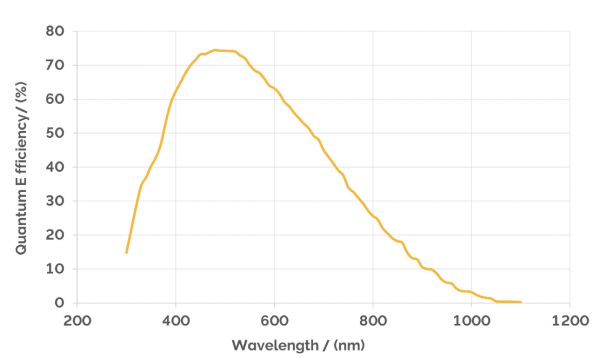
Quantum Efficiency
74% @ 550 nm
Readout Noise
1.38 e- / 2.33 e- / 2.35 e-
Sensor Resolution
812 x 624 / 1604 x 1104 / 3208 x 2200
Frame Rate
1,594 fps / 662 fps / 204 fps
Interface
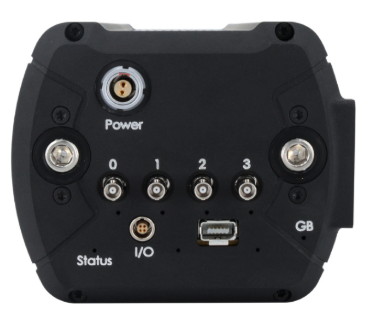
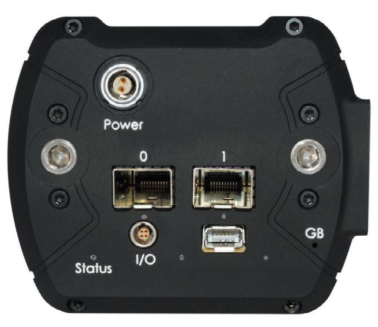
CoaXPress / 10 GigE
 Description
 Specifications
 QE Curve
 Applications
 Videos
 Downloads
Andor CB2 Global Shutter sCMOS Camera Series
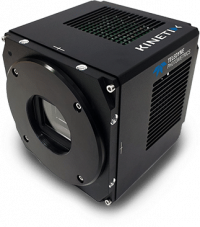
The Andor CB2 is a family of global shutter sCMOS cameras built for scientific imaging that is fast and low-light at the same time. Four sensors share one cooled platform: a 24.5 MP back-illuminated High Resolution model and three High Speed models at 7.1, 1.7 and 0.5 MP that reach up to 1,594 fps at full frame.
Every CB2 combines a true global shutter with read noise as low as 1.4 e⁻ and a maximum quantum efficiency of 74%, so moving samples keep their true shape even when signals are faint. CoaXPress 2.0 and 10 GigE interfaces, air or liquid cooling down to −40 °C, and a common software stack make it simple to move between models as an experiment evolves. Axiom Optics helps you choose the right sensor, frame grabber and cooling for your setup.
Global shutter, low noise
Distortion-free snapshots of moving samples with read noise down to 1.4 e⁻.
24.5 MP to 1,594 fps
Pick resolution or speed: one platform covers 0.5 to 24.5 MP.
Cooled to −40 °C
Air or liquid cooling, with a fan that switches off for vibration-free work.
CB2 Models: High Resolution and High Speed
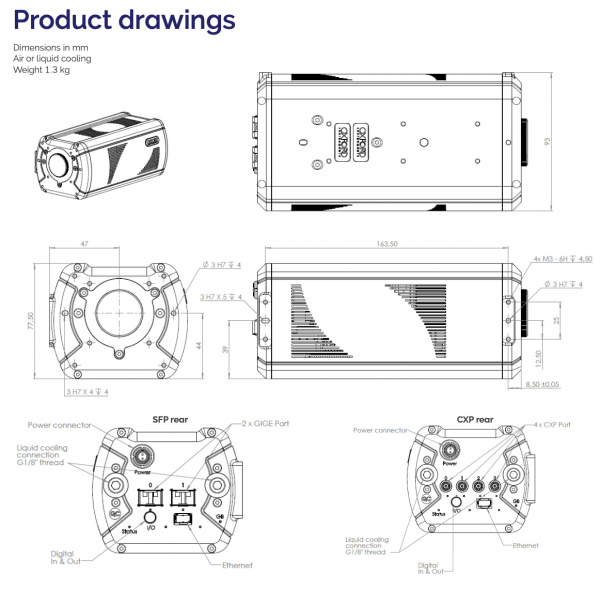
The CB2 24B uses a back-illuminated stacked sensor with 5328 x 4608 pixels at 2.74 µm, the choice for fine detail and large fields. The High Speed models use front-illuminated global shutter sensors with larger pixels for higher full well and frame rate, with QE optimized at 589 nm. All four share the same 183.7 x 93 x 77.5 mm housing.
Four sensors, one platform
Select a CB2 model to see its sensor area and pixel size to scale, with the numbers that matter.
14.60 x 12.63 mm sensor, 19.3 mm diagonal
2.74 µm pixels in a 36 µm patch, same scale for every model
14.47 x 9.94 mm sensor, 17.6 mm diagonal
4.5 µm pixels in a 36 µm patch, same scale for every model
14.47 x 9.94 mm sensor, 17.6 mm diagonal
9.0 µm pixels in a 36 µm patch, same scale for every model
7.34 x 5.62 mm sensor, 9.2 mm diagonal
9.0 µm pixels in a 36 µm patch, same scale for every model
Left: active area of the selected model (solid) against the other sensor formats (dashed); the 7.1 MP and 1.7 MP models share the same area. Right: a 36 µm square patch of pixels. Values from the Andor CB2 specification sheet; maximum QE is 74% for all four models.
Global Shutter With Scientific Noise Performance
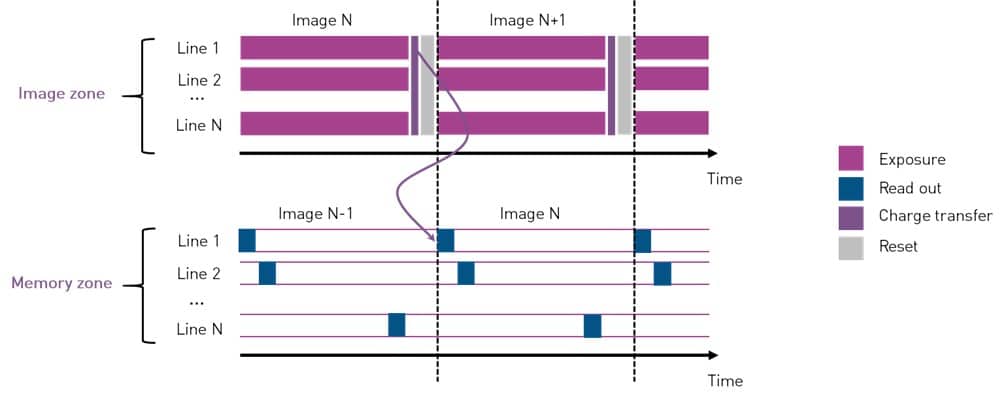
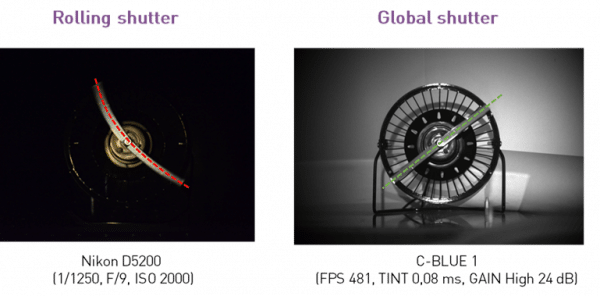
Global shutter pixels have traditionally been noisier than rolling-shutter pixels, which pushed many scientific cameras toward rolling readout and its distortions. The CB2 uses a parallel readout architecture to bring read noise down to 1.4 e⁻ while keeping the snapshot exposure that fast imaging needs. Minimum integration times of a few microseconds freeze motion, and all pixels belong to the same instant for accurate timing between regions of the image.
Frame Rates and Interfaces
Each CB2 is available with a CoaXPress 2.0 interface for maximum bandwidth or an SFP+ 10 GigE interface over copper or fiber for long cable runs, both GigE Vision and GenICam compliant. Choose 8, 10 or 12-bit readout, or the dual-amplifier HDR mode for scenes that combine bright and faint features.
Frame rate by model, interface and bit depth
Values are Andor’s published full-frame rates, measured at 20 °C.
2×2 binning at this setting: 386 fps with 5.48 µm effective pixels.
2×2 binning at this setting: 361 fps with 5.48 µm effective pixels.
2×2 binning at this setting: 283 fps with 5.48 µm effective pixels.
2×2 binning is not listed for this model and mode.
2×2 binning at this setting: 188 fps with 5.48 µm effective pixels.
2×2 binning at this setting: 125 fps with 5.48 µm effective pixels.
2×2 binning at this setting: 129 fps with 5.48 µm effective pixels.
2×2 binning is not listed for this model and mode.
2×2 binning at this setting: 418 fps with 9 µm effective pixels.
2×2 binning at this setting: 387 fps with 9 µm effective pixels.
2×2 binning at this setting: 261 fps with 9 µm effective pixels.
2×2 binning at this setting: 134 fps with 9 µm effective pixels.
2×2 binning at this setting: 418 fps with 9 µm effective pixels.
2×2 binning at this setting: 387 fps with 9 µm effective pixels.
2×2 binning at this setting: 261 fps with 9 µm effective pixels.
2×2 binning at this setting: 134 fps with 9 µm effective pixels.
This model already uses 9 µm pixels; Andor does not list a binned mode.
This model already uses 9 µm pixels; Andor does not list a binned mode.
This model already uses 9 µm pixels; Andor does not list a binned mode.
This model already uses 9 µm pixels; Andor does not list a binned mode.
This model already uses 9 µm pixels; Andor does not list a binned mode.
This model already uses 9 µm pixels; Andor does not list a binned mode.
This model already uses 9 µm pixels; Andor does not list a binned mode.
This model already uses 9 µm pixels; Andor does not list a binned mode.
This model already uses 9 µm pixels; Andor does not list a binned mode.
This model already uses 9 µm pixels; Andor does not list a binned mode.
This model already uses 9 µm pixels; Andor does not list a binned mode.
This model already uses 9 µm pixels; Andor does not list a binned mode.
This model already uses 9 µm pixels; Andor does not list a binned mode.
This model already uses 9 µm pixels; Andor does not list a binned mode.
This model already uses 9 µm pixels; Andor does not list a binned mode.
This model already uses 9 µm pixels; Andor does not list a binned mode.
Cropping the readout raises speed further: at a 16-line region of interest (8-bit, CoaXPress) Andor lists 2,560 fps for the 24.5 MP model and 7,366 fps for the 0.5 MP model. HDR is 16-bit on the High Resolution model and 14-bit on High Speed models.
Matching Pixel Size to Your Optics
Pixel size decides whether a camera captures the full resolution of a microscope objective or limits it. The 2.74 µm pixels of the CB2 24B sample high-magnification objectives finely, with 2×2 on-chip binning to 5.48 µm when signal is low. The 4.5 µm and 9 µm High Speed pixels pair well with lower magnification or added relay optics.
Match a CB2 to your microscope objective
Check whether pixel size samples the resolution of your objective at the Nyquist rate.
Matched. Pixel size sits in the Nyquist sweet spot for this objective: full optical resolution without wasting photons.
Matched. Pixel size sits in the Nyquist sweet spot for this objective: full optical resolution without wasting photons.
Undersampled. Each pixel spans 2.0x the Nyquist limit, so the camera, not the objective, limits resolution. Add relay magnification of about 2x, or choose a model with smaller pixels.
Undersampled. Each pixel spans 2.0x the Nyquist limit, so the camera, not the objective, limits resolution. Add relay magnification of about 2x, or choose a model with smaller pixels.
Matched. Pixel size sits in the Nyquist sweet spot for this objective: full optical resolution without wasting photons.
Undersampled. Each pixel spans 1.2x the Nyquist limit, so the camera, not the objective, limits resolution. Add relay magnification of about 1.5x, or choose a model with smaller pixels.
Undersampled. Each pixel spans 2.4x the Nyquist limit, so the camera, not the objective, limits resolution. Add relay magnification of about 2.5x, or choose a model with smaller pixels.
Undersampled. Each pixel spans 2.4x the Nyquist limit, so the camera, not the objective, limits resolution. Add relay magnification of about 2.5x, or choose a model with smaller pixels.
Oversampled. Resolution is fully captured but signal is spread thin. Use 2×2 binning (5.48 µm, 137 nm at the sample) for four times the signal per pixel at matched sampling.
Matched. Pixel size sits in the Nyquist sweet spot for this objective: full optical resolution without wasting photons.
Undersampled. Each pixel spans 1.5x the Nyquist limit, so the camera, not the objective, limits resolution. Add relay magnification of about 2x, or choose a model with smaller pixels.
Undersampled. Each pixel spans 1.5x the Nyquist limit, so the camera, not the objective, limits resolution. Add relay magnification of about 2x, or choose a model with smaller pixels.
Oversampled. Resolution is fully captured but signal is spread thin. Use 2×2 binning (5.48 µm, 91 nm at the sample) for four times the signal per pixel at matched sampling.
Matched. Pixel size sits in the Nyquist sweet spot for this objective: full optical resolution without wasting photons.
Undersampled. Each pixel spans 1.5x the Nyquist limit, so the camera, not the objective, limits resolution. Add relay magnification of about 2x, or choose a model with smaller pixels.
Undersampled. Each pixel spans 1.5x the Nyquist limit, so the camera, not the objective, limits resolution. Add relay magnification of about 2x, or choose a model with smaller pixels.
Oversampled. Resolution is fully captured but signal is spread thin. Use 2×2 binning (5.48 µm, 55 nm at the sample) for four times the signal per pixel at matched sampling.
Oversampled. Resolution is fully captured but signal is spread thin. Use 2×2 binning (9 µm, 90 nm at the sample) for four times the signal per pixel at matched sampling.
Matched. Pixel size sits in the Nyquist sweet spot for this objective: full optical resolution without wasting photons.
Matched. Pixel size sits in the Nyquist sweet spot for this objective: full optical resolution without wasting photons.
Assumes 520 nm emission (GFP), Rayleigh resolution 0.61λ/NA, a Nyquist target of resolution / 2.3, and no extra relay magnification. “Matched” means pixel size between half and one times the Nyquist target.
Cooling, Stability and Long Exposures
Andor offers air cooling to −5 °C at 25 °C ambient and liquid cooling to −20 °C with 25 °C coolant or −40 °C with 5 °C coolant, keeping dark current low for exposures of several hours. The fan can be disabled entirely, and the camera operates from −40 °C to +50 °C ambient for field and observatory use. When cooling hard, keep coolant above the dew point to avoid condensation.
CB2 Applications
From adaptive optics to live-cell imaging, the CB2 series is used wherever speed, sensitivity and a true snapshot exposure are needed together.
Which CB2 fits your application?
Start with: CB2 High Speed
Andor optimizes the High Speed models’ quantum efficiency at 589 nm, the sodium laser guide star line, and their frame rates suit fast wavefront sensing loops. A windowless CB2 for WFS variant is available for wavefront sensors.
Related: Wavefront sensors and adaptive optics solutions
Start with: CB2 24B High Resolution or High Speed
For wide fields, satellite tracking, exoplanet and near-Earth object work, the 24.5 MP model covers the most sky per frame; the High Speed models take over when fast cadence matters more than field.
Start with: CB2 24B High Resolution
Small 2.74 µm pixels, 74% peak QE and low read noise suit fast fluorescence of live cells, including calcium and magnesium ion imaging, with 2×2 binning when light is scarce.
Start with: CB2 24B High Resolution
Low read noise and a global shutter help with low atom number fluorescence imaging, where every photon and precise exposure timing count.
Start with: Any CB2, fan off
The CB2 fan can be fully disabled to keep vibration away from patch-clamp rigs and interferometric setups, with liquid cooling holding the sensor temperature.
Start with: CB2 UV
For 200-400 nm work, choose the CB2 UV, the UV-optimized member of the series.
Choose an application to see which CB2 to start with.
CB2 Key Specifications
CB2 24B High Resolution
- Sensor
- Back-illuminated stacked
- Resolution
- 5328 x 4608 (24.5 MP)
- Pixel size
- 2.74 µm (5.48 µm binned)
- Sensor diagonal
- 19.3 mm
- Max frame rate
- 106 fps (8-bit, CXP)
- Full well
- 9.5 ke⁻
- Dark current, +20 °C
- 0.043 e⁻/px/s
- HDR mode
- 16-bit
CB2 7.1F High Speed
- Sensor
- Front-illuminated
- Resolution
- 3216 x 2208 (7.1 MP)
- Pixel size
- 4.5 µm (9 µm binned)
- Sensor diagonal
- 17.6 mm
- Max frame rate
- 207 fps (8-bit, CXP)
- Full well
- 23 ke⁻
- Dark current, +20 °C
- 0.26 e⁻/px/s
- HDR mode
- 14-bit
CB2 1.7F High Speed
- Sensor
- Front-illuminated
- Resolution
- 1608 x 1104 (1.7 MP)
- Pixel size
- 9 µm
- Sensor diagonal
- 17.6 mm
- Max frame rate
- 662 fps (8-bit, CXP)
- Full well
- 94 ke⁻
- Dark current, +20 °C
- 1.14 e⁻/px/s
- HDR mode
- 14-bit
CB2 0.5F High Speed
- Sensor
- Front-illuminated
- Resolution
- 816 x 624 (0.5 MP)
- Pixel size
- 9 µm
- Sensor diagonal
- 9.2 mm
- Max frame rate
- 1,594 fps (8-bit, CXP)
- Full well
- 94 ke⁻
- Dark current, +20 °C
- 1.54 e⁻/px/s
- HDR mode
- 14-bit
All models: global shutter, maximum QE 74%, CoaXPress 2.0 or SFP+ 10 GigE, C-mount (TFL optional), air cooling to −5 °C, liquid cooling to −40 °C, 1.3 kg, 60 W maximum.
CB2 FAQ
What is the Andor CB2 camera?
The Andor CB2 is a series of global-shutter scientific CMOS cameras from Oxford Instruments for low-light, high-speed imaging. It includes a 24.5 MP High Resolution model, three High Speed models at 7.1, 1.7 and 0.5 MP, and the UV-optimized CB2 UV, all sharing the same cooled housing, interfaces and software.
Which CB2 model should I choose?
Choose the 24.5 MP CB2 24B for the most pixels and small 2.74 µm pixels, ideal for high-resolution microscopy and wide fields. Choose a High Speed model when frame rate leads: the 7.1 MP model reaches 207 fps, the 1.7 MP model 662 fps and the 0.5 MP model 1,594 fps at full frame. For 200-400 nm, choose the CB2 UV.
How fast is the CB2?
At full frame over CoaXPress 2.0 in 8-bit mode, Andor lists 106 fps for the 24.5 MP model and up to 1,594 fps for the 0.5 MP model. Smaller regions of interest go much faster, reaching 7,366 fps at 16 lines on the 0.5 MP model.
What are the CB2's noise and sensitivity specifications?
Andor specifies a maximum quantum efficiency of 74% and read noise as low as 1.4 e- (CB2 24B, 12-bit, 24 dB gain). Dark current at +20 °C is 0.043 e-/pixel/s for the 24.5 MP model, and cooling lowers it further. Full well ranges from 9.5 ke- on the 24.5 MP model to 94 ke- on the 9 µm pixel High Speed models.
Why choose a global shutter sCMOS camera?
A global shutter exposes every pixel at the same moment, so moving samples are captured without rolling-shutter skew and every part of the image shares one time point. It also simplifies synchronization with pulsed lasers, strobes and stages.
How is the CB2 cooled?
The CB2 offers air cooling to -5 °C at 25 °C ambient and liquid cooling to -20 °C with 25 °C coolant or -40 °C with 5 °C coolant. The fan can be switched off for vibration-sensitive setups such as electrophysiology.
Which interfaces and software does the CB2 support?
Each model is available with CoaXPress 2.0 or an SFP+ 10 GigE interface over copper or fiber, compliant with GigE Vision and GenICam. The 24.5 MP model uses four CoaXPress cables. Software includes First Light Vision and µManager, with SDKs for C, C++, C#, Python, LabVIEW and MATLAB, and Andor supports Euresys and Zebra frame grabbers.
Is there a CB2 version for wavefront sensing?
Yes. Andor offers a windowless CB2 for WFS variant across the High Resolution, High Speed and UV models for adaptive optics and wavefront sensing. Sensor cooling does not apply to the windowless variant.
Choose your CB2 configuration
Tell Axiom Optics your field of view, frame rate and light level. We will recommend the sensor, interface, grabber and cooling for your system.