
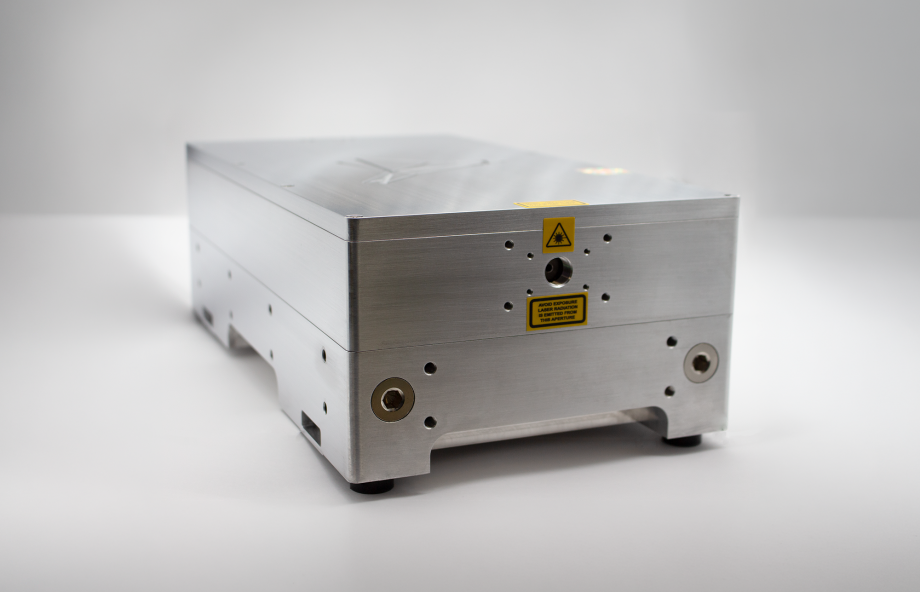
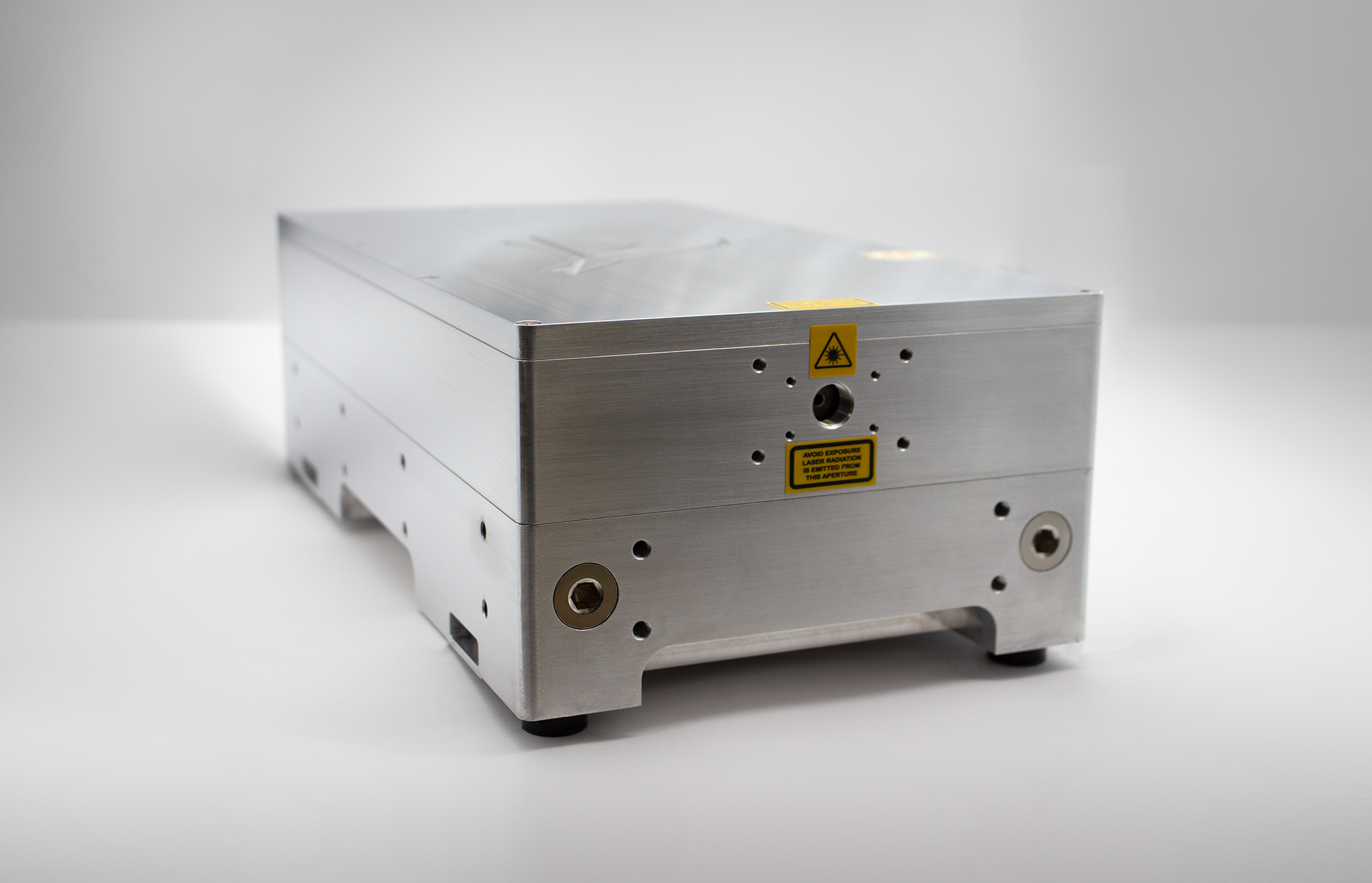
Skylark 780 | Single-Frequency CW DPSS NIR Laser
Wavelength
780 nm
Output Power
Up to 400 mW
Spectral Bandwidth
≤ 300 kHz
Spatial Mode
TEM₀₀
Spectral Stability
± 0.2 pm
Operational Mode
CW, intracavity-locked SLM
×
Tag: LASERS: CW
Brand: Skylark Lasers Limited
Skylark 780: Single-Frequency CW DPSS NIR Laser
The Skylark 780 is a single-frequency CW DPSS NIR laser designed for precision applications that require ultra-low ASE noise and ultra-stable output. It delivers up to 400 mW of ultra-stable power at a fixed wavelength of 780 nm. Engineered for consistent, long-term performance, this laser is ideal for systems that need precise measurement and control of rubidium transitions. The central wavelength at 780.24 nm targets Rb 85 and Rb 87.
Key Features
- Ultra-Stable Output: The laser maintains exceptional output power and wavelength stability, with minimal drift over long periods of operation. The output power stability is ≤ 2.0% over an 8-hour operation period, guaranteeing consistent results for extended processes.
- Ultra-Low Power Noise: With an output power noise of ≤ 0.3% RMS (10 Hz – 10 MHz), the Skylark 780 NX minimizes signal distortion, which is critical for high-clarity measurements.
- Ultra-Narrow Linewidth: A spectral bandwidth of ≤ 300 kHz ensures precise spectral resolution for fine-tuned interactions and high-resolution measurements.
- Inherently Low ASE Noise: The laser’s ultra-low ASE (Amplified Spontaneous Emission) noise of < -80 dB delivers a clean spectral profile and sharp, stable resonance. This significantly reduces background noise and increases the signal-to-noise ratio.
Blogs
| Output Beam Parameters | |
|---|---|
| Output Power | up to 400 mW |
| Wavelength | 780 nm |
| Spectral Bandwidth | ≤ 300 kHz |
| Spatial Mode | TEM₀₀ |
| Spectral Stability (over 8 hours) | ± 0.2 pm |
| Coherence Length | > 100 m |
| Output Power Stability (over 8 hours) | ≤ 2.0 % peak to peak |
| Output Power Noise (10 Hz-10MHz) | ≤ 0.3% RMS |
| ASE Noise | < - 80 dB |
| Beam Divergence | 1.0 mrad, diffraction limited |
| Beam Diameter at Output Aperture | 0.8 - 1.2 mm |
| Beam Pointing Stability | ≤ 5 μrad/°C |
| Environmental Conditions | |
|---|---|
| Ambient Temperature Range | 18 - 30 °C |
| Laser Head Interface Stability | ± 1.5 °C |
| Storage | 0 - 50 °C |
| Humidity | 0 - 50 %, non-condensing |
| Dimensions | |
|---|---|
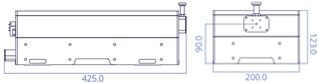
| Laser Head (L x W x H) | 425 x 200 x 123 mm |
| Beam Height | 90.0 mm |
780 nm Laser Applications
- Raman Spectroscopy
- Optical Manipulation
- Rubidium D2 Transitions
- Cold Atom Trapping</li></li>
- Atomic Spectroscopy
- Magnetometry
- Atom Interferometry
- Bose-Einstein Condensates (BEC formation)
- Magneto-optical Traps
- Frequency Comb Generation
- Atomic Clocks
- Free-Space Optical Communication
Thermal Management Options
- Closed-loop water chiller: By integrating a compact, closed-loop cooling system, the laser’s intensity stability is significantly improved. This design also makes the laser system portable, as it does not need to be connected to an external water source.
- Fan-assisted heatsink: This compact and economical laser cooling system is fully integrated into the laser platform. It uses intelligent controls to actively maintain a stable wavelength and intensity output.
- Fiber Coupling: The laser offers external fiber coupling options to simplify integration, achieving greater than 95% efficiency with multimode fibers and over 70% with single-mode fibers.

