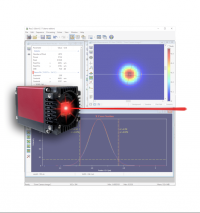

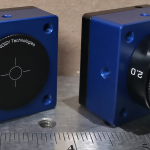
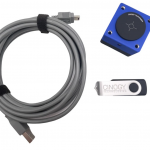
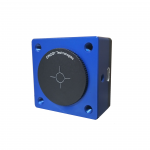
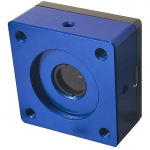
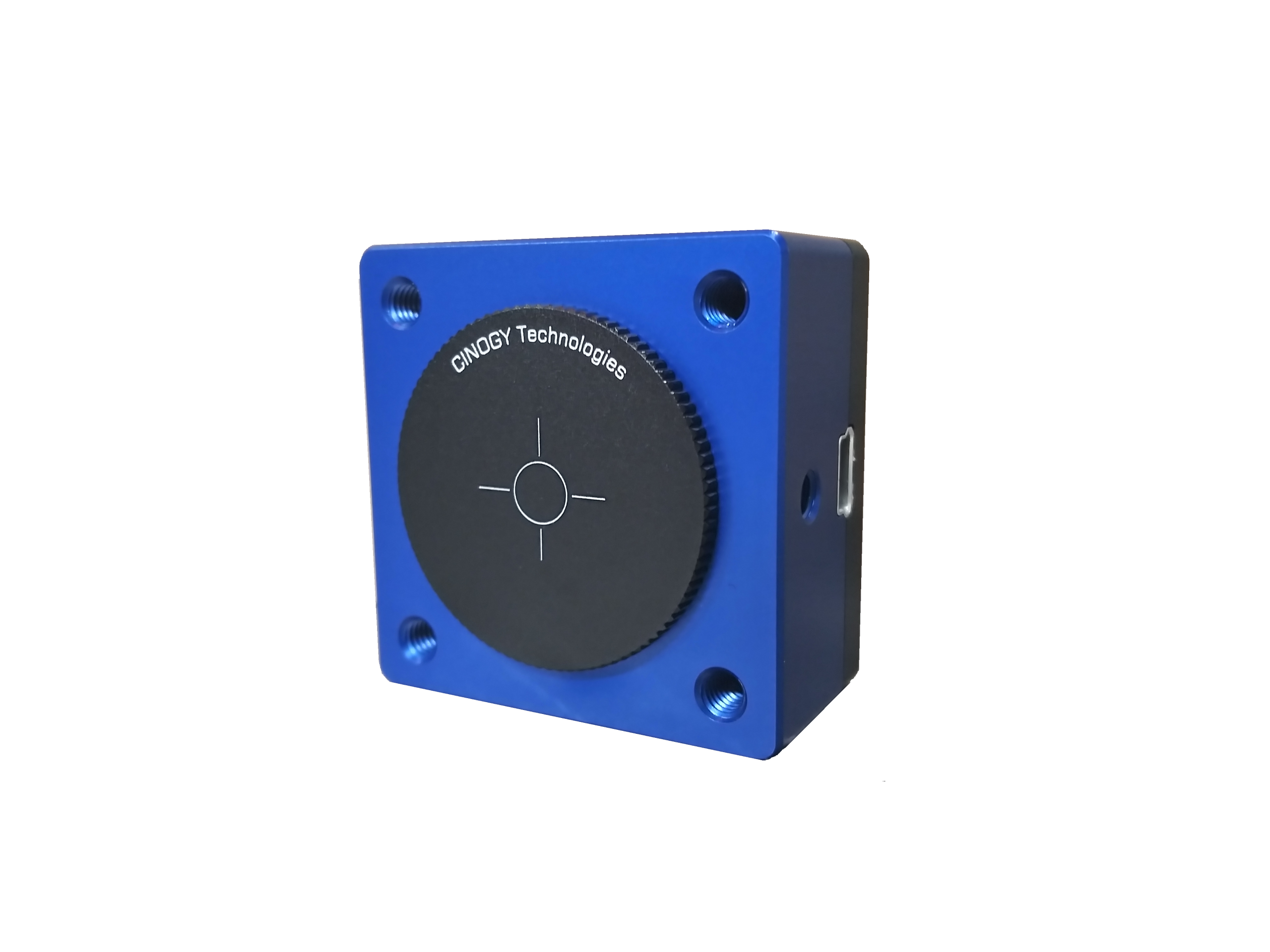
CinCam CMOS | Entry Level Beam Profiler
Form factor
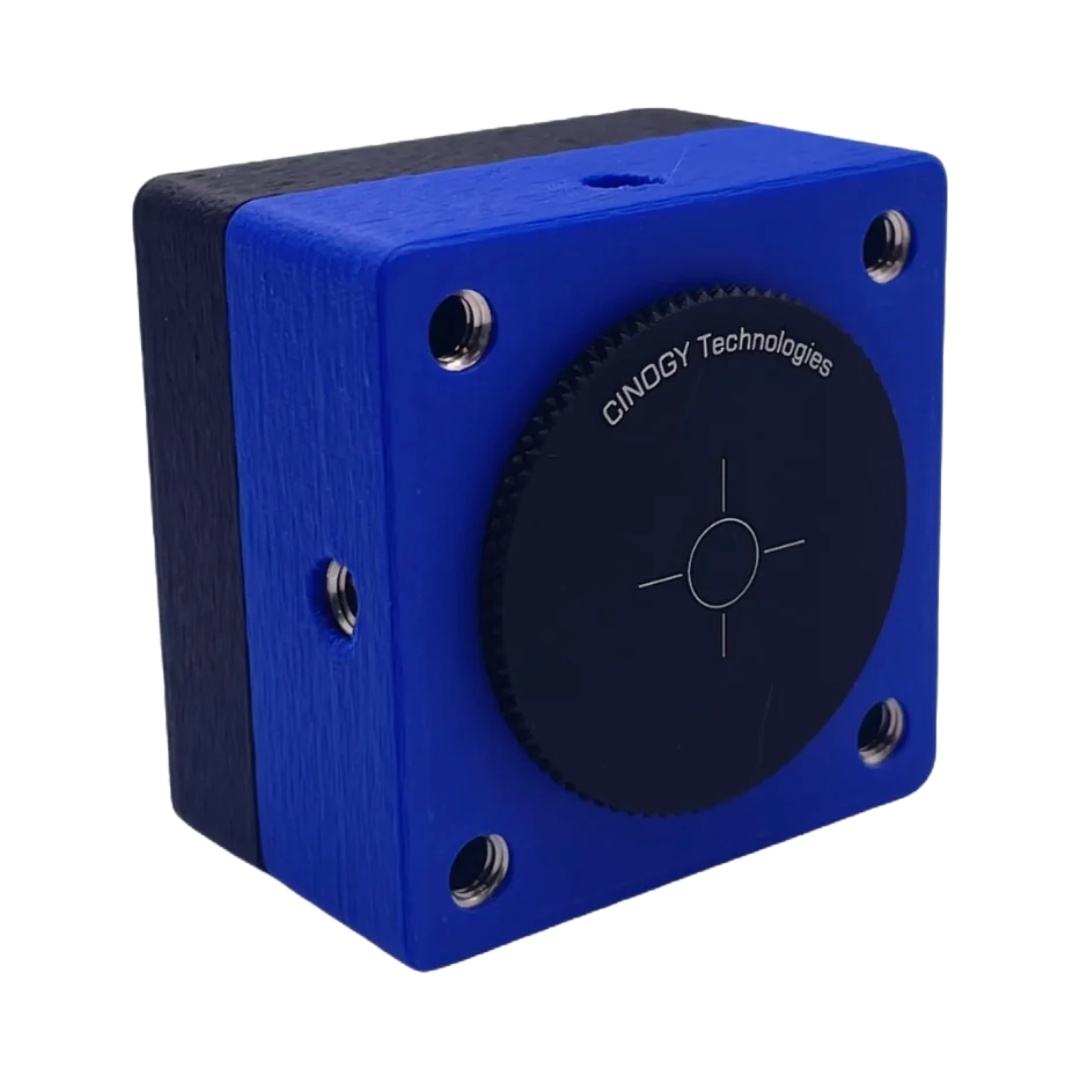
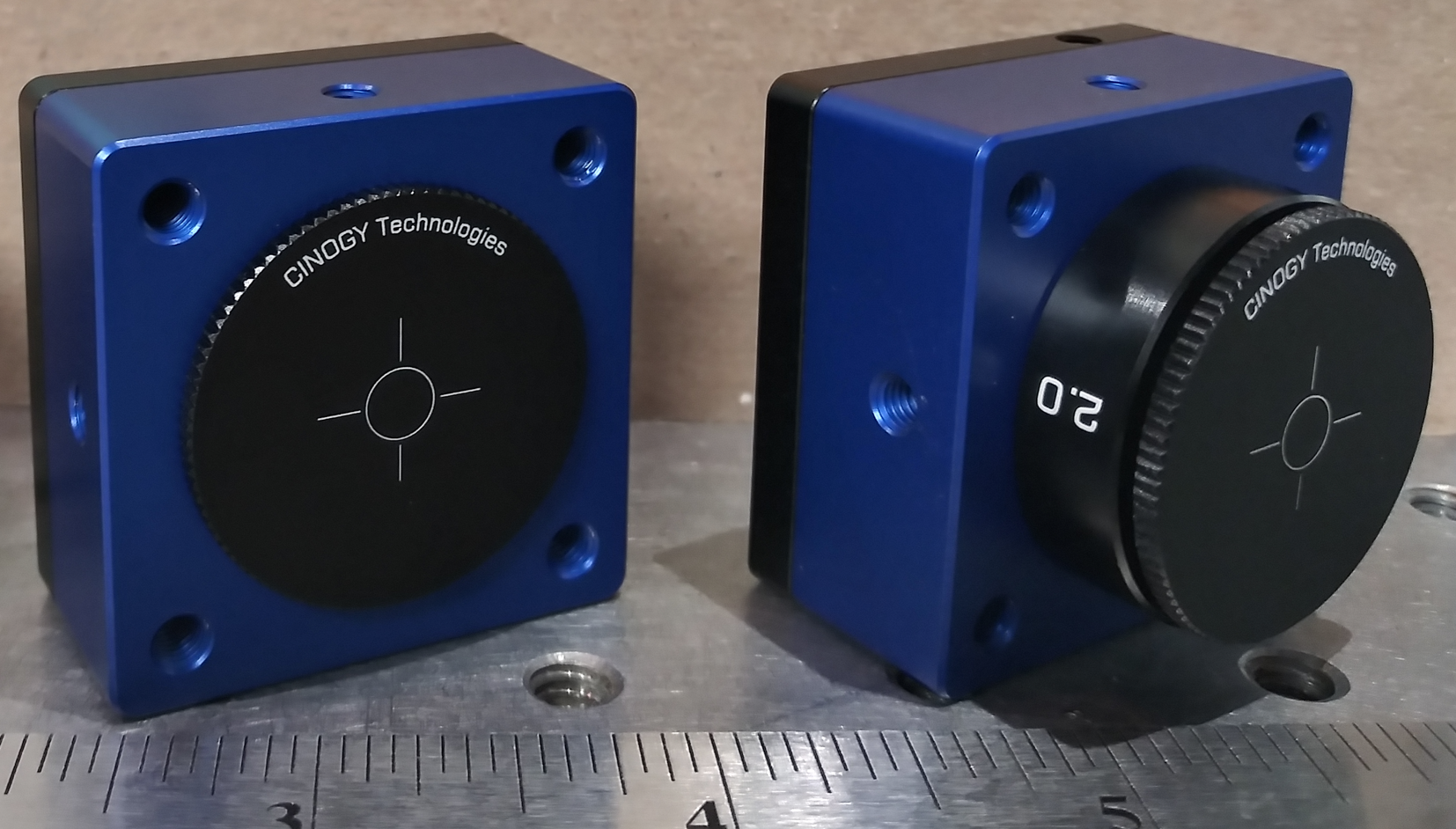
40mm x 40mm x 20mm
Small pitch available
2.2 µm
Largest active area available
7.2 x 5.4 mm
Wavelength Range
From 150nm (with UV option) to 1150nm
Software
RayCi Lite, Standard or Pro
SDK
C++, Python, LabVIEW
 Description
 Specifications
 Applications
 Videos
 Downloads
CinCam CMOS: A Cost-Effective Laser Beam Profiler
The CinCam CMOS beam profiler from CINOGY Technologies is a cost-effective, high-performance solution for precise laser beam characterization in laboratory, research and industrial environments. Its megapixel CMOS sensor delivers accurate, real-time beam analysis at up to 20 frames per second, reliably measuring beam size, shape, position and intensity distribution, even in dynamic or rapidly changing optical setups.
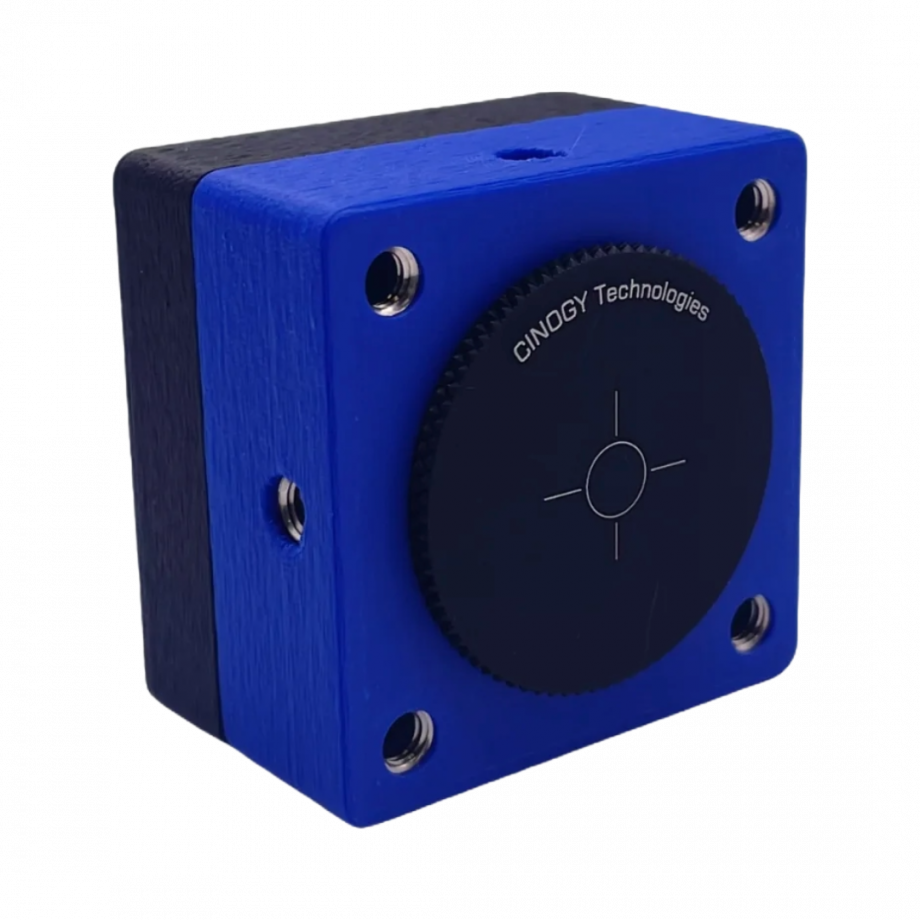
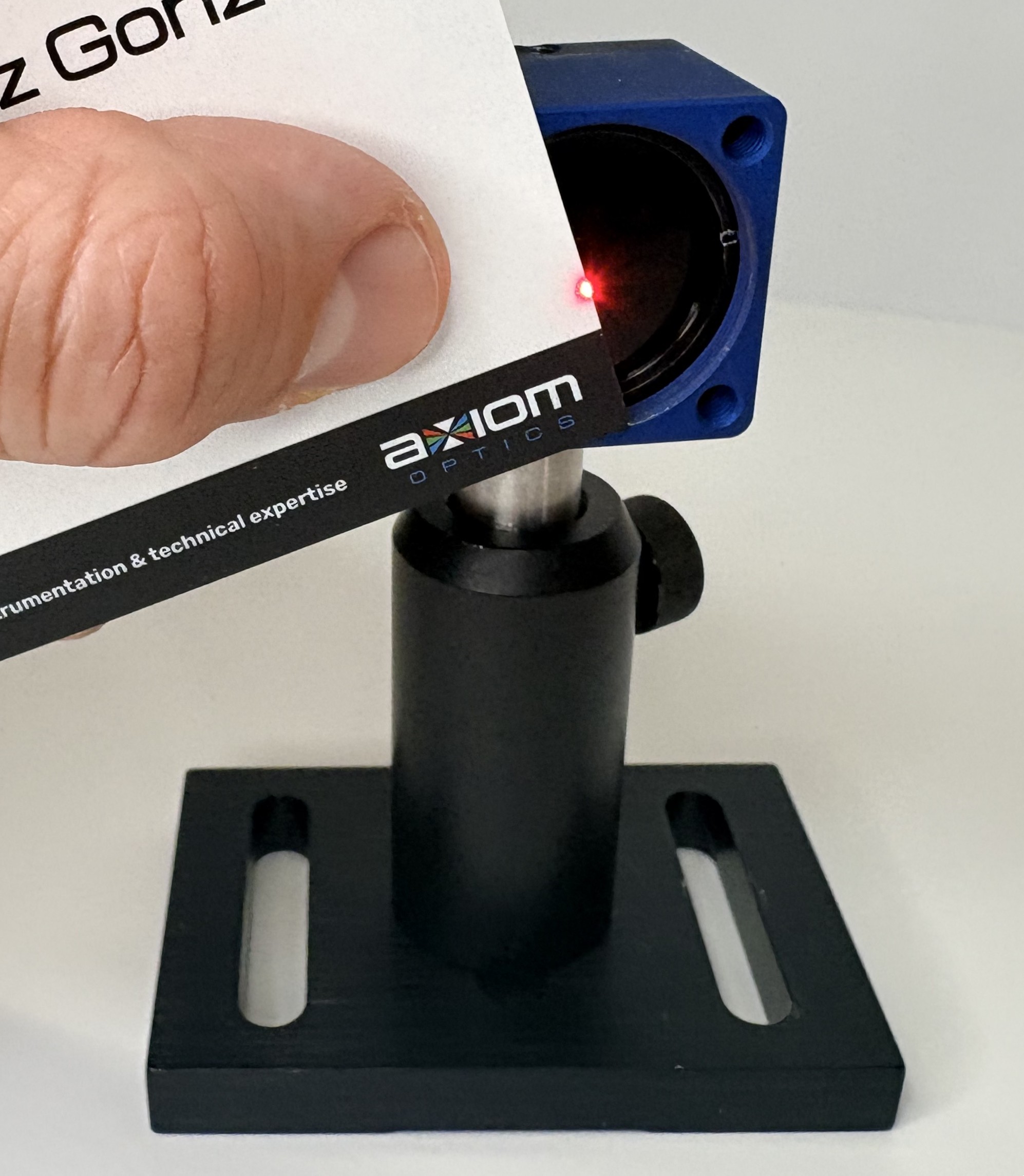
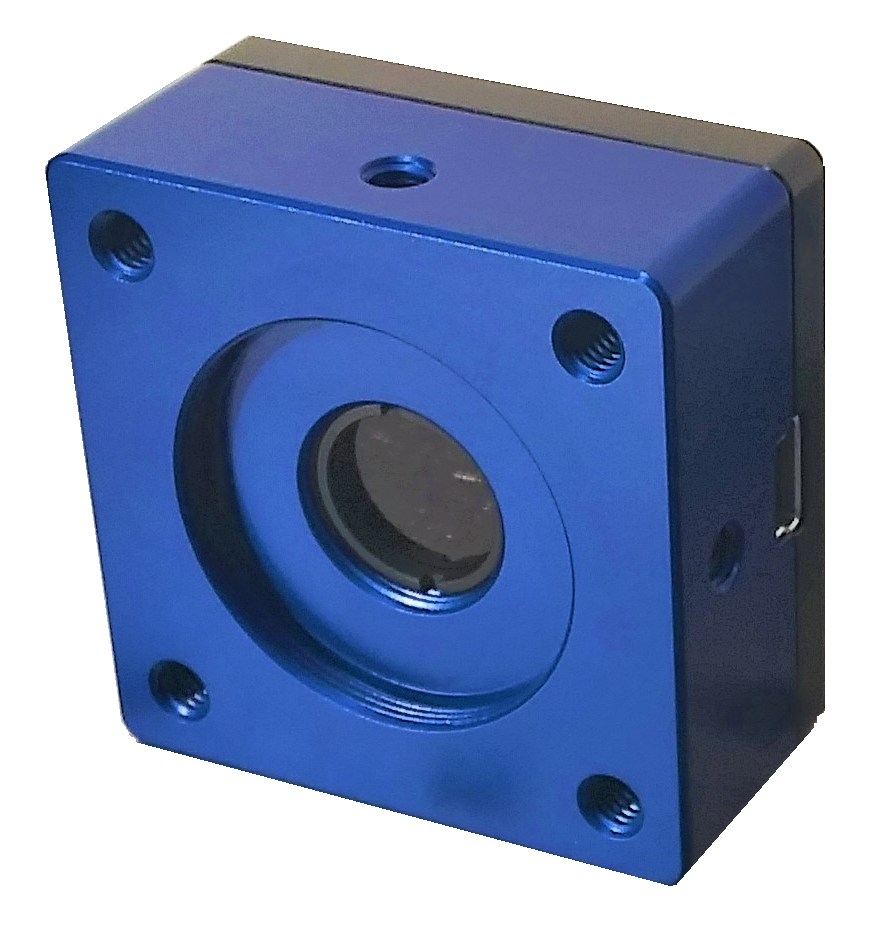
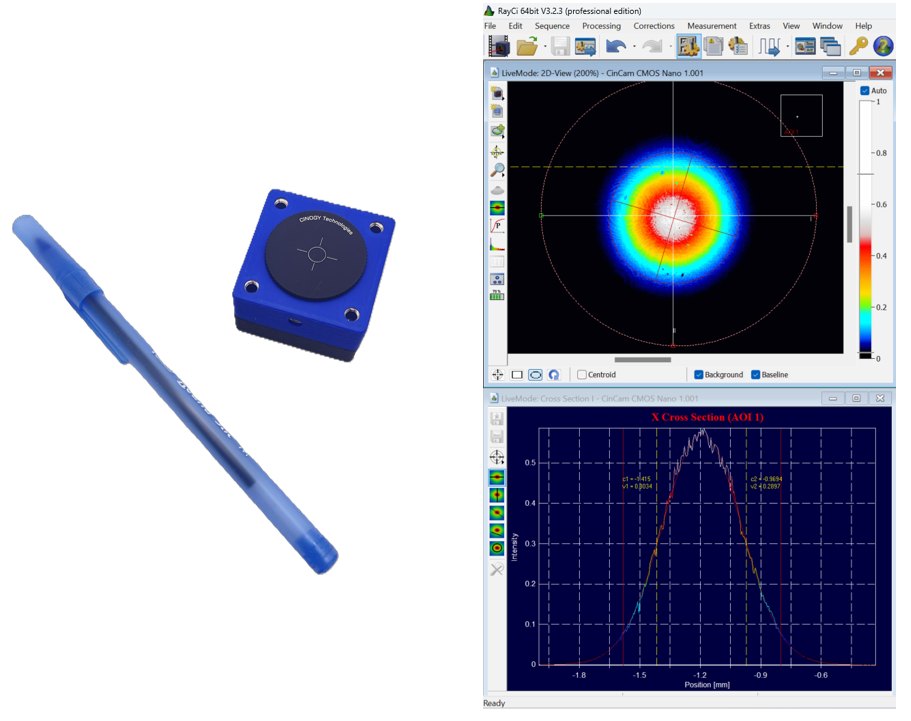
A lightweight, compact 40 x 40 x 20 mm design integrates seamlessly into existing optical systems. The CinCam CMOS adapts easily to standard opto-mechanical components, optical benches and imaging configurations, giving maximum flexibility for permanent installations and portable measurements alike. For alignment, system validation or ongoing process monitoring, it provides dependable performance in an accessible, entry-level platform.
The sensor is designed without cover glass, minimizing interference effects such as etalon fringes for higher measurement accuracy. Combined with high resolution, wide dynamic range and real-time monitoring, the CinCam CMOS offers exceptional value for users who need precise beam diagnostics without the complexity or cost of advanced profiling systems.
Key Features
- Compact, entry-level beam profiler ideal for laboratory, educational and industrial use
- High-resolution megapixel CMOS sensor without cover glass for improved accuracy and reduced interference artifacts
- Real-time beam monitoring at up to 20 fps with wide dynamic range for static and dynamic beams
- Compact and lightweight design for easy integration into optical setups and opto-mechanical systems
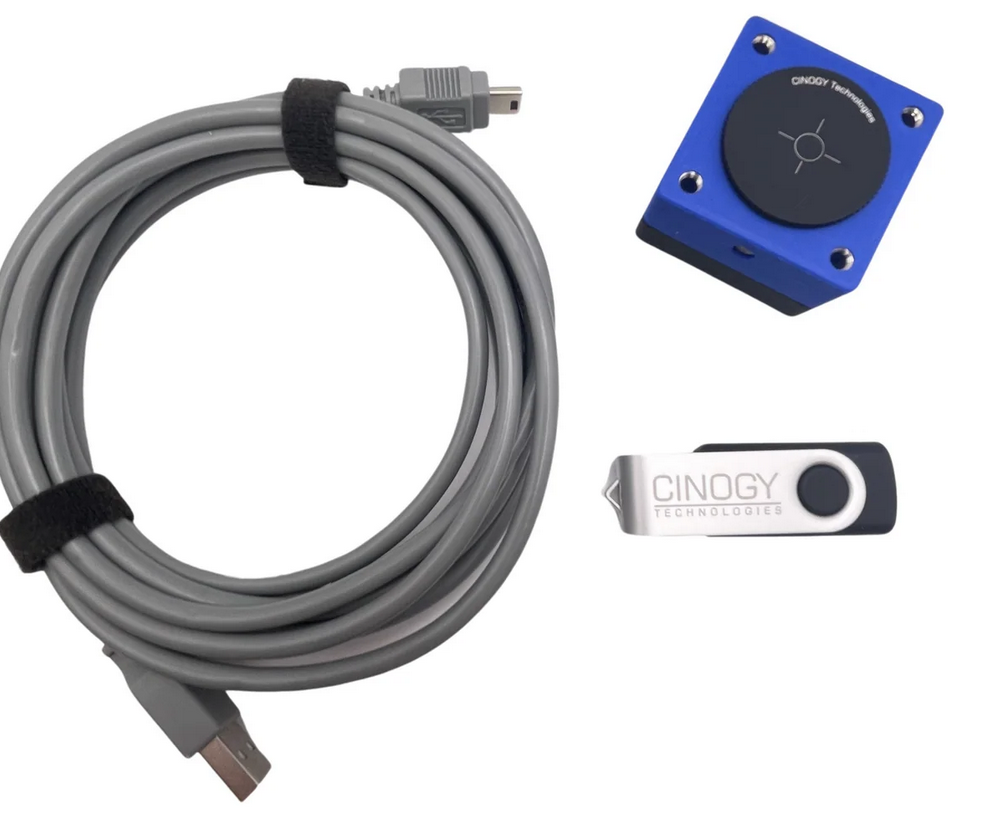
- Standard high-speed USB 2.0 connectivity for simple data transfer and plug-and-play operation
- Flexible software options in Lite, Standard and Professional versions of RayCi to match your analysis needs
Sizing the Beam Profiler to Your Beam
Accurate beam widths need enough pixels across the beam and room on the sensor for its wings. CINOGY recommends a minimum of about 10 pixels across the beam for each model.
Is your beam a good fit?
Choose a CinCam CMOS model and your beam diameter to check it against CINOGY’s recommended range.
Too small. Fewer than 10 pixels span the beam, too few for an accurate profile. Choose the CMOS-1204 with 2.2 µm pixels, or expand the beam.
Too small. Fewer than 10 pixels span the beam, too few for an accurate profile. Choose the CMOS-1204 with 2.2 µm pixels, or expand the beam.
Good fit. Within CINOGY’s recommended beam range for this model: enough pixels for accurate widths, with the wings on the sensor.
Good fit. Within CINOGY’s recommended beam range for this model: enough pixels for accurate widths, with the wings on the sensor.
Good fit. Within CINOGY’s recommended beam range for this model: enough pixels for accurate widths, with the wings on the sensor.
Good fit. Within CINOGY’s recommended beam range for this model: enough pixels for accurate widths, with the wings on the sensor.
Good fit. Within CINOGY’s recommended beam range for this model: enough pixels for accurate widths, with the wings on the sensor.
Good fit. Within CINOGY’s recommended beam range for this model: enough pixels for accurate widths, with the wings on the sensor.
Too large. The beam exceeds the sensor. See the BeamPro Large Area profilers or reduce the beam.
Too small. Fewer than 10 pixels span the beam, too few for an accurate profile. Choose the CMOS-1204 with 2.2 µm pixels, or expand the beam.
Too small. Fewer than 10 pixels span the beam, too few for an accurate profile. Choose the CMOS-1204 with 2.2 µm pixels, or expand the beam.
Good fit. Within CINOGY’s recommended beam range for this model: enough pixels for accurate widths, with the wings on the sensor.
Good fit. Within CINOGY’s recommended beam range for this model: enough pixels for accurate widths, with the wings on the sensor.
Good fit. Within CINOGY’s recommended beam range for this model: enough pixels for accurate widths, with the wings on the sensor.
Good fit. Within CINOGY’s recommended beam range for this model: enough pixels for accurate widths, with the wings on the sensor.
Good fit. Within CINOGY’s recommended beam range for this model: enough pixels for accurate widths, with the wings on the sensor.
Good fit. Within CINOGY’s recommended beam range for this model: enough pixels for accurate widths, with the wings on the sensor.
Too large. The beam exceeds the sensor. See the BeamPro Large Area profilers or reduce the beam.
Too small. Fewer than 10 pixels span the beam, too few for an accurate profile. Choose the CMOS-1204 with 2.2 µm pixels, or expand the beam.
Good fit. Within CINOGY’s recommended beam range for this model: enough pixels for accurate widths, with the wings on the sensor.
Good fit. Within CINOGY’s recommended beam range for this model: enough pixels for accurate widths, with the wings on the sensor.
Good fit. Within CINOGY’s recommended beam range for this model: enough pixels for accurate widths, with the wings on the sensor.
Good fit. Within CINOGY’s recommended beam range for this model: enough pixels for accurate widths, with the wings on the sensor.
Good fit. Within CINOGY’s recommended beam range for this model: enough pixels for accurate widths, with the wings on the sensor.
Good fit. Within CINOGY’s recommended beam range for this model: enough pixels for accurate widths, with the wings on the sensor.
Good fit. Within CINOGY’s recommended beam range for this model: enough pixels for accurate widths, with the wings on the sensor.
Too large. The beam exceeds the sensor. See the BeamPro Large Area profilers or reduce the beam.
Too small. Fewer than 10 pixels span the beam, too few for an accurate profile. Expand the beam, or ask Axiom Optics about higher-resolution profilers.
Good fit. Within CINOGY’s recommended beam range for this model: enough pixels for accurate widths, with the wings on the sensor.
Good fit. Within CINOGY’s recommended beam range for this model: enough pixels for accurate widths, with the wings on the sensor.
Good fit. Within CINOGY’s recommended beam range for this model: enough pixels for accurate widths, with the wings on the sensor.
Good fit. Within CINOGY’s recommended beam range for this model: enough pixels for accurate widths, with the wings on the sensor.
Good fit. Within CINOGY’s recommended beam range for this model: enough pixels for accurate widths, with the wings on the sensor.
Good fit. Within CINOGY’s recommended beam range for this model: enough pixels for accurate widths, with the wings on the sensor.
Wings clipped. Larger than the recommended maximum, so the faint wings fall off the sensor and second-moment widths read small. Consider a larger sensor.
Too large. The beam exceeds the sensor. See the BeamPro Large Area profilers or reduce the beam.
Recommended minimum and maximum beam diameters from the CINOGY CinCam CMOS datasheet; the minimum corresponds to 10 pixels. Sensor and beam drawn to scale (very small beams enlarged for visibility).
Wavelength Coverage
Which sensor version covers your laser?
Pick your laser wavelength to see which model and sensor version can measure it.
| 193 nm | CMOS-1201 | CMOS-1202 | CMOS-1203 | CMOS-1204 |
|---|---|---|---|---|
| Standard | no | no | no | no |
| RT | no | no | no | no |
| UV | yes | yes | yes | yes |
| OM | no | no | no | no |
| IR | no | no | no | no |
| 266 nm | CMOS-1201 | CMOS-1202 | CMOS-1203 | CMOS-1204 |
|---|---|---|---|---|
| Standard | no | no | no | no |
| RT | no | no | no | no |
| UV | yes | yes | yes | yes |
| OM | no | yes | yes | yes |
| IR | no | no | no | no |
| 355 nm | CMOS-1201 | CMOS-1202 | CMOS-1203 | CMOS-1204 |
|---|---|---|---|---|
| Standard | no | no | no | no |
| RT | yes | yes | yes | yes |
| UV | yes | yes | yes | yes |
| OM | no | yes | yes | yes |
| IR | no | no | no | no |
| 405 nm | CMOS-1201 | CMOS-1202 | CMOS-1203 | CMOS-1204 |
|---|---|---|---|---|
| Standard | yes | yes | yes | yes |
| RT | yes | yes | yes | yes |
| UV | yes | yes | yes | yes |
| OM | no | yes | yes | yes |
| IR | no | no | no | no |
| 532 nm | CMOS-1201 | CMOS-1202 | CMOS-1203 | CMOS-1204 |
|---|---|---|---|---|
| Standard | yes | yes | yes | yes |
| RT | yes | yes | yes | yes |
| UV | yes | yes | yes | yes |
| OM | no | yes | yes | yes |
| IR | no | no | no | no |
| 633 nm | CMOS-1201 | CMOS-1202 | CMOS-1203 | CMOS-1204 |
|---|---|---|---|---|
| Standard | yes | yes | yes | yes |
| RT | yes | yes | yes | yes |
| UV | yes | yes | yes | yes |
| OM | no | yes | yes | yes |
| IR | no | no | no | no |
| 808 nm | CMOS-1201 | CMOS-1202 | CMOS-1203 | CMOS-1204 |
|---|---|---|---|---|
| Standard | yes | yes | yes | yes |
| RT | yes | yes | yes | yes |
| UV | yes | yes | yes | yes |
| OM | no | yes | yes | yes |
| IR | no | no | no | no |
| 1064 nm | CMOS-1201 | CMOS-1202 | CMOS-1203 | CMOS-1204 |
|---|---|---|---|---|
| Standard | yes | yes | yes | yes |
| RT | yes | yes | yes | yes |
| UV | yes | yes | yes | yes |
| OM | no | yes | yes | yes |
| IR | no | no | no | no |
| 1310 nm | CMOS-1201 | CMOS-1202 | CMOS-1203 | CMOS-1204 |
|---|---|---|---|---|
| Standard | no | yes | yes | no |
| RT | no | no | no | no |
| UV | no | no | no | no |
| OM | no | no | no | no |
| IR | no | no | no | no |
| 1550 nm | CMOS-1201 | CMOS-1202 | CMOS-1203 | CMOS-1204 |
|---|---|---|---|---|
| Standard | no | no | no | no |
| RT | no | no | no | no |
| UV | no | no | no | no |
| OM | no | no | no | no |
| IR | yes | yes | yes | no |
CINOGY sensor versions: Standard (400-1150 nm, or 400-1320 nm on CMOS-1202 and 1203), RT (320-1150 nm), UV (<150-1150 nm), OM (240-1150 nm, not on CMOS-1201) and IR (1470-1605 nm, CMOS-1204 on request).
Choosing a CinCam CMOS Model
Which CinCam CMOS model?
Start with: CMOS-1201
1.3 MP with 5.2 µm pixels, 20 fps and 68 dB dynamic range: a straightforward choice for CW beam alignment, teaching labs and routine checks.
Start with: CMOS-1202 or CMOS-1203
Global shutter sensors with a TTL trigger input capture CW or pulsed beams. The CMOS-1202 runs at 20 fps; the CMOS-1203 adds 2 MP resolution at 14 fps.
Start with: CMOS-1204
2.2 µm pixels resolve beams down to about 22 µm, with 5 MP resolution and 70 dB dynamic range for CW lasers.
Start with: CMOS-1202 or CMOS-1203
Standard versions of these models extend to 1320 nm; the IR version covers 1470-1605 nm.
Choose your main need.
Need a smaller camera? See the CinCam CMOS Nano and Pico.
Typical Applications
- Laser beam profiling and characterization
- Optical system alignment and optimization
- Research and development laboratories
- Industrial laser system setup and maintenance
- Educational and academic training environments
The CinCam CMOS provides an ideal balance of performance, simplicity and affordability, an excellent choice for reliable beam profiling in a compact and versatile package.
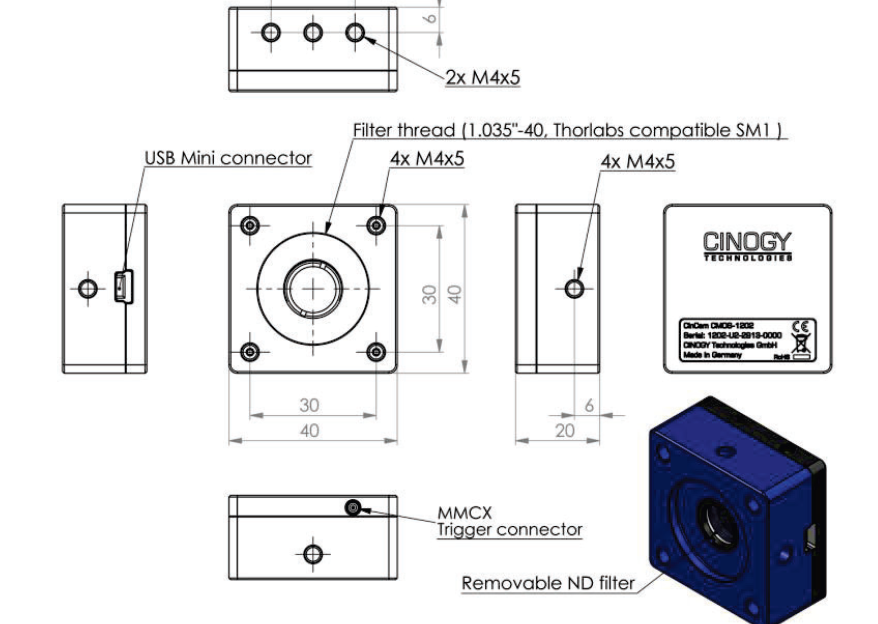
CinCam CMOS Specifications
| Spec | CMOS-1201 | CMOS-1202 | CMOS-1203 | CMOS-1204 |
|---|---|---|---|---|
| Sensor | 1/2″ | 1/1.8″ | 1/1.8″ | 1/2.5″ |
| Resolution | 1280 x 1024 | 1280 x 1024 | 1600 x 1200 | 2560 x 1920 |
| Pixel | 5.2 µm | 5.3 µm | 4.5 µm | 2.2 µm |
| Active area | 6.7 x 5.3 mm | 6.8 x 5.4 mm | 7.2 x 5.4 mm | 5.7 x 4.3 mm |
| Shutter | Rolling | Global | Global | Rolling |
| Frame rate | 20 fps | 20 fps | 14 fps | 5 fps |
| Dynamic range | 68 dB | 62 dB | 62 dB | 70 dB |
| Exposure | 100 µs-140 ms | 100 µs-300 ms | 100 µs-300 ms | 200 µs-200 ms |
| Trigger | None | TTL | TTL | None |
| Beam range | 52 µm-4 mm | 53 µm-4.1 mm | 45 µm-4 mm | 22 µm-3.2 mm |
All models: USB 2.0, USB powered, sensor without cover glass, filter mount with built-in OD 3.0 ND filter, 40 x 40 x 20 mm, 46-50 g, 0 to +40 °C. Source: CINOGY CinCam CMOS datasheet.
Available to buy online from the Axiom Optics online store. To learn more, visit our laser beam profiling applications page.
CinCam CMOS FAQ
What is the CinCam CMOS beam profiler?
The CinCam CMOS is a cost-effective, entry-level laser beam profiler from CINOGY Technologies. It uses a megapixel CMOS sensor without cover glass to measure beam size, shape, position and intensity distribution in real time at up to 20 frames per second, over a standard USB 2.0 connection.
Which CinCam CMOS model should I choose?
The CMOS-1201 suits CW alignment and teaching. The CMOS-1202 and CMOS-1203 have global shutters and TTL triggering for pulsed lasers, with the 1203 offering 2 MP resolution. The CMOS-1204 has 2.2 µm pixels for small focused spots.
Why does the sensor have no cover glass?
Removing the cover glass eliminates interference effects such as etalon fringes caused by reflections between the glass and the sensor, which would otherwise distort the measured profile of coherent laser beams.
What wavelengths can the CinCam CMOS measure?
Standard versions cover 400-1150 nm, or 400-1320 nm on the CMOS-1202 and CMOS-1203. CINOGY also offers RT (320-1150 nm), UV (below 150-1150 nm), OM (240-1150 nm) and IR (1470-1605 nm) sensor versions.
What beam sizes can it profile?
CINOGY recommends beams from about 10 pixels across up to roughly 4 mm: 52 µm to 4 mm on the CMOS-1201, 53 µm to 4.1 mm on the CMOS-1202, 45 µm to 4 mm on the CMOS-1203 and 22 µm to 3.2 mm on the CMOS-1204.
Which software comes with the CinCam CMOS?
CINOGY's RayCi beam analysis software is available in Lite, Standard and Professional versions, so you can match analysis features to your needs.
How much laser power can the CinCam CMOS handle?
The camera includes an OD 3.0 neutral density filter, and additional ND filters from OD 1 to OD 4 raise the measurable power. Saturation depends on beam size, wavelength and exposure, so share your laser details with Axiom Optics for a recommendation.
Where can I buy the CinCam CMOS?
The CinCam CMOS is available from the Axiom Optics online store, and all models and sensor versions are available by quote.
Get the right CinCam CMOS
Share your wavelength, beam size and whether your laser is CW or pulsed. Axiom Optics will recommend the model, sensor version and filters.
RayCi Software for Beam Profilers
RayCi is a dedicated laser beam profiler software that utilizes newly developed correction algorithms and incomparable visualizations modes. This ensures the highest accuracy in beam profile analysis according to ISO standards. (ISO conformity: ISO 11145, 11146, 11554, 11670, 13694)
RayCi has different versions available:
– RayCi-Lite
– RayCi-Standard (Includes SDK)
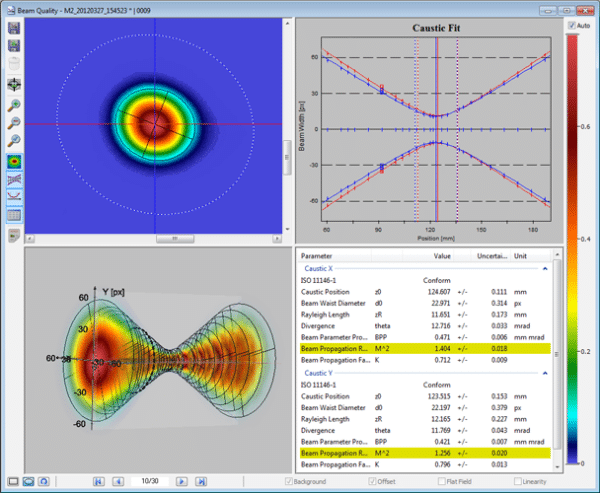
– RayCi-Professional (includes SDK, beam quality / M2 measurement and simultaneous multi-camera measurements)
Please see specification tab for more information on versions.
Also be sure to visit our laser beam profiling application page to learn more and our online store to purchase select beam profilers directly.
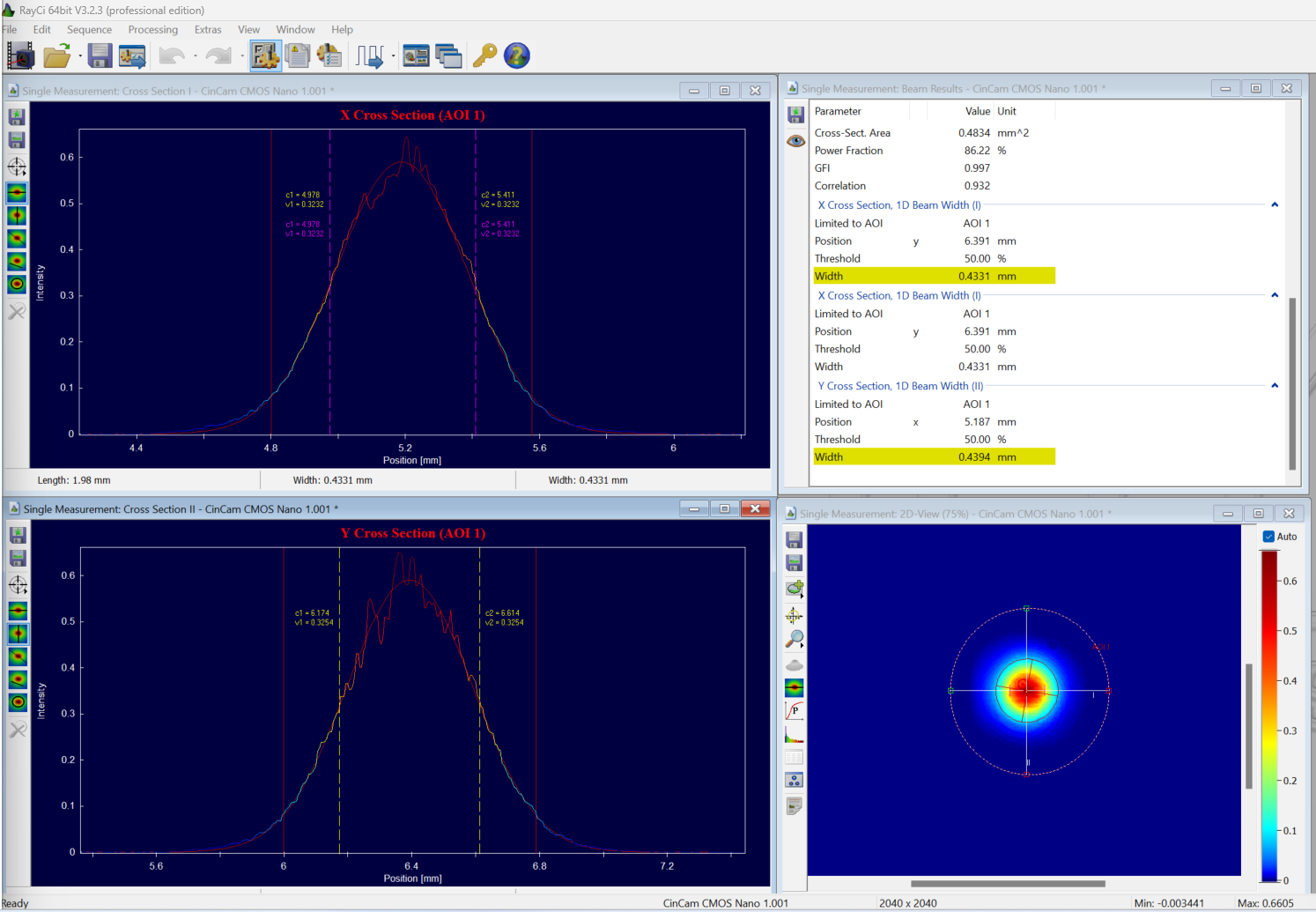
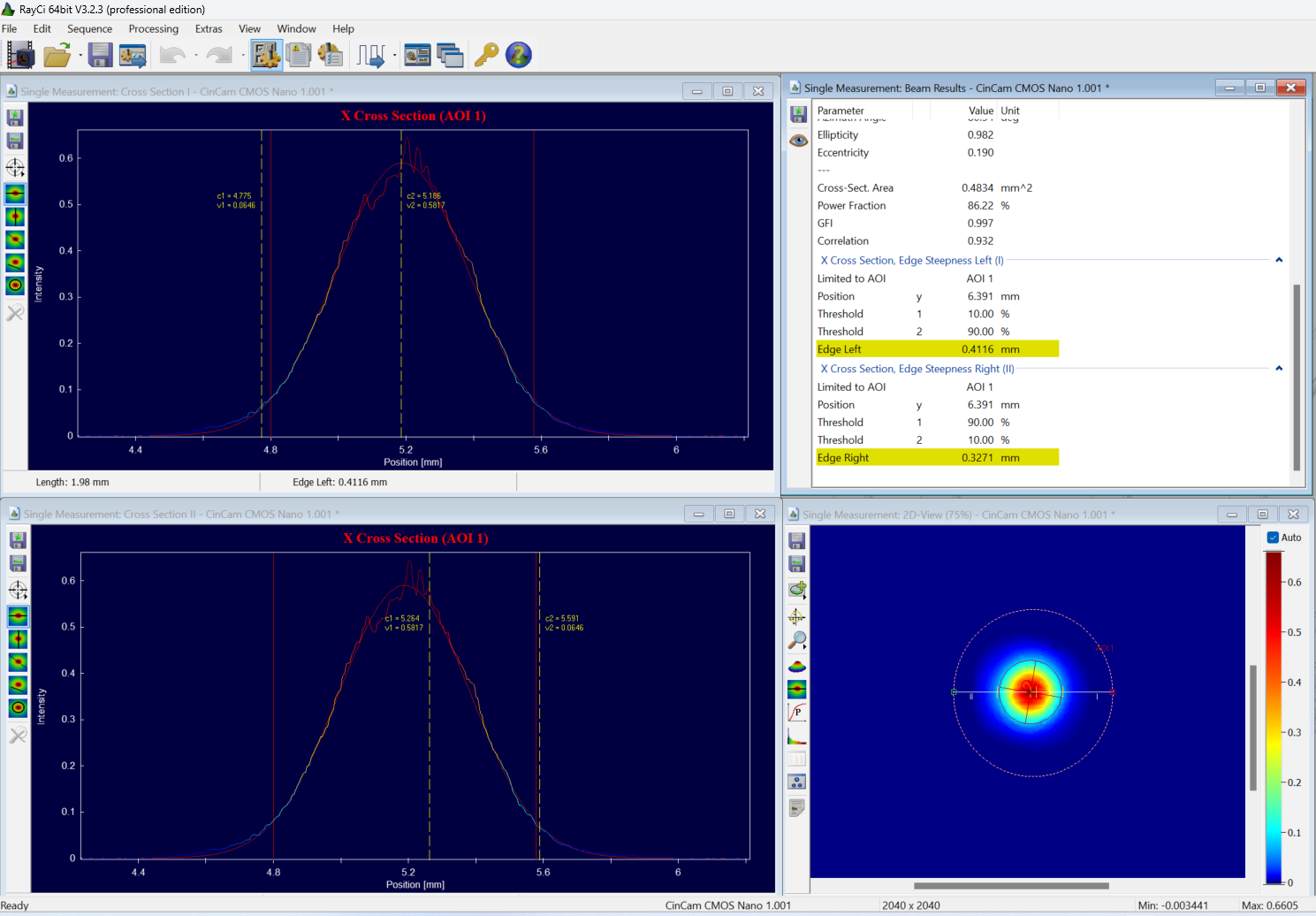
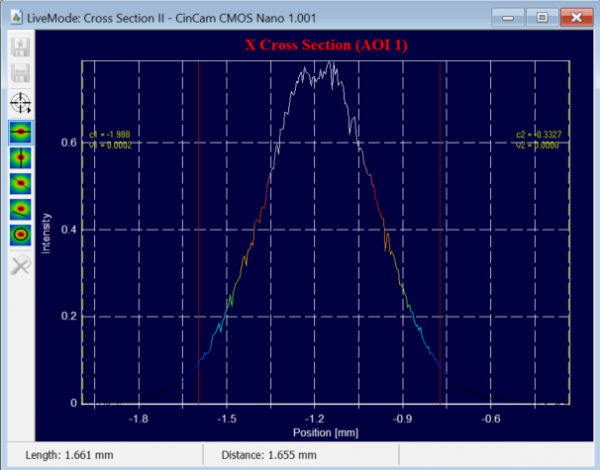
Cross Section Analysis – 1D Beam Width / Edge Steepness
Percentage of Peak:
RayCi supports the most commonly used ‘percentage of peak’ method to determine the width from the beam cross section line. Therefore, two opposite markers are positioned automatically to the specified intensity level. The distance between the markers are used to define the beam width. Two pairs of markers can be used simultaneously to compare different settings. To expand the beam analysis level and roughness options with statistical values are available
Edge Steepness:
Cross section lines of beam profiles are of particular interest for further beam analysis. Especially for flat-top beams the knowledge of the edge steepness is of great importance. RayCi defines the edge steepness of such beams by using different options.
2D Beam Width Analysis
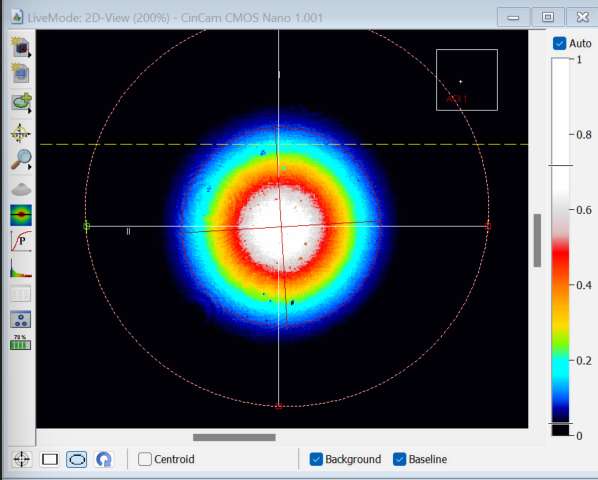
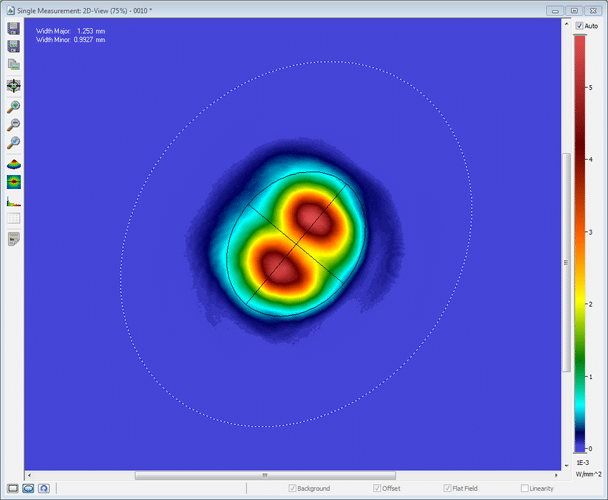
RayCi beam profiler software supports several 2D techniques to determine the beam width of a laser beam. The customer can choose the best technique for their application. This extensive tool on beam width techniques is unique on the market for laser beam profiling.
- 2nd moments (D4s)
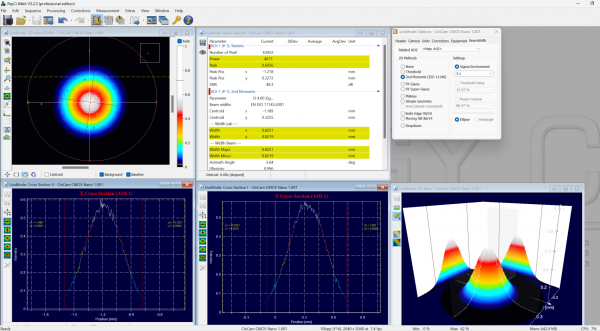
- Gauss/super gauss
- Knife edge/moving slit
- Plateau/geometry/area
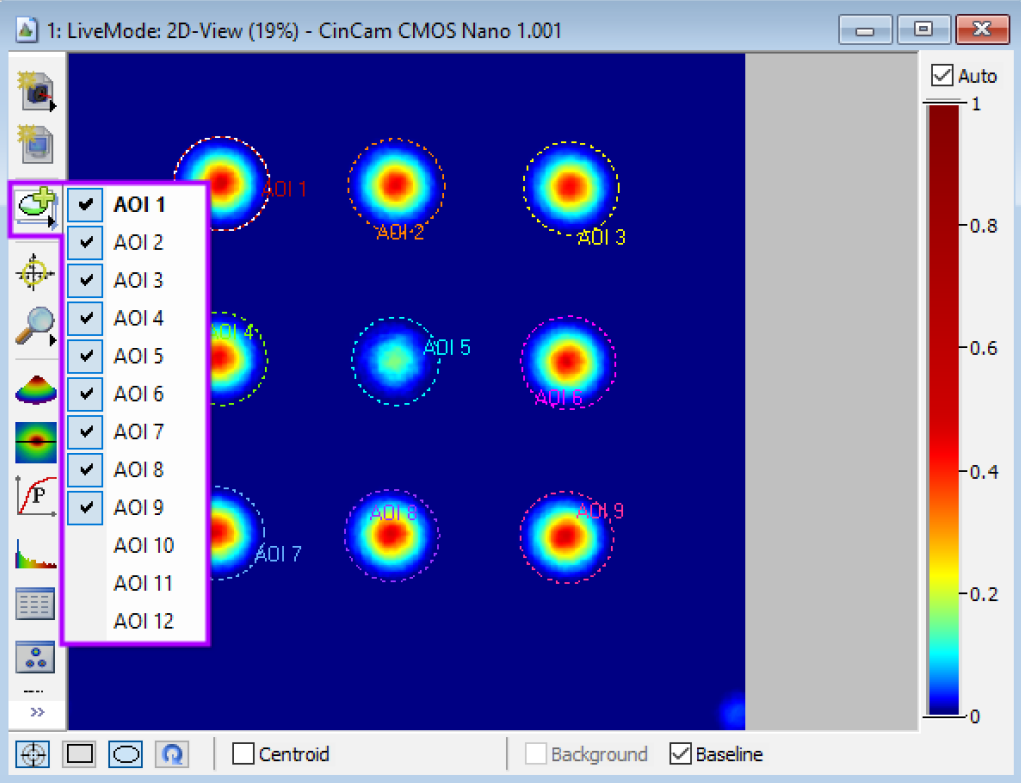
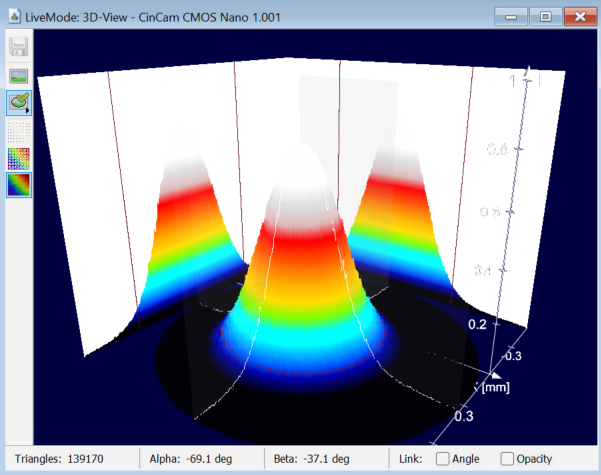
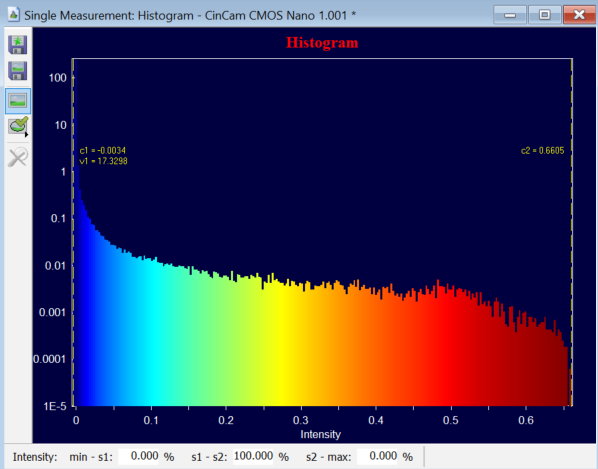
Visualization Tool
| Multiple AOIs |
|
 |
| 2D-View |
|
 |
| 3D-View |
|
 |
| Histogram |
|
 |
| Cross Section |
|
 |
| Beam Result |
|
 |
Measurement Tool
| Snapshot Single Measurement Time Series |
|
 |
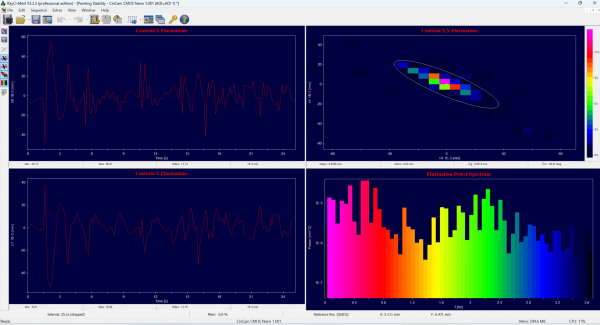
| Pointing Stability: |
|
 |
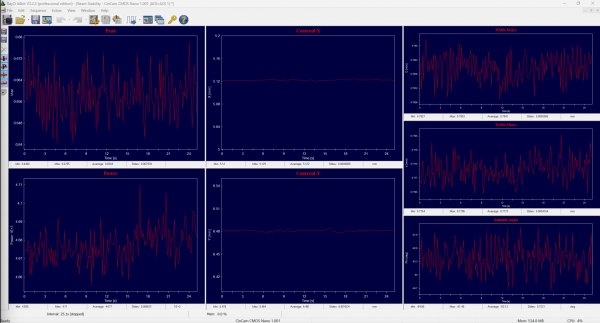
| Beam Stability |
|
 |
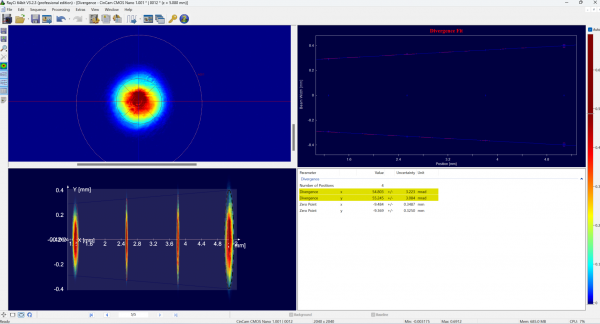
| Divergence Measurement |
|
 |
| Beam Quality M2 |
|
 |