
A Stewart platform is a type of parallel robot that can move in six degrees of freedom (6-DOF), meaning it can translate and rotate in all directions. Also known as a hexapod, a Stewart platform is a mechanical system composed of two rigid plates (fixed and moving plates) connected by six extendable legs (actuators). By precisely controlling the length of each leg, the platform can move in multiple directions and orientations. These movements include:
- Translation along the X (surge), Y (sway), and Z (heave) axes.
- Rotation around the X (roll), Y (pitch), and Z (yaw) axes.
This combination gives the Stewart platform its powerful motion capabilities.
Video 1 – Motion capabilities of a Stewart Platform (shown in 2x speed)
The core principle behind a Stewart platform is parallel kinematics. Unlike serial robots (like robotic arms or stacking up linear stages), where joints are arranged one after another, a Stewart platform uses multiple actuators working simultaneously to control motion.
Each of the six actuators connects the base (fixed) to the top (moving) platform via joints (often spherical or universal joints). When the actuators extend or contract, they change the position and orientation of the top platform.
Key components:
- Base platform: The fixed bottom plate fastened to the ground or table.
- Top platform: The moving upper plate where the payload is attached.
- Six actuators: Typically hydraulic, electric, or pneumatic (always electric for Symetrie hexapods).
- Joints: Allow angular flexibility between components.
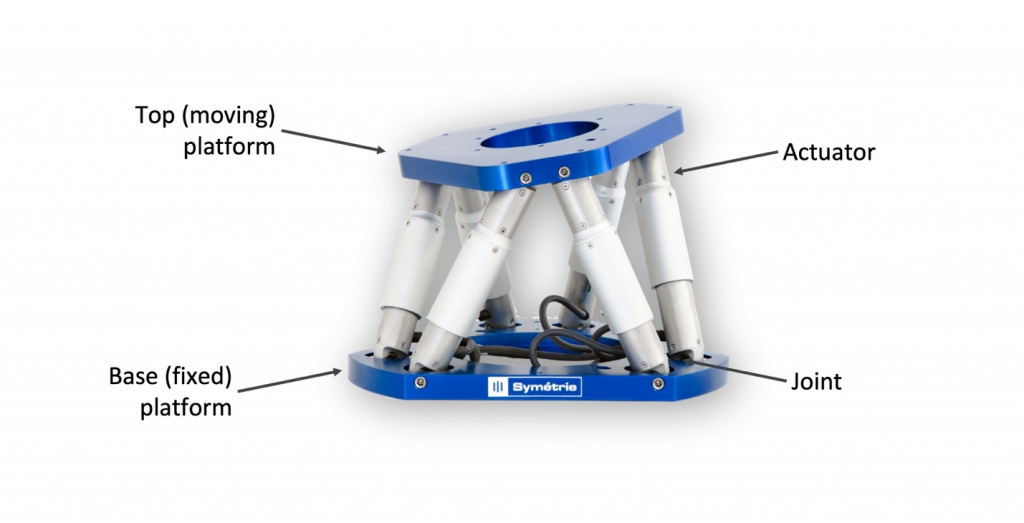
Figure 1 – Components of a Stewart Platform
The system relies on inverse kinematics to compute how each actuator should move to achieve a desired position.
The History of the Stewart platform
The Stewart platform carries one name but owes its existence to three engineers who arrived at the same six-legged idea independently: for tires, for flight, and for the page that finally made it famous.
1947 – The Concept Takes Shape
British automotive engineer V. E. (Eric) Gough, working at Fort Dunlop in Birmingham, conceives a closed-loop mechanism in which six struts share the load between a fixed base and a moving platform, the geometry we now recognize as a hexapod.
1954 – The First Working Machine
Gough’s octahedral “Universal Tyre-Testing Machine” becomes operational, able to push, pull, and twist a tyre in every direction at once to measure its behaviour under realistic combined loads. The rig stayed in service into the late 1980s.
1962-1964 – An Independent Invention
American engineer Klaus Cappel, at the Franklin Institute, develops the same octahedral hexapod without knowledge of Gough’s work. He patents a motion-simulator design (granted in 1967) and builds the first commercial hexapod flight simulators.
1965 – The Name That Stuck
D. Stewart, then at Elliott Automation, publishes “A Platform with Six Degrees of Freedom” with the UK Institution of Mechanical Engineers, proposing the mechanism as a flight simulator. Gough happened to review the paper and noted the resemblance to his own rig, Stewart had been entirely unaware of it.
1980s – Research Takes Off
After roughly fifteen quiet years, parallel manipulators draw serious attention for their stiffness, accuracy, and load capacity. From this point the Stewart platform spreads rapidly through aerospace, simulation, and precision engineering.
Today – A Standard Precision Tool
Hexapods are now everyday instruments in optics and physics labs, aerospace integration, motion simulation, and metrology; from sub-micron mirror alignment to multi-tonne motion bases.
So, What Should You Call It?
All three terms describe the same six-degree-of-freedom parallel mechanism. Stewart platform is the most widely used, thanks to the reach of Stewart’s 1965 paper. Gough-Stewart platform is preferred by many researchers to credit Gough’s earlier prototype. And hexapod, literally “six legs”, is the common commercial name you’ll hear in a procurement conversation. They are all interchangeable.
Advantages and limitations of a Stewart platform
Thanks to its parallel structure, a Stewart platform offers many advantages compared to serial structures:
- High precision: in a serial structure, the errors add to each other, but because all actuators of the Stewart platform contribute simultaneously, errors tend to average out, resulting in very fine positioning accuracy.
- High stiffness: the parallel structure of the Stewart platform distributes loads efficiently, making the system very rigid and stable, relative to its own mass.
- Compact design: compared to serial robots, Stewart platforms can achieve complex motion in a relatively small footprint.
- High load capacity: Stewart platform can support heavy payloads relative to their size due to their structural geometry, for instance Symetrie hexapods have payloads capabilities from 5 kg for the smallest model, up to several tons for the largest model.
- 6-degrees of freedom: this sounds trivial, but a Stewart platform always offers at least 6-DOF, sometimes at about the same price as stacking up 3 linear stages.
- No moving cables: cables are connected at the base of each actuator, next to the fixed platform, so by design, they are not moving.
- Configurable pivot point: the pivot point can be configured through the control software and can be located anywhere in space.
Despite their advantages, Stewart platforms also have some constraints, the main one being their limited travel range: unlike serial robots, moving in one direction or one orientation on a Stewart platform will limit the maximum travel range for the other degrees of freedom.
Comparison
Stewart platform vs. serial robots vs. delta robots
A Stewart platform is one of several ways to move a payload through space. Here’s how the parallel hexapod compares with the two other archetypes engineers most often weigh against it. Focus a column with the buttons, or open a row to see why each criterion matters.
| Criterion | Stewart platform parallel hexapod | Serial robot articulated arm | Delta robot parallel |
|---|---|---|---|
| Parallel, closed-loop — six struts share the load between two plates | Serial, open chain — joints stacked end to end | Parallel — three arms drive one common platform | |
| Why it matters: parallel structures spread both load and error across all members; a serial chain concentrates them at every joint. | |||
| 6 by design (3 translation + 3 rotation) | Typically 6, set by the number of joints | Usually 3 (translation), with 1 optional rotation | |
| Why it matters: if you need full 6-DOF pose control in a compact unit, the hexapod provides it natively; delta robots trade rotation for speed. | |||
| Very high — errors tend to average out | Moderate — errors accumulate along the chain | High — limited error stack-up | |
| Why it matters: in a serial arm a small error at the base is amplified at the tool; parallel legs tend to cancel rather than compound errors. | |||
| Very high — six members loaded in tension/compression | Lower — cantilevered links flex under load | High for its weight class | |
| Why it matters: stiffness governs how well a system holds position under load and resists vibration — critical for optics, machining, and metrology. | |||
| High — heavy payloads in a small footprint | Low–moderate — motors carry downstream link weight | Moderate — low moving mass favors speed | |
| Why it matters: the six legs carry the payload together, so a compact hexapod can hold far more than a similarly sized arm. | |||
| Limited and coupled — range in one axis reduces the others | Large — long reach and wide working envelope | Limited — compact, dome-shaped volume | |
| Why it matters: this is the hexapod’s central trade-off — you exchange a large working envelope for stiffness and precision. | |||
| Moderate–high — motion hexapods reach ~1–2.5 m/s and ~1 g | Moderate | Very high — built for rapid cycles | |
| Why it matters: delta robots are purpose-built for fast pick-and-place; motion hexapods prioritize controlled dynamic motion over peak speed. | |||
| Compact — floor- or table-mounted | Larger footprint — floor or pedestal | Mounted overhead, above the work area | |
| Why it matters: mounting and footprint decide how the unit integrates into a cell, instrument, or test rig. | |||
| Simple inverse, hard forward kinematics; singularities to avoid | Mature and widely supported | Moderate; established controllers | |
| Why it matters: all three are well understood, but hexapod calibration and trajectory validation demand more care. | |||
| Precision positioning, optical & antenna alignment, motion simulation, metrology | General automation — welding, assembly, material handling | High-speed sorting, packaging, pick-and-place | |
| Why it matters: match the structure to the job — precision and stiffness vs. reach vs. raw speed. | |||
A fourth option — stacking three or more linear stages — can reach similar travel, but a hexapod often delivers full 6-DOF motion at comparable cost with far better stiffness.
Key applications of Stewart platforms
Stewart platforms are used wherever precise, multi-axis motion is required. Their ability to deliver synchronized movement across six degrees of freedom makes them especially valuable in high-performance and safety-critical environments. Below is a non-exhaustive list of key applications for Stewart platforms:
Flight simulators
One of the most iconic applications of the Stewart platform is in flight simulation. The platform reproduces aircraft motion—roll, pitch, yaw, and translational accelerations—to create a realistic training environment for pilots. High-end simulators combine the hexapod’s motion with visual and vestibular cues to mimic turbulence, takeoff, landing, and emergency scenarios with high fidelity.
Automotive & naval industries
Similar to aircraft simulators, Stewart platforms can simulate real-world road conditions and sea swell for applications like durability testing, ride comfort evaluation, and component validation, so that engineers can test vehicle behavior without leaving the lab. They are also used in testing autonomous vehicle sensors, where precise and repeatable motion profiles are critical.
Aerospace & SATCOM
In aerospace, Stewart platforms are used for antenna alignment, satellite testing, and optical system positioning. For example, they can simulate the orientation of a satellite in orbit or precisely align instruments during integration and testing phases. Their stiffness and accuracy are key for maintaining alignment under load.
Manufacturing, metrology & precision engineering
Stewart platforms are used in precision manufacturing processes such as CNC machining, laser cutting, and semiconductor alignment. In metrology, they serve as positioning stages for measurement equipment, enabling accurate inspection of parts and assemblies. Their rigidity minimizes deformation, which is essential for maintaining measurement accuracy.
Medical & surgical systems
In the medical field, Stewart platforms are used in surgical robotics, rehabilitation platforms, and imaging systems. They enable extremely precise positioning, which is critical for minimally invasive procedures or radiotherapy systems where sub-millimeter accuracy is required.
Robotics
Stewart platforms are widely used in robotics labs and research institutions for motion control experiments, calibration systems, and validation of control algorithms. Their predictable and repeatable kinematics make them ideal for studying advanced topics such as control theory, sensor fusion, and dynamic system response.
Entertainment & virtual reality
Beyond industrial applications, hexapods are also used in motion platforms for gaming, virtual reality experiences, and theme park attractions. These systems leverage the same principles as flight simulators but are optimized for immersion and user experience rather than strict physical accuracy.
FAQ
Frequently asked questions
Why is it called a Stewart platform?
It is named after D. Stewart, whose 1965 paper “A Platform with Six Degrees of Freedom” introduced the mechanism to a wide audience as a flight simulator. It is also called the Gough-Stewart platform, after Eric Gough, who built a similar six-legged rig to test tyres years earlier. Both names describe the same six-degree-of-freedom parallel mechanism.
Is a hexapod the same as a Stewart platform?
Yes. “Hexapod” — meaning six legs — is the common commercial term for a Stewart platform: a moving platform driven by six actuators. In a procurement or technical conversation, “hexapod,” “Stewart platform,” and “Gough-Stewart platform” all refer to the same thing.
How many degrees of freedom does a Stewart platform have?
Six. It can translate along three axes (surge, sway, and heave) and rotate about three axes (roll, pitch, and yaw), which is why it is described as a 6-DOF or six-axis platform.
What are the advantages of a Stewart platform over a serial robot?
Because all six actuators share the load and act in parallel, positioning errors tend to average out rather than accumulate, so a Stewart platform offers higher accuracy and far greater stiffness than a comparable serial arm. It also supports heavy payloads in a compact footprint and provides six degrees of freedom by design.
What are the limitations of a Stewart platform?
Its main constraint is a limited, coupled workspace: moving toward the limit of one axis reduces the available range of the others. Stewart platforms also have certain singular poses that must be avoided, and their forward kinematics — finding the platform’s pose from the six leg lengths — is mathematically complex.
What is the difference between a positioning hexapod and a motion hexapod?
Positioning hexapods are built for fine, highly repeatable point-to-point moves where accuracy and stiffness matter most. Motion hexapods are built for dynamic simulation, where speed and acceleration matter more than sub-micron resolution — for example, reproducing sea swell, road, or flight motion.
Are Stewart platform actuators hydraulic or electric?
They can be hydraulic, pneumatic, or electric. Hydraulic actuators were common in early large simulators, while modern precision and motion hexapods — including all Symetrie hexapods — use electric actuators for cleaner, more controllable operation.
A dive into Symetrie Stewart platform solutions
Symetrie offers a wide range of high-end Stewart platforms, categorized in two families: positioning hexapods and motion hexapods. All Symetrie hexapods use electric actuators (not hydraulic nor pneumatic).
Positioning Hexapods
These Stewart platforms are designed to achieve very fine displacements, with high repeatability and accuracy. Positioning hexapods are typically slow (but not always) and are usually operated in a point-to-point fashion. They are also very stiff as many applications require holding a position, either while the hexapod is on and running or when the hexapod is off. In the latter case, the hexapod needs to be mechanically irreversible, which most of Symetrie hexapods are.
Payload capacity & resolution:
Symetrie positioning hexapods product range starts at 5 kg maximum payload capacity with the SOLANO miniature hexapod and goes all the way up to 1,500 kg maximum payload capacity with the JORAN hexapod, with sub-micron resolution for most of the catalog.
All hexapods are using absolute encoders, except the BORA and PUNA that are using incremental encoders, but an option called Virtual Homing is available to avoid having to do the homing procedure at every boot-up. The most high-end hexapods are using linear absolute encoders directly mounted on the actuator (ZONDA & JORAN hexapods).
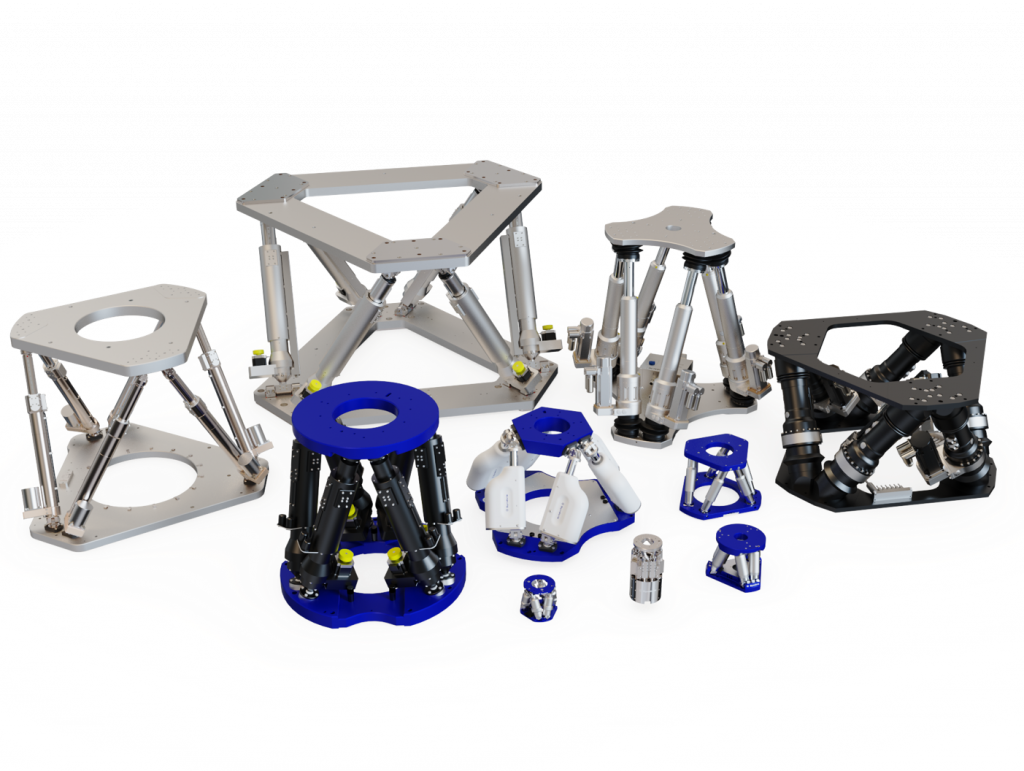
Figure 2 – Symetrie positioning hexapods displayed to scale
Environment:
Positioning Stewart platforms became very popular tools for optics and physics labs and factories, and therefore sometimes need to be compatible with clean or harsh environments. All of Symetrie positioning hexapods are clean-room compatible with ISO 7 class in standard, and down to ISO 5 class as an option.
Some models can even be customized to be compatible with high vacuum (10⁻⁶ mbar) environments (MAUKA, BORA, ZONDA & JORAN hexapods), and with extended temperature range compatibility from -40°C up to +60°C (BORA & ZONDA), vs. 0°C to +50°C in standard.
Symetrie also has experience designing and manufacturing non-magnetic hexapods, but those are not part of the standard catalog.
Finally, some positioning Stewart platforms are being used outdoors, in dusty, and sometimes rainy and/or snowy environments (for instance when used as secondary mirror or sub-reflector positioners in telescopes). In those cases, the hexapod can be customized to be compatible with this outdoor environment, typically by adding a protective bellow between the fixed and mobile platforms.
Control software:
SYM_Positioning is the GUI software included with each hexapod that allows simple tasks like configuring the center of rotation and moving to safe (pre-validated) positions based on pre-configured payload characteristics (mass, COG position) and coordinate system, or more complex tasks like generating a sequence of positions.
Symetrie can also supply a free-of-charge API and specific SDKs, programming libraries or examples for C++, LabVIEW, Matlab, Python, EPICS, TANGO, etc …
Lastly, a hand-held control unit can be provided for manual controls, with the possibility to select the axis and increment size, and then to do some jog or continuous movements.
Video 2 – SYM_Positioning GUI software main features
To learn more about Symetrie’s positioning hexapods, visit our product pages.
Motion Hexapods
Motion Stewart platforms are typically used for simulation applications where dynamic specs like speed and acceleration matter more than resolution and accuracy. Symetrie motion hexapods still are on the high-end of the spectrum when it comes to resolution, repeatability and accuracy specs, but with typically one to two orders of magnitude difference with positioning hexapods. Symetrie hexapods are extremely popular for applications like sea-motion, aircraft motion or ground-based vehicle motion simulation or for motion compensation applications with similar motion profiles.
Payload capacity, speed & acceleration:
Symetrie motion Stewart platform’s product range starts at 50 kg maximum payload capacity, and goes up to 6 tons, with maximum rated speed typically between 1 and 2.5 m/s and acceleration rates up to 10 m/s2 or 1 g.
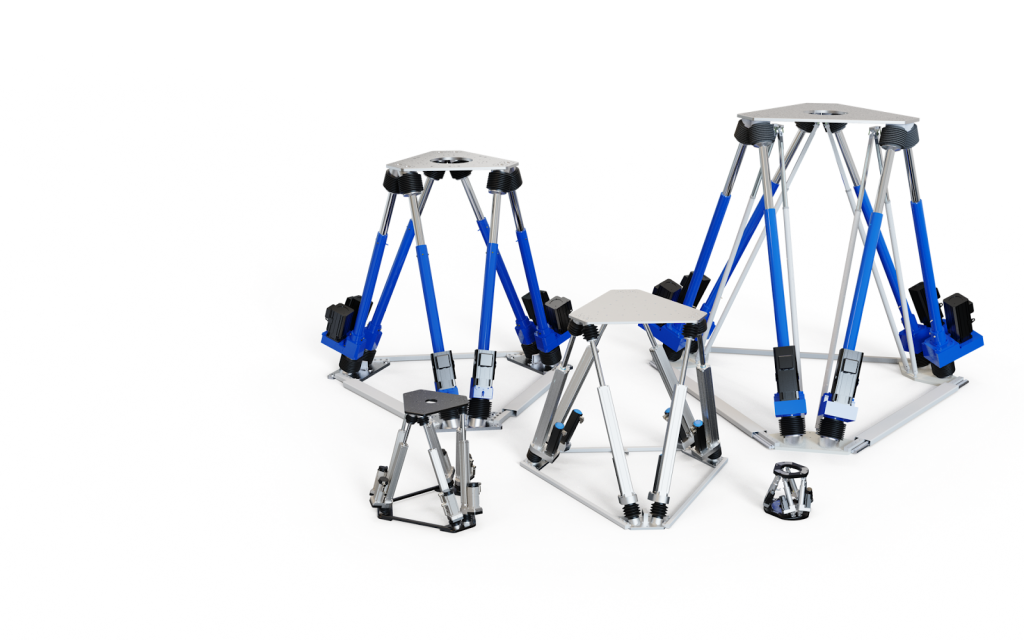
Figure 3- Symetrie motion hexapods displayed to scale
Environment:
Symetrie motion Stewart platforms are often used outside and can therefore be exposed to dust, rain, snow as well as to wider temperature ranges. Each one of those hexapods can be modified to be outdoor compatible, typically with anti-corrosion treatments, protective bellows or skirts to limit the intrusion of dust and water in the joints, and with the use of different grease and parts that can accommodate the wider temperature swings.
Control software:
SYM_Motion is the GUI software that allows the user to control the motion of dynamic hexapods, with the following control features: point-to-point, sinusoidal and harmonic trajectories, or more complex pre-defined or pre-recorded trajectories. All those movements require software validation before being played.
An optional API is available for customers interested in interfacing with the hexapod through their own control software.
The UPD Acquisition is another optional feature that allows the user to retrieve the exact position of the hexapod directly from the absolute encoder’s values, either in real time or in post-processing.
Lastly, the ERTT feature (External Real-Time Trajectory) is an option that allows users to control the hexapod in real-time without prior trajectory validation, for example by using a joystick, or by feeding trajectory information live.
To learn more about Symetrie’s motion hexapods, visit our product pages.
You can also read more about the applications of hexapods on this page.
This post was written by:
Vincent Renaud, Sales & Application Engineer
