
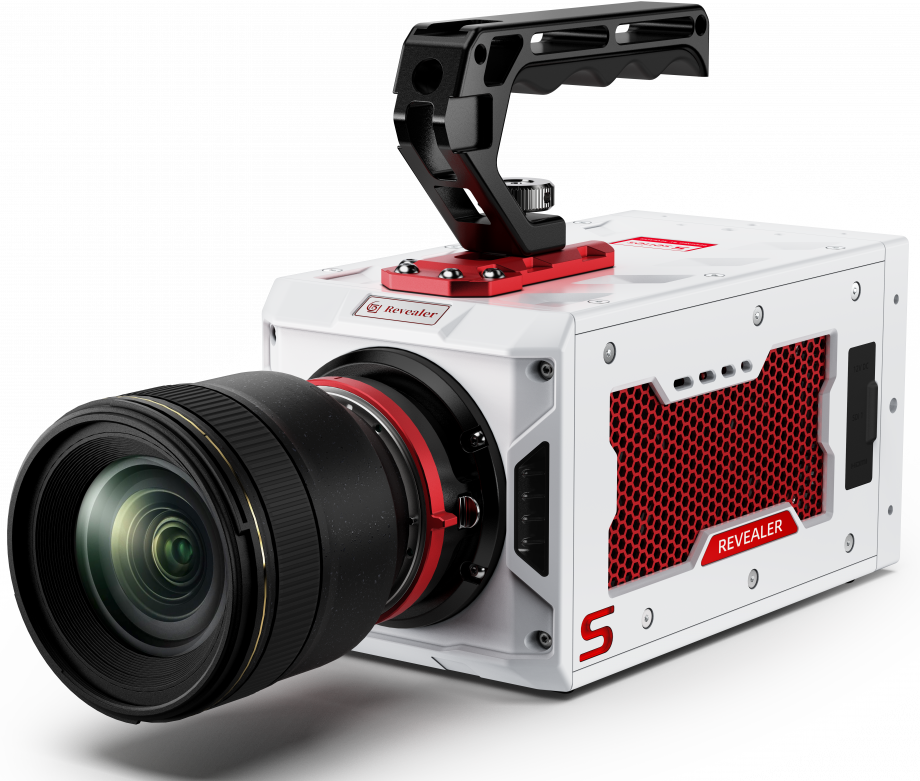
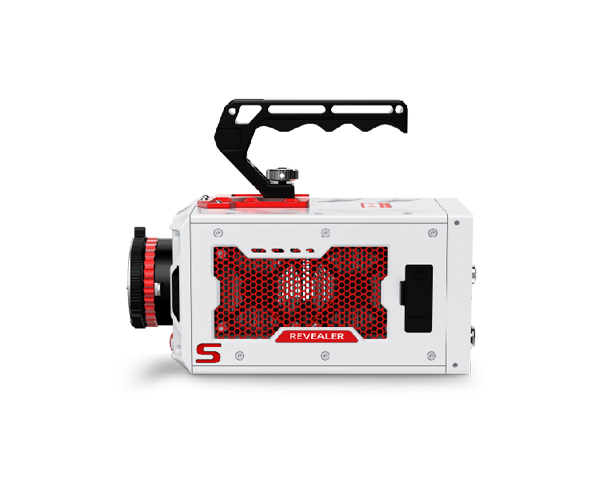
Revealer | High-Speed Camera S Series
Sensor Type
Global Shutter CMOS
Pixel Size
14.6 μm × 14.6 μm
Full-Frame Resolution
1280 × 1024
Minimum Exposure
100 ns
Max Frame Rate (Reduced Resolution)
1,060,000 fps
Data Interface
10 Gigabit Ethernet (10 GbE), backward compatible with 1 GbE
 Description
 Specifications
 Applications
 Downloads
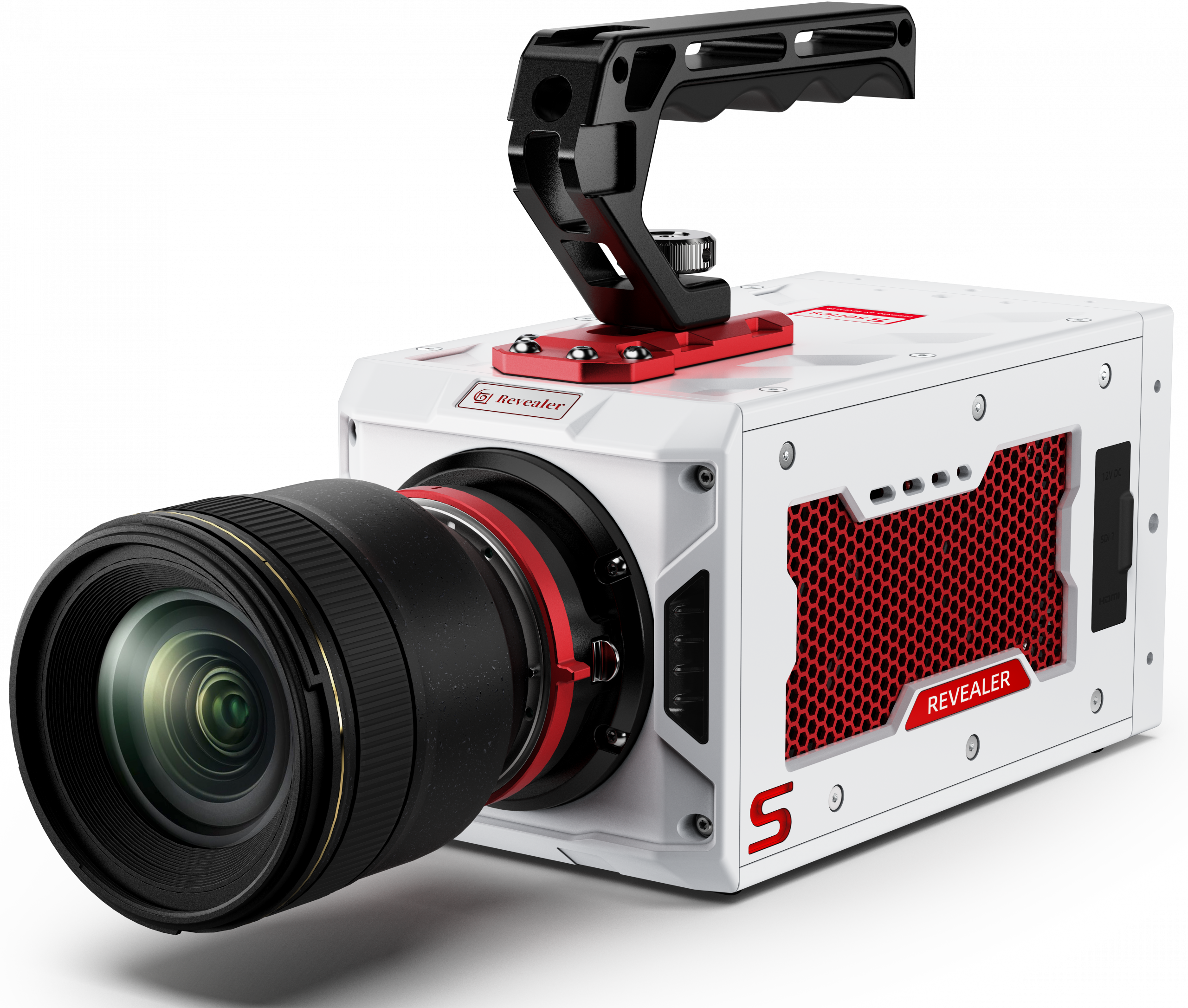
Revealer High-Speed Camera S Series: 15,000 fps Full Frame and Long-Take Memory
The Revealer S Series high-speed cameras adopt a high-bandwidth CMOS chip architecture coupled with a high-performance processing engine. Operating at a full 1280 × 1024 frame size, the flagship S1315M/C model reaches 15,000 fps at full resolution and up to 1,060,000 fps in ROI windowing mode.
Equipped with 96 GB or 192 GB of onboard high-speed RAM and expandable non-volatile flash storage from 1 TB up to 10 TB, the S Series is designed for ultra-fast, long-duration recording without loss of image data upon power-down. A 10 Gigabit Ethernet interface ensures rapid offloading, while its IP64-rated aluminum body withstands harsh field and laboratory environments.
Revealer S Series Highlights
- Global shutter CMOS sensor: eliminates motion distortion with exposure times down to 100 ns
- Extreme ROI frame rates: top speed exceeds 1,060,000 fps at 1280 × 8 resolution
- Massive long-take RAM and flash: up to 192 GB RAM (with 96 GB, the S1305 holds 11.44 seconds of full-frame video at 5,000 fps), complemented by up to 10 TB expandable flash storage
- Particle image velocimetry (PIV): 300 ns inter-frame straddle time for fluid dynamics, shockwave tracking and particle measurements
- Comprehensive mounting options: 1/4 in threaded mounting holes on top, bottom and both side faces for flexible integration
Microsecond Precision with the Revealer S Series
The Revealer S1315M/C ultra-high-speed camera transforms transient phenomena into actionable engineering insight. Operating at up to 15,000 frames per second full frame, it records a new frame every 66.7 µs, the temporal scale where laser pulse propagation, critical material fracture dynamics and precision ignition events unfold. By turning motion too fast for the eye into detailed frame-by-frame records, this camera delivers uncompromised frame-by-frame observational fidelity for demanding research and industrial environments.
Engineered for high-throughput quantitative analysis, the S Series integrates a high-performance global shutter with true 10-bit depth to eliminate motion distortion and capture crisp intensity gradients. Whether deploying advanced particle image velocimetry (PIV), digital image correlation (DIC) or forensic structural failure analysis, every frame yields clean, high-contrast, quantitative datasets designed to accelerate analytical workflows and elevate diagnostic accuracy.
Trade Field Height for Frame Rate
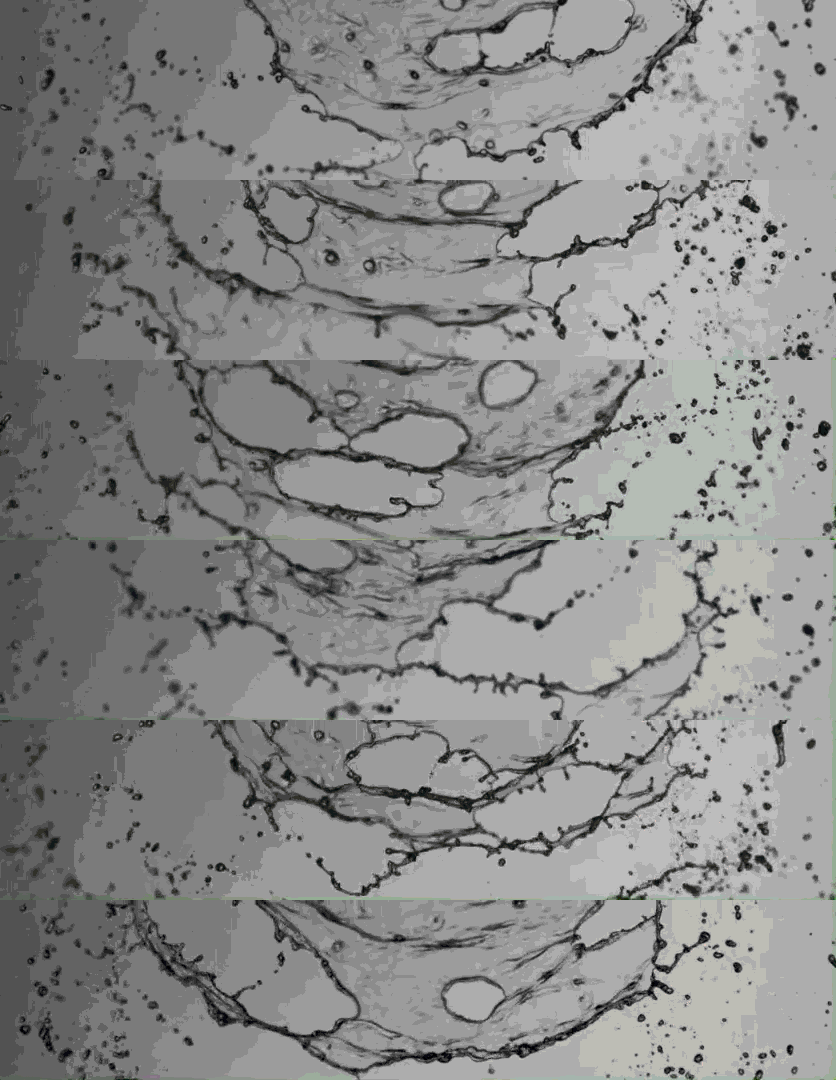
Reducing the region of interest shortens readout, so frame rate rises as rows are removed: the S1315 runs 21,600 fps at 1280 × 720 and 60,000 fps at 1280 × 256. Keep the full frame when the event spans a large field; narrow the window when the fastest motion sits in a band.
Explore
Frame rate, frame interval and record time by region of interest
Pick a model and a sensor height. Values come from Revealer’s S Series resolution and recording-time table (96 GB RAM).
Model
Region of interest (1280 px wide)
The 192 GB RAM option extends these record times, and recordings can be saved to non-volatile flash. Exposure can never exceed the frame interval.
| Model | Full frame | Max ROI (1280 × 8) | Record time, full frame (96 GB) |
|---|---|---|---|
| S1315 | 15,000 fps | 1,060,000 fps | 3.08 s |
| S1310 | 10,000 fps | 800,000 fps | 5.25 s |
| S1307 | 7,000 fps | 600,000 fps | 7.68 s |
| S1305 | 5,000 fps | 470,000 fps | 11.44 s |
Plan the Field of View
With 14.6 µm pixels, the S Series sensor measures 18.7 × 15.0 mm. Focal length and working distance set how large an area you see and how small a detail one pixel resolves, which in turn sets how far a subject moves in pixels between frames.
Calculate
What field of view will you get?
Choose an EF lens focal length and the distance from lens to subject. The 1280 × 1024 sensor with 14.6 µm pixels measures 18.7 × 15.0 mm.
Focal length
Working distance
10 mm100 mm1 m10 mField-of-view width
Thin-lens estimate; real lenses differ slightly, and a lens cannot focus closer than its minimum focus distance.
S Series, NEO Series or NEO Mini?
Choose the S Series for long takes at high frame rates, 100 ns exposures and up to 192 GB of RAM. Choose the NEO Series when the scene is dim and you need its back-side illuminated sensor with 85% peak QE, the NEO 25 UV for ultraviolet emission imaging, or the NEO Mini when size and weight set the limit.
S Series Specifications
- Sensor
- CMOS, global shutter; monochrome or color versions
- Resolution
- 1280 × 1024
- Pixel size
- 14.6 × 14.6 µm
- ADC
- 10-bit
- Minimum exposure
- 100 ns
- PIV straddle time
- 300 ns
- Exposure modes
- Auto exposure (AE), extended dynamic range (EDR)
- High-speed RAM
- 96 GB or 192 GB
- Flash storage
- Expandable non-volatile flash, 1 TB up to 10 TB
- Data interface
- 10 Gb Ethernet, Gb Ethernet compatible
- Video output
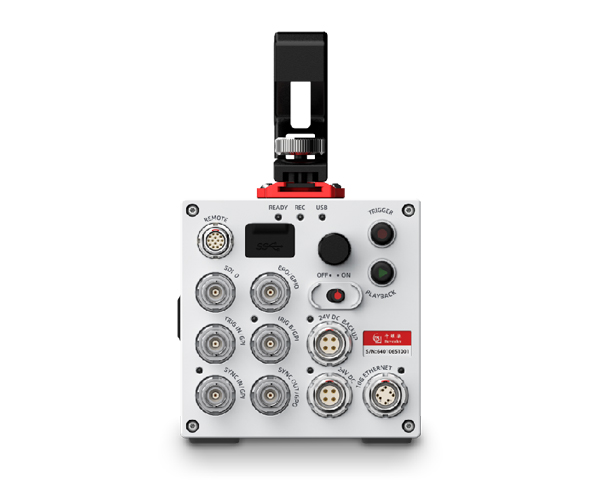
- SDI
- Sync and trigger
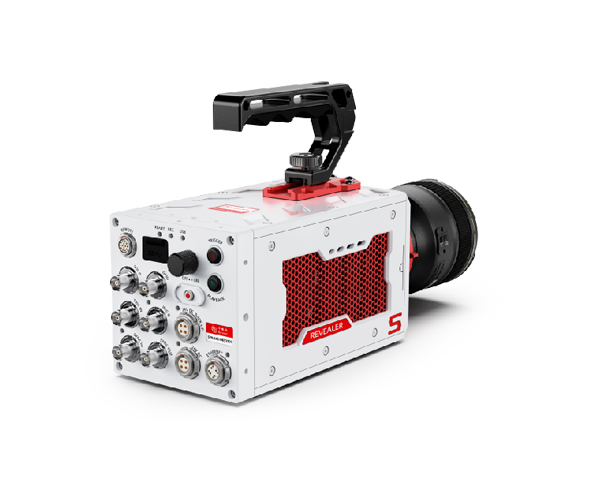
- 3.3/5 V TTL sync in, 5 V TTL sync out, pulse trigger input, 1 custom output; record button
- Timing
- DC IRIG-B input
- Control
- RS422 (reserved)
- Lens mount
- EF standard; F and C optional
- Power
- 24 VDC (18 to 28 VDC, dual power inputs), 160 W max
- Size
- 110 × 110 × 205 mm max
- Weight
- 3.8 kg max
- Mounting
- 1/4 in threaded holes on top, bottom and both sides
- Operating temperature
- −10 to 50 °C; −35 to 60 °C optional
- Operating humidity
- 0 to 95%
- Protection
- IP64, EMC
- Shock
- 30 Grms at 11 ms, 3 axes, 60 pulses
- Vibration
- Resistant to transport vibration
- Cooling
- Fans
S Series FAQ
What frame rates do the Revealer S Series models reach?
At full 1280 × 1024 resolution the S1315 records at 15,000 fps, the S1310 at 10,000 fps, the S1307 at 7,000 fps and the S1305 at 5,000 fps. At a 1280 × 8 region of interest the maximums are 1,060,000, 800,000, 600,000 and 470,000 fps.
How long can the S Series record?
With 96 GB of RAM, Revealer lists 3.08 s at full resolution for the S1315 at 15,000 fps and 11.44 s for the S1305 at 5,000 fps. The 192 GB option extends recording, and expandable non-volatile flash of up to 10 TB keeps recordings without power.
What is the minimum exposure time?
100 ns, with a global shutter. Exposure cannot exceed the frame interval, which is 66.7 µs at 15,000 fps full frame.
Can the S Series be used for PIV?
Yes. It offers a 300 ns inter-frame straddle time, 3.3/5 V TTL sync input, 5 V TTL sync output and a pulse trigger input for laser synchronization.
How does the S Series differ from the Revealer NEO Series?
The S Series uses a CMOS sensor with 14.6 µm pixels, a 100 ns minimum exposure and 96 or 192 GB of RAM for long takes. The NEO Series uses a back-side illuminated sensor with 20 µm pixels and an 85% peak QE for low-light work, reaching 16,000 to 25,000 fps at full resolution.
Which lenses fit the S Series?
The standard mount is EF, with F and C mounts available as options.
Is the S Series suitable for field testing?
Yes. It has an IP64-rated aluminum body, shock resistance of 30 Grms at 11 ms on 3 axes, EMC protection, 1/4 in mounting holes on four faces and an operating range of -10 to 50 °C, with -35 to 60 °C available as an option.
What bit depth does the S Series record?
10-bit, from a 10-bit ADC, for quantitative PIV, DIC and intensity analysis.
Choose the right S Series model
Axiom Optics can help you match frame rate, region of interest, memory and lensing to your test, and arrange a quote or demo.