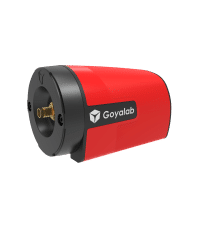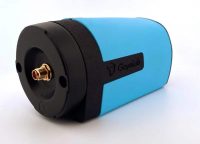


MIDWAVE Spectrometer | 2.0 – 5.0 micron
Readout Rate
400 Hz full-spectrum
Sensitivity
5 pW/nm
Bandwidth
2.0 – 5.0 μm
Optical Input
SMA-905 fiber connector or free space
Resolution
6 cm-1
Exposure Time
0.0108 - 500 ms
 Description
 Specifications
 Applications
 Videos
 Downloads
MIDWAVE Spectrometer: The Fastest Mid-IR Spectrometer in the 2.0 – 5.0µm Range
Developers in both industry and research use mid-infrared (MIR) spectrometers for non-invasive characterization of gases, liquids, and solids as well as characterization of light sources. NLIR’s MIDWAVE Spectrometer manufactured by NLIR is a fast, portable, and versatile Mid-IR spectrometer for measuring light in the 2.0 – 5.0 μm range. Designed for applications requiring high-speed and accurate spectral measurements, it captures full spectra in milliseconds, making it ideal for both in and out of the lab. Did we say it is FAST?

NLIR’s MIDWAVE Spectrometer has high sensitivity of -80 dBm/nm or better, and the full-spectrum readout rate of 400 Hz! The spectrometer enables the characterization of light sources and measuring spectral content from chemical processes with a time resolution of 10 µs.
NLIR spectrometers can be optionally equipped with a light source, optical fibers and probes to perform emission measurements, general transmission and reflection measurements, or measurements on well-defined small areas such as those required during the inspection of small silicon wafer production. Get in touch to discuss your application and request a quote for an instrument or a bundle that meet your needs!
Technological Advantages: MIDWAVE Spectrometer vs. FTIR
All mid-infrared detection products, such as the MIDWAVE Mid-IR Spectrometer, are based on sum-frequency generation (SFG). SFG is a nonlinear optical process where two photons annihilate in the creation of a new photon with the same energy as the sum of the originals. NLIR spectrometers use SFG in a process called upconversion, which aims to change the wavelength of incoming mid-infrared (MIR) light to near-visible light.
The core of NLIR technology is providing a high-intensity laser field (1064 nm,> 1 MW / cm 2 continuous wave) inside a LiNbO3 crystal in a simple way that allows MIR light to enter and the generated near-visible light to exit without either being attenuated. The figure below illustrates a crystal with a high-power laser field (green) penetrating it, and a MIR signal coming in (red) overlapping with the high-power field. After upconversion, the near-visible light (blue) can be detected with a detector suitable for the application in mind. That can be achieved with a CMOS array in a grating spectrometer.

Noise
NLIR spectrometers exhibit superior noise characteristics compared to conventional Mid-IR spectrometers. Upconversion inherently filters out ambient thermal noise, allowing only upconverted signal noise within the detectable bandwidth. Unlike conventional Mid-IR spectrometers, which suffer from significant internal thermal noise often requiring cryo-cooling, NLIR largely avoids this issue because minimal thermal photons exist at the upconverted wavelengths at room temperature.
Speed
While other Mid-IR spectrometer technologies such as FTIR can achieve very high resolution and spectral coverage, they are simply not fast enough for all applications. NLIR MIDWAVE spectrometers utilize a nonlinear optical process to convert IR light into visible or near-IR light which can be detected with very sensitive, lower-noise, and fast detectors, breaking the speed limits set by, for example, interferometric approaches. While the standard MIDWAVE spectrometer can reach full spectra readout rates of 400 Hz, speeds of up to 130kHz can be reached using this technology.

To discover our line of handheld spectrometers for Visible or NIR bands, click here .
Applications of Mid-IR spectrometers
Optical Coating Measurements
A 30 W globar was used as light source for these transmission measurement of coated optical windows: a Ge bandpass filter (BPF) for 3.7 – 4.5 µm and a YAG mirror coated with high reflection at 1064 nm and high-transmission at 2.1 – 4.5 µm. The S2050-400 spectrometer was set to 20 ms exposure time and capturing just single shots. No averaging or smoothing has been applied to the data subsequently. Such measurements are used for coating quality control or even production monitoring.

80 kHz Mid-Infrared Spectroscopy
The drive current of a mid-infrared laser at 3329 nm is modulated in amplitude at 1 kHz and the ultra-fast 80 kHz edition of the NLIR 2.0 – 5.0 µm spectrometer measures the laser spectrum with a temporal resolution of 12.5 µs. When the drive current is modulated, the amplitude and center frequency of the laser changes, and these characteristics are clearly visible in the data shown in the figure. Measurement done by Marc-Simon Bahr at HAW Hamburg, Department of Information and Electrical Engineering.

kHz-Rate Optical Coherence Tomography
Optical coherence tomography is a well-known in-depth imaging technique in the near infrared that, however, has numerous advantages in the mid-infrared region. The NLIR upconversion technology is used to realize kHz line-rate spectroscopy that enables live mid-infrared OCT monitoring.

40 kHz Single Pulse Measurement
Single pulses from a super-continuum light source with a bandwidth of approx. 3.5 µm – 4.2 µm and a repetition rate of 40 kHz of 2 ns pulses were measured with 80 kHz full-spectrum readout rate. In the figure, (a) shows raw data of 12 ms data acquisition, (b) shows a zoom where every other readout is empty as expected from 40 kHz rep-rate and 80 kHz sampling, (c) shows 10 raw consecutive spectra. The fluctuations in the spectra is by far dominated by noise from the light source.
Based on this measurement, the S2050-130k spectrometer is capable of characterizing fast modulations of infrared lasers and other dynamic events.

Plastic Transmission
A 30 W globar was used as the light source for these transmission measurements of a 50 µm polystyrene (PS) film and a 800 µm polyethylene terephthalate (PET) film. The S2050-400 spectrometer was set to 20 ms exposure time and capturing just single shots. No averaging or smoothing has been applied to the data subsequently.
Computer algorithms can certainly tolerate a much shorter exposure time, and thus a faster acquisition, in the context of plastic recognition or thickness analysis.

Fiber Reflection Probe
A fiber reflection probe is a single-bounce attenuated total reflection (ATR) crystal that has fiber-coupled input and output. In this measurement, light from a 30W globar was coupled to the input fiber, and the output fiber was connected to the S2050-400 spectrometer. By first taking a reference with the ATR probe in air, the probe was subsequently inserted into water, propane-2-ol, and sunflower oil, respectively, producing these absorption plots. The measurements were single-shot at an exposure time of 100 ms, and a 4-pixel wide Gauss filter was scanned through the data for smoothing.


Mid-IR Spectrometer Software Included
- A simple and easy-to-use software program.
- Data live stream, external trigger mode, background capture, transmission view, data saving, etc.
- API for spectrometers in MATLAB and Python available upon request

Mid-IR Spectrometer Accessories
Collimator
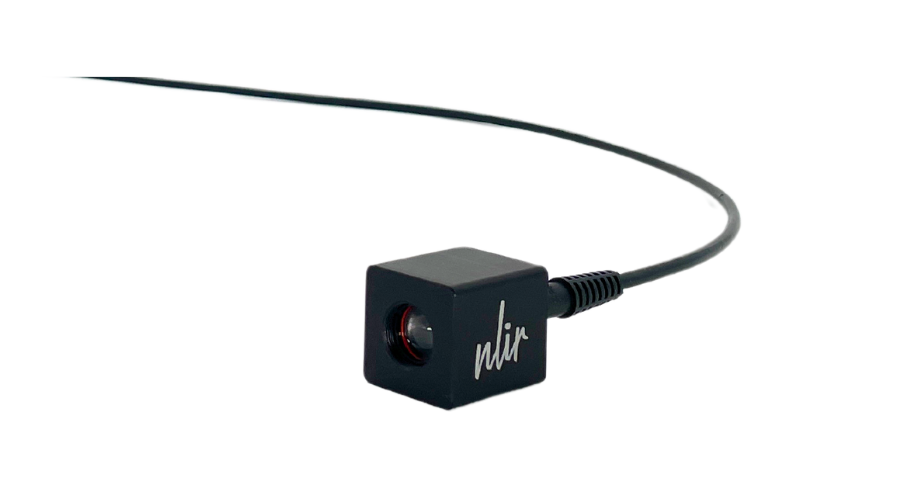 The COLLIMATOR is a simple, cost-effective, and efficient tool for coupling collimated light into a fiber. It features a 20 mm CaF₂ lens, optimized for operation in the 2.0 – 5.0 µm wavelength range. Additionally, the COLLIMATOR can be used in reverse to collimate light emitted from a fiber, making it a versatile optical component for various mid-infrared applications.
Sampler
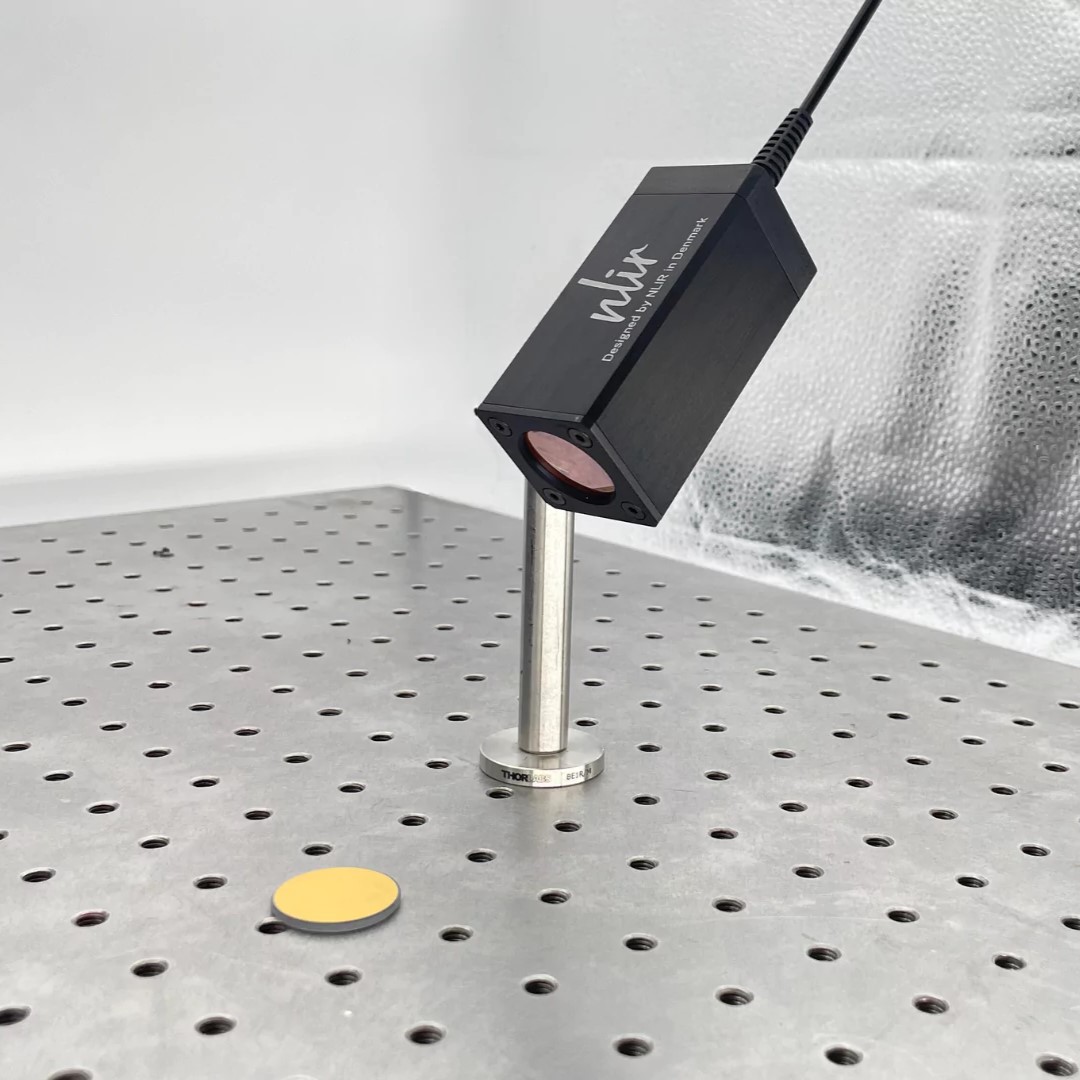 The NLIR SAMPLER Accessory is an effective tool designed to capture light from a specific point and couple it into a fiber.
Constructed with two Calcium fluoride lenses, it is optimized for the 2.0 – 5.0 µm wavelength range. The standard working distance of 146 mm ensures a balance between proximity – to maximize light capture – and sufficient distance to accommodate dynamic samples safely. This working distance can be adjusted upon request.
The SAMPLER is ideally suited for samples exhibiting any degree of diffuse reflectance and works exceptionally well with a large free-space light source.
Mid-IR Fiber
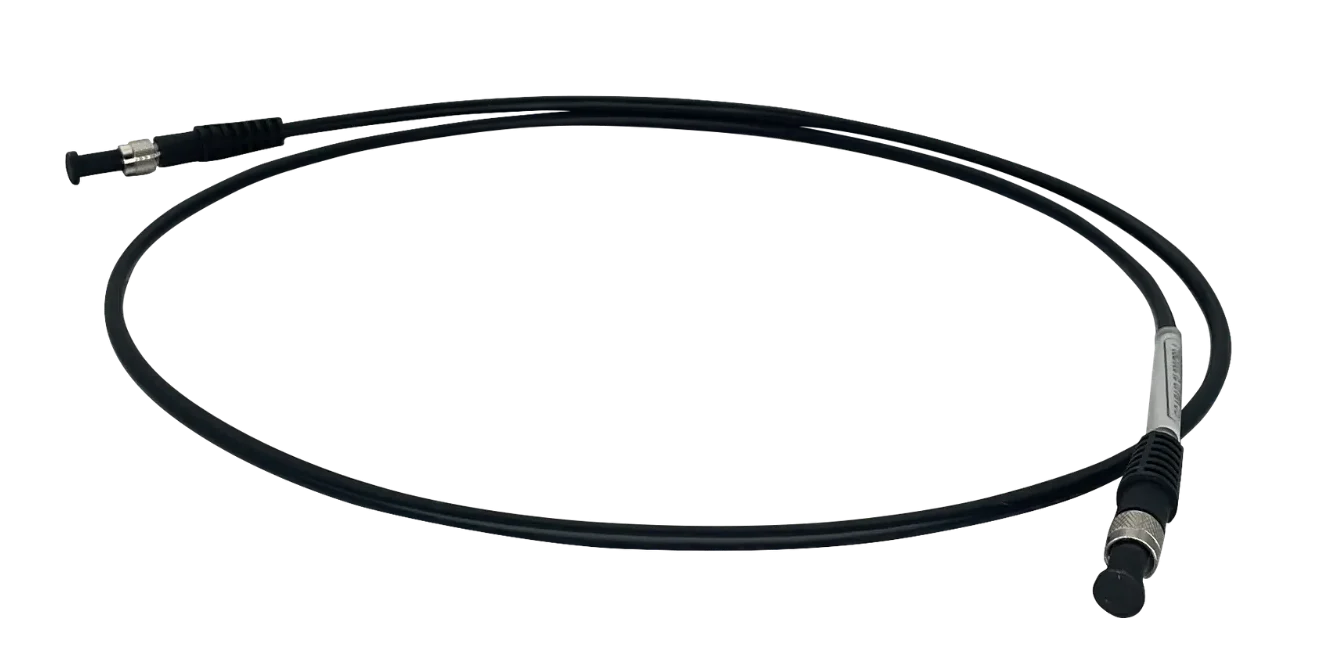 Optical fibers are essential for efficiently guiding light from the source to the sample and from the sample to the detector.
At NLIR, we recommend using InF₃ fibers with our products. These fibers offer excellent transmission from the visible range up to 5 µm, making them highly suitable for all our systems.
The fibers are available with SMA-905 connectors, making them ideal plug-and-play accessories with our Mid-IR Spectrometers and all accessories.
Reflection Interface
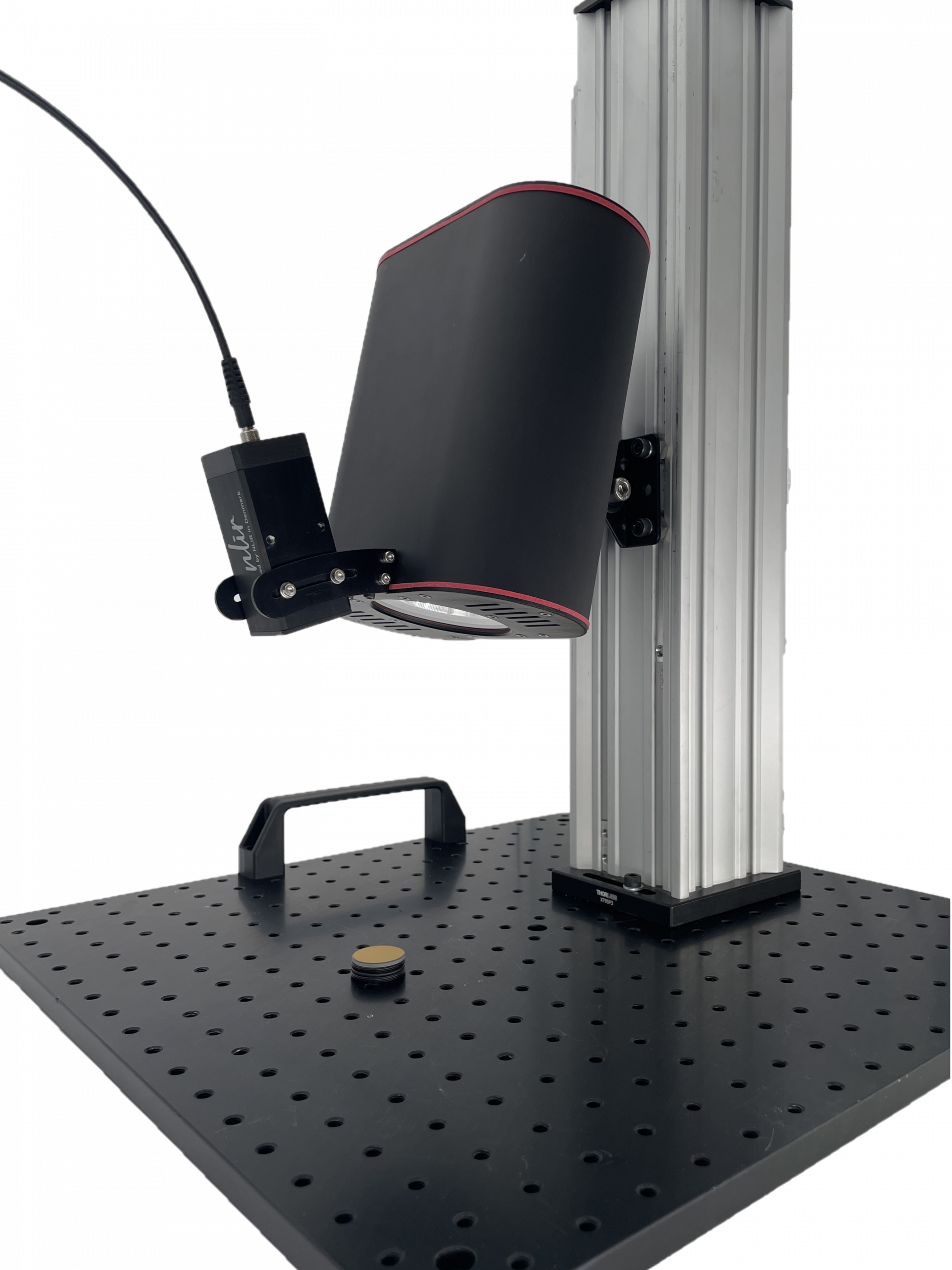
NLIR’s REFLECTION Interface is an optical system designed to reflect and direct infrared (1.0 – 10.0 µm) light efficiently. It is used in various applications where reflection-based optical pathways are needed.
It consists of two independent products AURALIS Light Source and SAMPLER Accessory. Designed to be fiber-coupled with MIDWAVE Spectrometer, this interface allows you to perform reflection measurements at a 15° angle, 150 mm distance. Mounting NLIR’s REFLECTION Interface on a stand in your production line allows you to perform reflection measurements at scale, in real time.
MIDWAVE Spectrometer Technical Drawing