
When most people think of lasers, they picture narrow beams of a single color—like the bright red of a laser pointer or green used in construction tools. But in advanced photonics, there’s a class of lasers that break this mold: white light lasers. These unique sources emit light spanning the UV and visible spectrum and well into the infrared, combining the brightness and coherence of lasers with the broad spectral coverage of traditional lamps. At the heart of this revolution lies supercontinuum laser technology.
What Makes a Laser Look “White”?
White light lasers are different from conventional single-wavelength lasers. To the human eye, their output looks like brilliant white light, but in reality, it is a continuous spectrum extending across the visible region—and often into the ultraviolet and infrared. This broadband coverage makes them extremely versatile in both scientific and industrial applications.
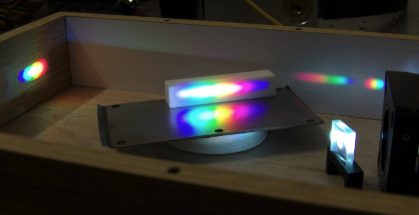
Figure 1. Light dispersion of a white light supercontinuum laser into its constituent colors.
Interactive · how it works
Watch a laser pulse become white light
A supercontinuum starts as an intense, single-color pulse. Drive more peak power into the nonlinear fiber and self-phase modulation, four-wave mixing, and Raman scattering stretch that narrow line into a continuous spectrum from the visible to the infrared.
Conceptual illustration of spectral broadening, not a numerical simulation. Axiom Optics supercontinuum lasers deliver a real continuum from roughly 410 to 2300 nm — see the supercontinuum white light lasers.
Why Supercontinuum White Light Lasers Are Special
Supercontinuum lasers are unique light sources combining laser and broadband lamp features. Unlike other broadband sources, supercontinuum laser light is spatially coherent, allowing tight focusing or efficient fiber coupling. Generated by ultrashort pulses in nonlinear media, they offer high peak power and spectral power density, making them brighter than thermal sources and valuable for scientific and industrial uses.
- Broadband yet coherent: They provide laser-like directionality across a full spectrum.
- High brightness: Thousands of times brighter than conventional lamps or LEDs.
- Compact and fiber-delivered: The use of PCF makes them easy to integrate into laboratory setups and instruments.
- Tunable output: By combining with tunable filters, users can select specific bands or scan across wavelengths.
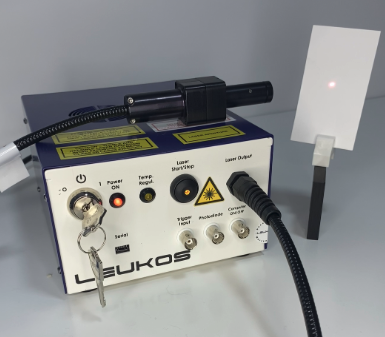
Figure 2. A Supercontinuum white light laser provides an ultra-broadband output delivered in a coherent beam.
Applications of Supercontinuum White Light Lasers
Supercontinuum lasers have become an important technology across scientific and industrial sectors, owing to their ability to generate a broad, continuous spectral output while maintaining the high spatial coherence and brightness of a laser beam. This combination effectively creates a light source that can be spectrally filtered for tunability, replacing multiple conventional light sources, such as lamps and single-wavelength lasers, in complex setups. This versatility can be utilized in high-resolution imaging, sensitive analytical measurements, and ultrafast photonic processing, making supercontinuum lasers essential tools for research and next-generation product development in a variety of fields.
- Biomedical imaging: Essential in fluorescence microscopy, flow cytometry, and endoscopy, where multiple dyes or biomarkers require different excitation wavelengths.
- Spectroscopy: The broadband nature enables absorption, scattering, reflection, and Raman spectroscopy across a wide spectral range with a single source.
- Metrology: Used for optical coherence tomography (OCT), interferometry, and precise surface measurements.
- Telecommunications research: Testing broadband optical components and networks.
- Material science: Probing semiconductors, polymers, and nanostructures’ response to different wavelengths.
Interactive · why it is useful
One source, any wavelength
Because the output is a continuous spectrum, a tunable filter can slice out any band you need — the reason a single supercontinuum laser can stand in for a rack of single-color sources. Tune the center and the passband to see the region and the applications each band serves.
Widen the passband or scan the center to use one source for absorption, reflectance, and Raman spectroscopy across the band.
Wavelength selection shown with a Boreal tunable optical filter on an Axiom supercontinuum white light laser (approx. 410–2300 nm).
Looking Ahead
White light lasers powered by supercontinuum generation represent a remarkable blend of physics and engineering. By transforming ultrafast pulses into a broad emission spectrum, they provide researchers and engineers with a light source that is as versatile as it is powerful—enabling new possibilities across science, medicine, and technology. Supercontinuum lasers continue to evolve by becoming more compact, cost-effective, and user-friendly. Advances in fiber design, pulse laser sources, and thermal management are steadily pushing them from specialized research labs into broader markets, including medical diagnostics, industrial inspection, and advanced imaging systems.
To learn more about our Supercontinuum White Light Lasers click here: https://www.axiomoptics.com/products/laser/supercontinuum-lasers/
This post was written by:
Rodrigo Sánchez González, Technical Sales Engineer