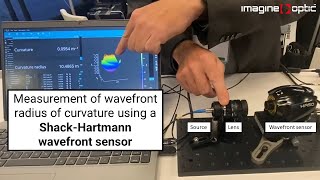
Wavefront Metrology & Adaptive Optics
Axiom Optics supplies the complete wavefront sensing and adaptive optics line from Imagine Optic, together with complementary deformable mirrors, spatial light modulators, and light sources, so you can measure an optical wavefront, analyze it, and correct it with one partner. The range covers Shack-Hartmann wavefront sensors from the extreme ultraviolet to the SWIR, turnkey metrology stations for optics testing, and closed-loop adaptive optics for lasers, microscopes, telescopes, and free space optical links.
Wavefront Metrology and Adaptive Optics Product Families
| Product family | What it does | Models | Highlights | Best for |
|---|---|---|---|---|
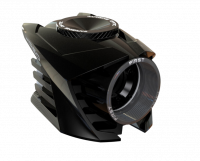
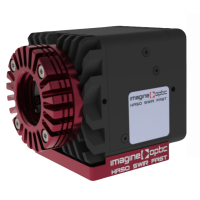
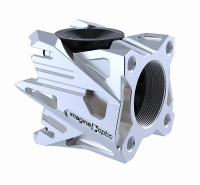
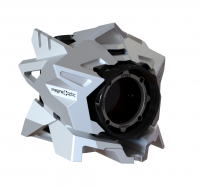
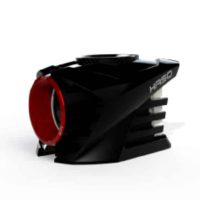
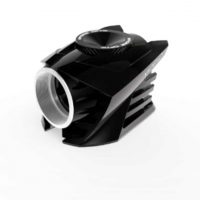
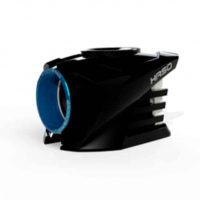
| Wavefront sensors | Measure the phase and intensity of a beam or optic in a single shot with Shack-Hartmann technology | HASO FIRST, LIFT 680, LIFT LP 512, HASO FAST, HASO Multispectral, EUV, DUV, and SWIR models | 4 nm to 1.7 µm; up to 680 × 504 phase points; up to 4.5 kHz | Laser characterization, alignment, AO feedback |
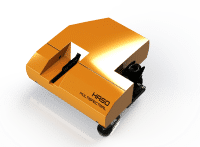
| Turnkey metrology systems | Complete stations for testing lenses, mirrors, windows, and wafers | MESO, R-FLEX2, R-FLEX LA | Multi-wavelength; plane-parallel and large-aperture optics | Optics manufacturing and quality control |
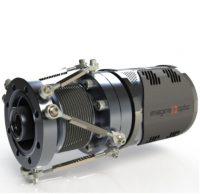
| Deformable mirrors and phase plates | Correct the wavefront by reshaping a reflective or transmissive surface | muDM, Mirao 52e, ILAO Star, Delta 7, Zwobbel | 52 to 93 actuators; high-power and transmissive options | High-power lasers, microscopy, focus control |
| Spatial light modulators | Modulate phase or amplitude pixel by pixel with liquid crystal on silicon | GAEA-2.1, ERIS-1.1, LETO-3, PLUTO-2.1, LUNA, LC 2012, amplitude SLM | Up to 4K resolution; high-speed 1080p; transmissive XGA | Beam shaping, holography, structured light |
| Adaptive optics kits and software | Closed-loop systems pairing a sensor, a corrector, and control software | CIAO, AO Kit DM, SLM, and Phaseplate, AOKit Bio, MicAO 3DSR, WaveTune, WaveKit SDK | Turnkey loops; Python, C++, and LabVIEW SDK | Astronomy, free space optics, microscopy, lasers |
| Metrology light sources | Reference illumination for wavefront metrology benches | MS-LAMBDA | Designed for use with HASO sensors and metrology systems | Building or upgrading a test bench |
How to Choose the Right System
Start with the wavelength. The sensor has to match your source. HASO EUV and HASO DUV cover the extreme and deep ultraviolet, most HASO and LIFT sensors cover the visible and near-infrared, and the HASO SWIR family covers telecom and fiber laser wavelengths. The HASO Multispectral resolves the wavefront across 550 to 1000 nm with 1 nm spectral resolution.
Decide whether you need to measure or to correct. Characterizing a laser, testing an optic, or aligning a system needs a wavefront sensor and analysis software such as WaveView. Removing aberrations in real time needs a closed loop: a sensor, a deformable mirror or SLM, and control software.
Match the tool to the object under test. For laser beams, choose a wavefront sensor sized to the beam. For optical components, a turnkey system saves integration time: MESO measures both surfaces and the transmitted wavefront of plane-parallel optics, and R-FLEX LA handles large apertures.
Check speed and resolution. Fast loops for turbulence correction need kilohertz rates, such as the HASO FAST at 1 kHz or the HASO SWIR FAST at 4.5 kHz. Fine spatial detail calls for high phase-point density, such as the LIFT 680 at 680 × 504 or the LIFT LP 512 at 512 × 512 over a 22 × 22 mm pupil.
Applications for Wavefront Metrology and Adaptive Optics
Laser beam characterization and M² measurement
High-performance lasers need rigorous metrology to verify beam quality. HASO wavefront sensors measure phase and intensity simultaneously, so a single acquisition yields M², divergence, and pointing stability across UV, visible, and SWIR bands. Dedicated M² measurement systems are also available.
Laser focal spot optimization and Strehl ratio
A diffraction-limited spot is essential for material processing and laser-plasma acceleration. Pairing a wavefront sensor with a deformable mirror creates a feedback loop that identifies and compensates for system aberrations, maximizing the Strehl ratio. Learn more in Strehl ratio: how perfect is your focal spot?
Optical component testing and system alignment
High-end optics manufacturing relies on non-contact metrology to verify performance. Wavefront sensors speed the alignment of complex systems such as off-axis parabolas, support MTF measurement, and test the transmitted wavefront error of lenses, mirrors, and thin plane-parallel optics such as glass wafers.
Atmospheric correction for free space optics and astronomy
Atmospheric turbulence degrades signal strength in free space optical communications and image resolution in astronomy. Adaptive optics senses the distortion in real time and corrects it at high frequency, restoring link margin for ground-to-space communications and sharpening telescope images. See how CIAO brings compact adaptive optics to telescopes and free space optics.
Adaptive optics for microscopy
Biological samples distort light as it travels to depth, blurring images and weakening signal. AOKit Bio corrects these sample-induced aberrations in multiphoton microscopy, and MicAO 3DSR brings adaptive optics to single-molecule localization microscopy. Browse more use cases on the wavefront sensing and adaptive optics application pages.
Wavefront Metrology and Adaptive Optics FAQs
What is the difference between wavefront metrology and adaptive optics?
Wavefront metrology measures how an optical wavefront departs from its ideal shape, using an instrument such as a Shack-Hartmann wavefront sensor, so you can characterize a laser, test an optical component, or align a system. Adaptive optics adds correction: a deformable mirror or spatial light modulator reshapes the wavefront in response to the sensor’s measurement, closing a feedback loop that removes aberrations in real time.
Which wavefront sensor fits my wavelength?
Start with the band. The HASO EUV covers 4 to 40 nm or 5 to 50 nm, the HASO DUV covers 190 to 280 nm or 240 to 410 nm, the visible and near-infrared HASO and LIFT sensors span roughly 350 to 1100 nm, and the HASO SWIR family covers about 900 to 1700 nm. Within a band, choose by aperture, phase-point resolution, and speed.
Should I use a Shack-Hartmann wavefront sensor or an interferometer?
Interferometers remain the reference for sub-nanometer surface figure in a controlled lab. Shack-Hartmann wavefront sensors trade a small amount of resolution for wider dynamic range, tolerance to vibration and air turbulence, faster single-shot measurement, and the ability to work with incoherent or multi-wavelength light. Our guide to Shack-Hartmann vs. interferometer walks through the trade-offs.
Should I choose a deformable mirror or a spatial light modulator?
Deformable mirrors handle high optical power, work across broad spectral bands, and respond quickly, which suits laser correction, astronomy, and free space optics. Liquid crystal spatial light modulators offer far more pixels for complex phase patterns, which suits beam shaping, holography, and structured illumination, but they are wavelength and polarization dependent and have lower power handling. See how spatial light modulators are used in adaptive optics for more detail.
Can Axiom Optics supply a complete closed-loop adaptive optics system?
Yes. Turnkey options include the CIAO platform for satellite communications and astronomy, adaptive optics kits built around a deformable mirror, SLM, or phase plate, and application-specific systems such as AOKit Bio for multiphoton microscopy. WaveTune runs the loop, and the WaveKit SDK supports Python, C++, and LabVIEW integration. Our team in Cambridge, MA and Orsay, France supports specification, integration, and training.
Not sure which configuration fits your application? Contact Axiom Optics to talk through your wavelength, aperture, and correction requirements with our wavefront metrology team.
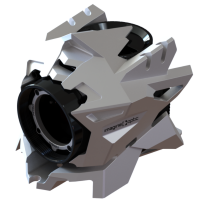
Wavefront Sensing Applications
 Click here to read
Adaptive Optics Applications
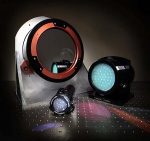 Click here to read
Blogs
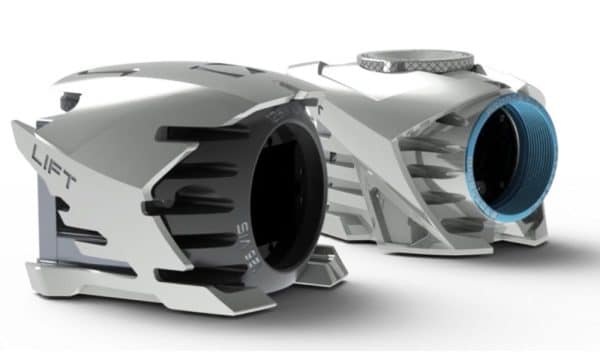
5 Reasons To Utilize Shack-Hartmann Wavefront Sensors
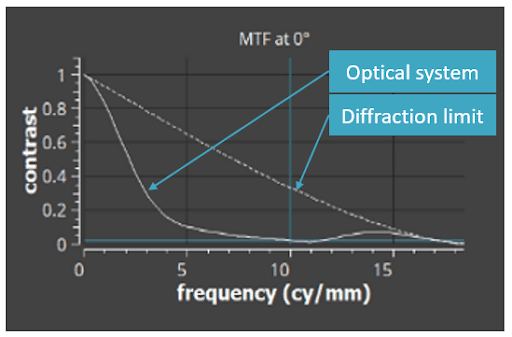
MTF measurement using a Shack-Hartmann wavefront sensor
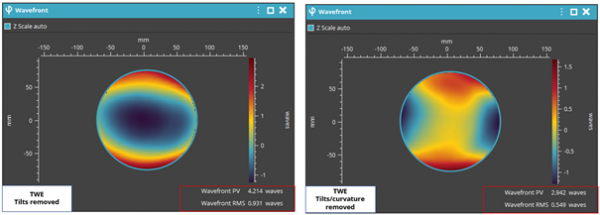
A double-sided optical metrology procedure for full thin plane parallel optics, such as glass wafers
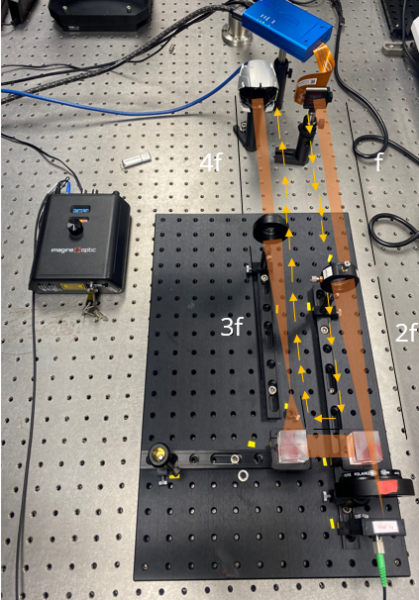
Spatial Light Modulators in Adaptive Optics: A Paradigm for Aberration Control
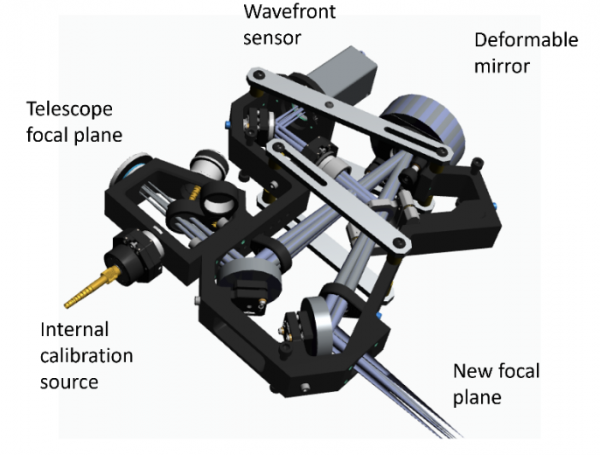
CIAO: Compact Adaptive Optics for Ground-Based Telescopes and Free Space Optics
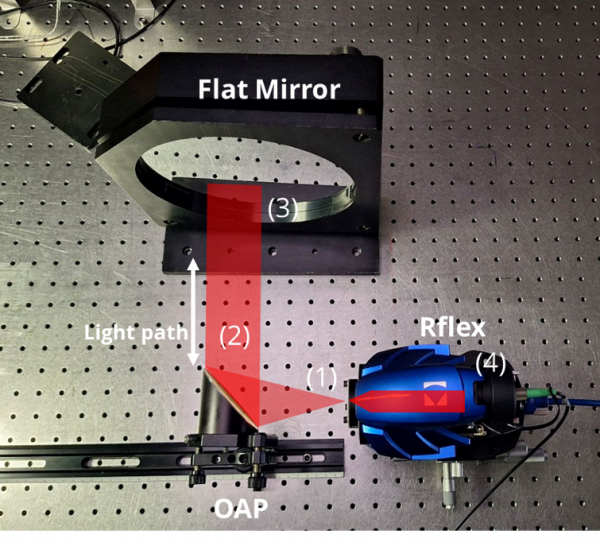
Aligning Optics with a wavefront sensor: the off axis parabola example
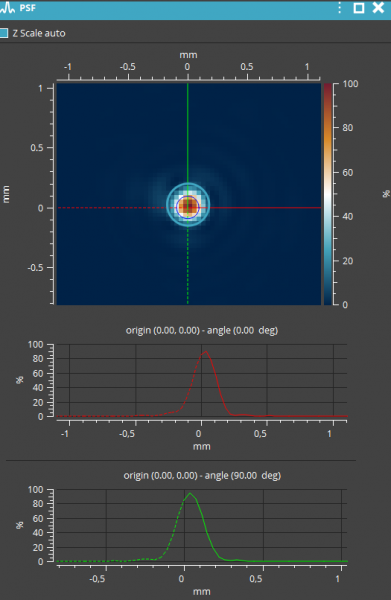
Strehl Ratio: How Perfect is Your Focal Spot?
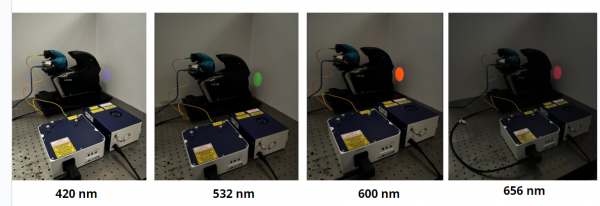
Multi-Wavelength optical metrology with A Supercontinuum laser

Adaptive Optics for Ophthalmology
Optical Alignment of an Adaptive Optics System Using a HASO Wavefront Sensor
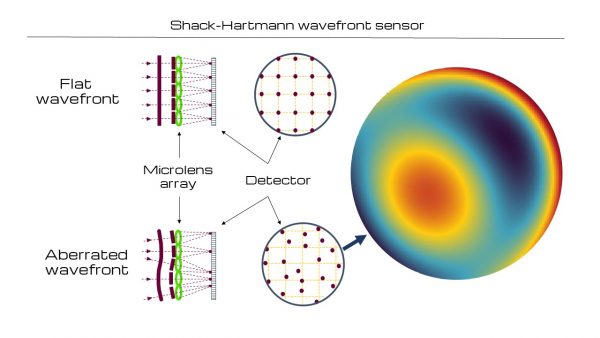
Brief History of Shack-Hartmann Wavefront Sensing
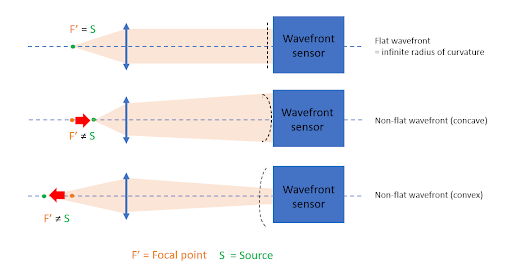
Optical alignment using the radius of curvature measurement from HASO4 sensor
Watch our videos